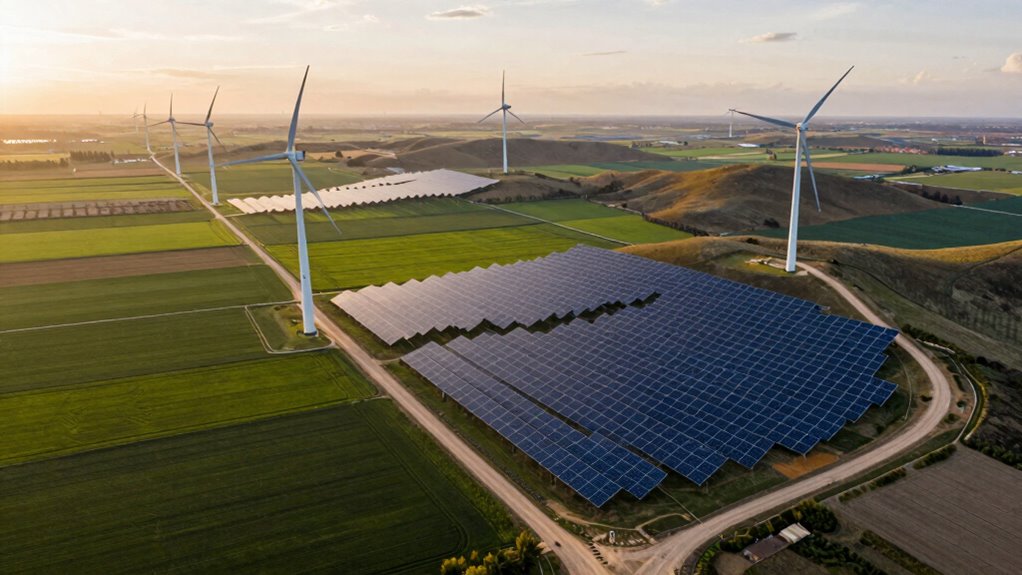

You may not realize it, but land use battles and zoning rules are quietly shaping energy policies around you. Restrictions based on community values or environmental concerns can slow down or restrict renewable projects like solar farms or wind turbines. Some areas prioritize conservation, while others actively promote clean energy, creating a complex landscape of regulations. Your understanding of these conflicts and policies reveals how local battles influence broader energy shifts—if you’re curious, there’s more to uncover.
Key Takeaways
- Land use conflicts and zoning restrictions influence where and how renewable energy projects can be developed.
- Community values and environmental concerns shape zoning policies, affecting renewable energy deployment.
- Differing local approaches to zoning either promote or hinder renewable energy expansion.
- Land use battles create challenges for policymakers balancing environmental, community, and energy priorities.
- Stakeholders’ engagement and innovative zoning strategies are key to aligning land use with sustainable energy goals.

Have land use conflicts really started to reshape our energy policies? It’s a question that’s gaining traction as local communities grapple with balancing development needs and environmental concerns. At the heart of these conflicts are zoning regulations, which determine where and how energy infrastructure can be built. When communities tighten restrictions or introduce new zoning rules, they inadvertently influence the types of energy projects that can take shape. For example, a city might zone specific areas as off-limits for large solar farms or wind turbines, citing aesthetic reasons or concerns about land use. While these regulations aim to protect local character and property values, they often complicate efforts to expand renewable energy sources.
Land use conflicts and zoning rules are shaping and sometimes hindering renewable energy development.
You might not realize it, but these zoning regulations are a key battleground for energy policy. They shape the landscape of what’s feasible and what’s not, directly affecting the pace and scope of energy *shifts*. Local governments, often responding to residents’ environmental concerns, impose restrictions that emphasize minimizing environmental impact. These rules can include buffer zones around protected habitats or limits on noisy infrastructure, which are essential for safeguarding ecosystems. However, they can also hinder the development of renewable projects that are *vital* for reducing greenhouse gases. This tension creates a complex puzzle: how to meet energy demands while respecting environmental impact and community values.
As communities push for greener solutions, the land use battles *switch*. Some localities favor strict zoning policies that prioritize conservation, making it difficult to site renewable facilities nearby. Others seek more flexible regulations to encourage clean energy investments. These differing approaches reflect broader debates about environmental impact and land stewardship. When a city or town tightens zoning rules, it can slow down the deployment of wind turbines or solar arrays, often citing concerns about wildlife, visual intrusion, or land degradation. Conversely, areas with more permissive zoning actively promote renewable energy, recognizing its long-term benefits for the environment and economy.
Ultimately, land use conflicts are quietly but profoundly influencing energy policy at every level. They challenge policymakers to find a delicate balance—protecting local environments and community interests while advancing national and global energy goals. These conflicts are also impacted by the evolving role of AI Ethicist Jobs, which can help develop guidelines for responsible land use and renewable energy deployment. This ongoing tug-of-war highlights that energy policy isn’t just about technology or economics; it’s also about land, community values, and environmental impact. As these battles continue, innovative zoning solutions and regulatory frameworks are being explored to better reconcile these competing priorities, shaping the future of energy in ways that reflect local realities and global needs. Additionally, understanding the influence of land use policies can help communities craft more sustainable and adaptable strategies for energy development. Recognizing the importance of public engagement can lead to more balanced and accepted land use decisions that support renewable energy goals.
As an affiliate, we earn on qualifying purchases.
Frequently Asked Questions
How Do Land Use Conflicts Impact Renewable Energy Project Timelines?
Land use conflicts can considerably delay renewable energy projects. You might face hurdles like agricultural zoning restrictions that limit where solar farms or wind turbines can be installed. Coastal restrictions also pose challenges, especially for offshore projects, by adding layers of permitting and environmental reviews. These conflicts often cause project timelines to stretch, increasing costs and uncertainty, ultimately slowing the shift to cleaner energy sources.
What Legal Challenges Are Common in Land Use Disputes for Energy Sites?
In land use disputes for energy sites, you’ll often face legal challenges related to zoning regulations and environmental assessments. Local governments may contest project permits if they don’t meet zoning codes or if environmental impact studies reveal potential harm. You might also encounter legal hurdles from community opposition or regulatory agencies questioning compliance. Addressing these challenges requires thorough preparation of zoning and environmental documentation to guarantee your project aligns with legal standards.
How Do Local Communities Influence Land Use Decisions for Energy Projects?
Imagine your community as a ship steering through energy projects; your activism acts as the steering wheel. Local communities influence land use decisions through activism, attending hearings, and advocating for zoning regulations that protect their environment. These efforts can sway project approval or modifications. When residents voice concerns, they can reshape plans, ensuring energy development aligns with local values, making community involvement a powerful force in land use decisions.
What Economic Factors Drive Land Use Battles Over Energy Infrastructure?
Economic factors like zoning regulations and property rights heavily influence land use battles over energy infrastructure. You’ll find that property owners often resist projects that threaten their land values or restrict how they can use their property. Meanwhile, zoning laws can either facilitate or hinder energy development, depending on local policies. These financial considerations motivate communities, developers, and regulators to navigate land disputes and shape energy policy outcomes.
Are There Successful Strategies to Balance Land Preservation and Energy Development?
Balancing land preservation and energy development is like walking a tightrope—you need steady footing. You can succeed by implementing innovative zoning that guides development while protecting key areas. Simultaneously, engaging the community creates a shared sense of purpose and trust, turning potential conflicts into collaborative solutions. Together, these strategies help you strike a harmony where energy needs are met without sacrificing the land’s natural beauty.
wind turbine noise reduction equipment
As an affiliate, we earn on qualifying purchases.
As an affiliate, we earn on qualifying purchases.
Conclusion
As you navigate this shifting landscape, remember the silent battles shaping our energy future—like echoes of a storm long past, quietly steering the course. Land use conflicts, much like the tides, ebb and flow beneath the surface, guiding policies that will define tomorrow. In this dance of development and conservation, your awareness becomes the compass. Embrace the rhythm, for in understanding these quiet struggles, you hold the power to influence the next chapter of energy and land harmony.
As an affiliate, we earn on qualifying purchases.
As an affiliate, we earn on qualifying purchases.