
Whole-house filters mainly target specific contaminants like chlorine, sediment, or certain chemicals, but they don’t automatically fix water taste because minerals like calcium, magnesium, and pH imbalances impact flavor too. These filters often don’t remove all minerals or correct acidity, which are common causes of metallic or bitter tastes. If you want to understand why your water still doesn’t taste right and how to improve it, there’s more to take into account beyond standard filtration.

Get the latest gadgets delivered free — and shop member deals
- Fast, free delivery on millions of items
- Access to Prime Big Deal Days deals on October 6–7
- Prime Video, Amazon Music and more included
Key Takeaways
- Whole-house filters primarily target specific contaminants and may not address minerals or pH imbalances causing taste issues.
- Mineral removal alone often doesn’t eliminate taste problems caused by calcium, magnesium, or other substances.
- Filters lacking pH regulation may allow acidic or alkaline water to persist, affecting flavor.
- Standard filtration systems may not remove organic compounds or microbes contributing to off-flavors.
- Additional treatment steps are often needed for comprehensive water taste improvement beyond basic filtration.
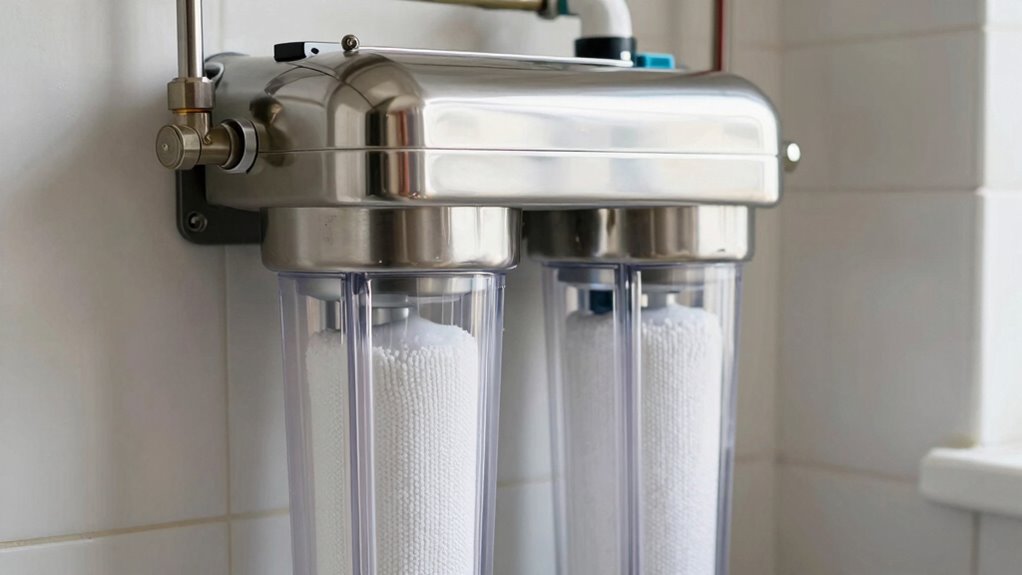
Ever wondered why your tap water sometimes tastes off? It’s a common question, especially when you’ve invested in a whole-house filter and still notice that the taste isn’t quite right. Many people assume that a whole-house filtration system will automatically fix any water taste issues, but that’s not always the case. These systems are designed to handle specific problems—like removing certain minerals or contaminants—but they don’t necessarily address the root causes of bad taste.
Whole-house filters don’t always fix taste issues; they target specific contaminants but may miss mineral and pH imbalances.
One key reason is that many filters focus primarily on mineral removal. Hard water, which contains high levels of calcium and magnesium, can leave a metallic or bitter taste. While a whole-house filter may reduce these minerals, it doesn’t always eliminate the taste entirely, especially if other factors are at play. Additionally, some filters target chlorine or sediment but don’t considerably impact the mineral content that influences flavor. So, if mineral buildup is a primary cause of your water’s off-taste, simply installing a filter may not be enough to fully improve the flavor profile.
Another aspect that affects water taste is pH balance. Water that’s too acidic or too alkaline can taste metallic, sour, or bitter. Whole-house filters often don’t regulate pH levels unless they’re specifically designed to do so. As a result, even after filtration, your water’s acidity or alkalinity might still produce an unpleasant flavor. If your water’s pH isn’t in the neutral range, it can also cause corrosion in pipes, leading to additional metallic tastes and other issues. Addressing mineral content without balancing pH means you might still be left with water that doesn’t taste quite right. Understanding water chemistry can help identify whether pH imbalance is contributing to the taste issues. Some advanced filters incorporate pH balancing features to optimize taste and reduce corrosion. Moreover, water testing can reveal specific issues that may not be addressed by standard filtration alone. It’s also worth noting that water source quality varies greatly, and sometimes the problem originates outside the filtration system itself, requiring a comprehensive approach to treatment.
A further consideration is that organic matter or microbial activity may be present in your water, which many standard whole-house filters aren’t built to handle. If your source water contains organic compounds or bacteria, these can contribute to strange flavors, even after filtration. To truly fix the taste, you might need a multi-stage system that combines mineral removal, pH adjustment, and microbial control. Additionally, understanding the specific water source and its inherent qualities can guide you toward the most effective treatment options.
In essence, while whole-house filters can greatly improve water quality, they don’t automatically fix taste issues unless they’re tailored to target the specific causes—like mineral content and pH imbalance. Understanding what’s affecting your water’s flavor is essential. Sometimes, a specialized filter or additional treatment steps are necessary to enjoy clean, great-tasting water straight from your tap.
As an affiliate, we earn on qualifying purchases.
Frequently Asked Questions
Can Whole-House Filters Remove All Types of Water Odors?
Whole-house filters can’t remove all types of water odors, especially strong or chemical smells. They mainly use chemical filtration to target specific contaminants and may include pH adjustment to improve water taste. However, some odors, like sulfur or organic compounds, require specialized treatments. To effectively eliminate various odors, you might need additional or specialized systems alongside your whole-house filter, ensuring your water tastes fresh and clean.
How Often Should I Replace Filter Cartridges to Maintain Taste?
Ever wondered how to keep your water tasting fresh? You should replace your filter cartridges every 6 to 12 months, depending on usage and water quality. Regular cartridge maintenance guarantees ideal filter lifespan and prevents odors or impurities from lingering. Don’t wait until you notice a change—staying on top of replacements helps maintain great taste and keeps your whole-house filter working efficiently.
Do Filters Improve Water Taste in Well Water Systems?
Yes, filters can improve water taste in well water systems, but they might not fully address issues like pH imbalance or microbial contamination. To truly enhance taste, you may need additional solutions like pH adjustment systems or UV disinfection. Regular filter maintenance guarantees effective removal of odors and sediments. Keep in mind, some taste issues stem from mineral content or bacteria, which simple filters might not fully resolve without supplementary treatments.
Are There Specific Filters for Mineral or Salt Water Sources?
Ever wonder if your filter can handle mineral or saltwater sources? Yes, there are specialized filters for these needs. Mineral filtration systems target dissolved minerals that affect taste, while saltwater treatment units remove excess salt, making water more palatable. These filters are designed specifically for mineral-rich or salty water, ensuring you get cleaner, better-tasting water without compromising on efficiency. You just need to choose the right system for your water source.
Can Whole-House Filters Reduce Water Discoloration Issues?
Yes, whole-house filters can help reduce water discoloration issues. They work by improving water pH balance and removing sediments that cause staining or cloudiness. Sediment removal is especially effective if discoloration is caused by rust or dirt, while adjusting water pH can improve clarity and color. However, for persistent problems, you might need specialized filters or additional treatment options to fully address discoloration.
whole house mineral removal filter
As an affiliate, we earn on qualifying purchases.
As an affiliate, we earn on qualifying purchases.
Conclusion
Remember, a whole-house filter is like a gatekeeper—it blocks many impurities but doesn’t guarantee perfect taste. Think of it as trying to tame a wild river; it can slow the current but may not tame every twist or turn. If your water still tastes off, don’t settle for just the filter’s promise. Sometimes, a more specialized treatment is needed to truly turn your tap water into a crisp, clear stream you can trust.
As an affiliate, we earn on qualifying purchases.
As an affiliate, we earn on qualifying purchases.
Fall Picks
fall essentials
As an affiliate, we earn on qualifying purchases.