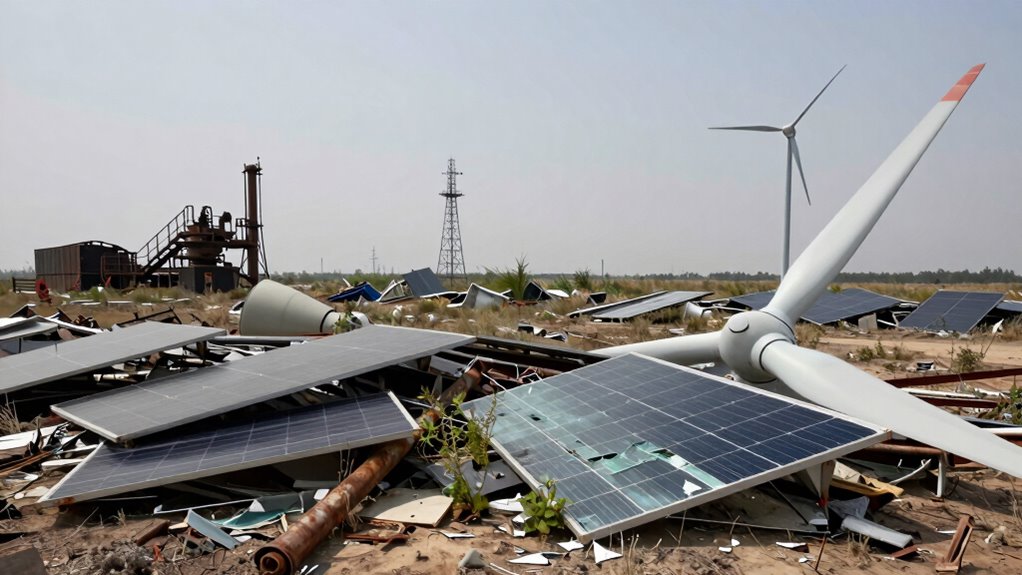

As renewable energy expands, you’ll find that managing end-of-life equipment is a growing challenge. Old solar panels and wind turbines contain hazardous materials like lead and cadmium and are hard to recycle properly. Without adequate infrastructure and policies, these materials often end up in landfills, risking soil and water contamination. The environmental impact grows as more equipment reaches the end of its lifespan. If you want to understand how this waste problem develops and what solutions are emerging, keep going.

Get the latest gadgets delivered free with Prime
- Fast, free delivery on millions of items
- Prime Video, Amazon Music and more included
- Member-only deals all year
Key Takeaways
- The rapid expansion of renewable energy has led to a surge in decommissioned equipment, straining waste disposal systems.
- Recycling technologies for solar panels and wind turbine components are costly, complex, and not yet widely implemented.
- Hazardous materials like toxic metals pose environmental and health risks if improperly disposed of or landfilled.
- Insufficient recycling infrastructure and policies hinder proper end-of-life management of renewable energy devices.
- Without effective cleanup, improper disposal threatens ecosystems, communities, and long-term sustainability goals.

Have you ever wondered what happens to renewable energy equipment once it reaches the end of its lifespan? As the world shifts toward cleaner energy sources like solar panels and wind turbines, a new challenge emerges—what to do with all this aging equipment. While renewable energy is essential for reducing greenhouse gases, the environmental impact of disposing of or recycling these materials is often overlooked. Many of these technologies contain hazardous components or rare materials that require careful handling. If not managed properly, they can cause environmental contamination, runoff, and health issues for communities nearby.
Recycling challenges are a significant part of the problem. Unlike traditional waste, renewable energy equipment isn’t always straightforward to break down and repurpose. Solar panels, for example, contain silicon, glass, and sometimes toxic metals like cadmium or lead. Extracting these materials requires specialized processes that are not yet widespread or cost-effective. Wind turbine blades are made from composites that are difficult to recycle, often ending up in landfills. As the industry expands rapidly, the volume of decommissioned equipment will grow exponentially, straining existing waste management systems and recycling facilities. This creates a pressing need for innovation in recycling technologies and better policies to manage end-of-life equipment.
Recycling renewable energy equipment requires specialized, costly processes that current systems are ill-equipped to handle efficiently.
Another factor complicating the environmental impact is the sheer scale of equipment reaching the end of its life. Many solar panels installed a decade ago are now nearing retirement, and wind turbines are similarly aging. Without effective recycling strategies, these materials risk becoming environmental hazards. Landfills may become filled with non-biodegradable parts that leach toxic substances into soil and water sources. Conversely, improperly processed recycling efforts can also release harmful chemicals into the environment. The challenge lies in establishing sustainable and economically viable methods to reclaim and reuse valuable materials, turning what would be waste into resources. Additionally, the limited infrastructure for recycling renewable energy components further hampers the industry’s ability to manage end-of-life equipment responsibly. To address these issues, ongoing research into recycling technologies is crucial for creating more efficient and environmentally friendly solutions.
You might also consider the social implications. Communities near landfills or disposal sites often bear the brunt of improper waste management. The environmental impact extends beyond just pollution; it affects local health, biodiversity, and access to clean water. As the renewable energy industry grows, so does the responsibility to develop responsible disposal and recycling practices. The industry must invest in research and infrastructure to address these challenges head-on. Only then can renewable energy truly fulfill its promise of a cleaner, healthier planet without creating an equally formidable waste problem.
As an affiliate, we earn on qualifying purchases.
Frequently Asked Questions
How Long Do Renewable Energy Infrastructure Materials Typically Last?
Renewable energy infrastructure materials generally last between 20 to 30 years, depending on material durability and environmental conditions. You can expect solar panels to have a lifespan estimation of around 25-30 years, while wind turbine blades typically last about 20-25 years. Regular maintenance can extend their durability. Keep in mind, advancements in materials may improve lifespan and reduce environmental impacts over time.
What Are the Economic Costs of Renewable Energy Waste Cleanup?
You face significant economic costs from renewable energy waste cleanup, as environmental impact concerns drive up disposal expenses. Recycling and decommissioning require technological innovation to reduce costs and manage materials responsibly. Without advancements, waste management could strain budgets and hinder future projects. Investing in cleaner, more efficient technologies now can lower long-term cleanup costs, minimizing environmental damage while supporting sustainable energy growth.
Are Recycling Methods for Solar Panels and Wind Turbines Effective?
Like Da Vinci’s innovations, your hope for sustainable energy depends on effective recycling methods. Innovative recycling and recent technology advancements make solar panels and wind turbines more recyclable. While challenges still exist, these methods now recover valuable materials efficiently. You benefit from reduced waste and environmental impact, knowing that ongoing improvements promise a cleaner future. Embracing these advancements guarantees your role in a sustainable energy revolution, echoing the ingenuity of history’s greatest innovators.
How Does Waste Management Impact Renewable Energy Adoption?
Waste management considerably impacts renewable energy adoption by shaping public awareness and compliance with environmental regulations. When waste disposal is efficient and environmentally friendly, it boosts public confidence in renewable projects. Conversely, poor waste management can cause environmental harm, leading to stricter regulations and hesitancy among investors. You can help by supporting policies that promote sustainable waste practices, ensuring renewable energy remains a viable, eco-friendly solution for the future.
What Policies Are in Place for Renewable Energy Waste Disposal?
Did you know that current policies cover only about 30% of renewable energy waste disposal? You’ll find significant policy gaps in waste regulation, leaving many disposal methods unregulated. Governments are slowly implementing regulations, but enforcement varies widely. These policies aim to guarantee proper handling of solar panels, wind turbine blades, and batteries, yet many experts argue that stronger, more unified regulations are vital to managing renewable energy waste effectively and sustainably.
wind turbine blade recycling equipment
As an affiliate, we earn on qualifying purchases.
As an affiliate, we earn on qualifying purchases.
Conclusion
As you see the renewable energy boom surge ahead, don’t forget the hidden challenge lurking beneath—what happens when the turbines and solar panels reach the end of their life? The cleanup dilemma isn’t just a future concern; it’s a ticking time bomb that could reshape the very sustainability we’re working towards. Will we find a solution before it’s too late? The answer might just change everything you thought you knew about clean energy.
As an affiliate, we earn on qualifying purchases.
solar panel decommissioning tools
As an affiliate, we earn on qualifying purchases.
As an affiliate, we earn on qualifying purchases.
Fall Picks
fall essentials
As an affiliate, we earn on qualifying purchases.