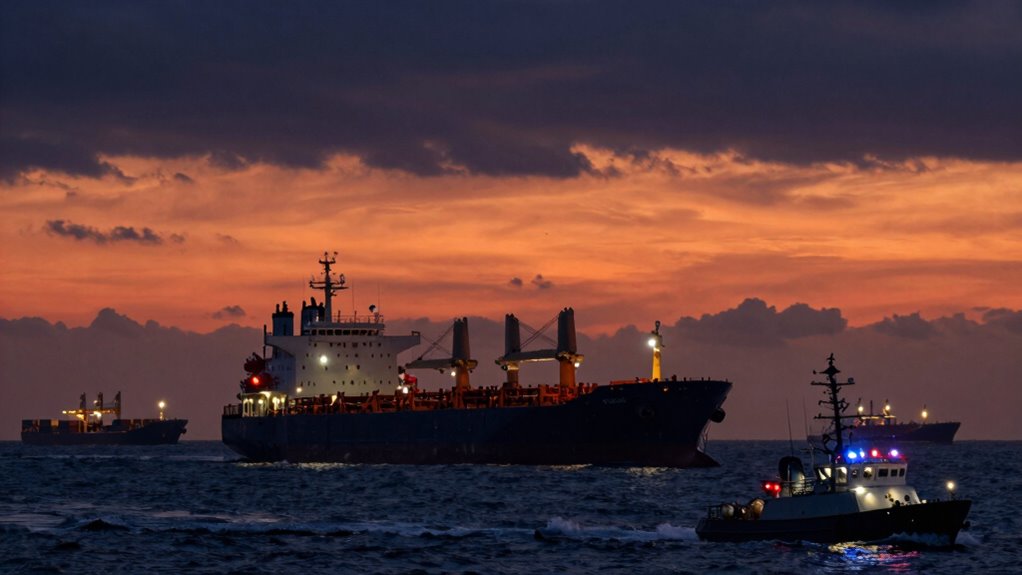

Rising tensions over strategic shipping lanes threaten global trade as nations compete for control of key maritime routes. Geopolitical rivalries, conflicts, and military posturing increase risks of disruptions, which can delay shipments and raise costs. International efforts to maintain security often falter amid political disputes, amplifying instability. As tensions mount, understanding how these disputes impact worldwide commerce becomes essential—staying informed reveals more about the shifting landscape of maritime power struggles and their implications.

Get the latest gadgets delivered free with Prime
- Fast, free delivery on millions of items
- Prime Video, Amazon Music and more included
- Member-only deals all year
Key Takeaways
- Geopolitical rivalries and territorial disputes are escalating tensions over control of vital shipping routes like the Strait of Malacca and South China Sea.
- Military posturing and naval patrols increase risk of conflicts disrupting international maritime trade.
- Political conflicts and regional power struggles threaten to destabilize key maritime corridors, impacting global supply chains.
- Countries are investing heavily in surveillance and security measures to safeguard these strategic lanes from threats and illegal activities.
- Rising tensions risk broader economic repercussions due to rerouted shipping, higher costs, and insurance premiums.
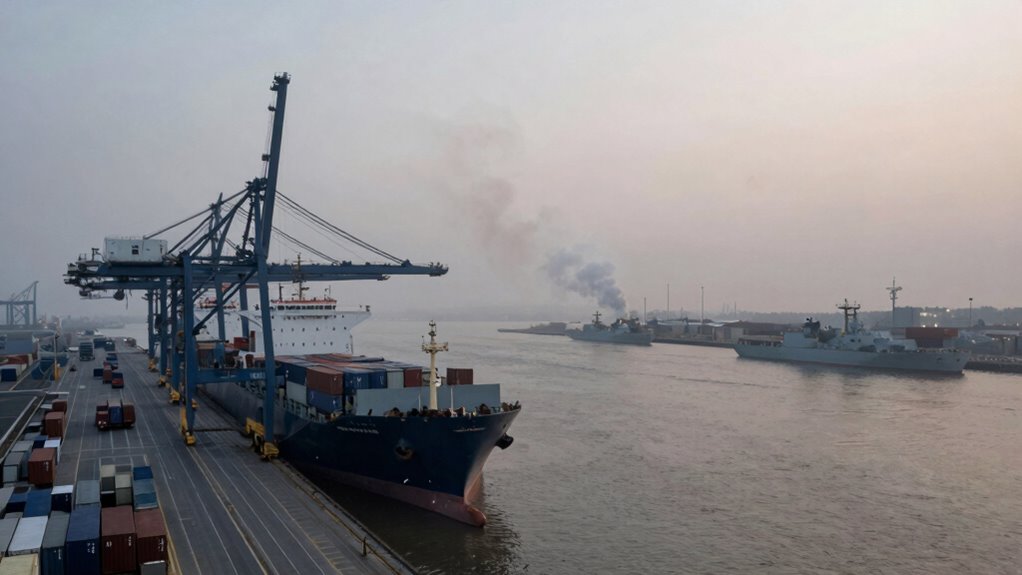
As global trade intensifies, tensions over the control and security of strategic shipping lanes have surged, directly impacting international commerce and regional stability. These vital maritime routes, which connect major economies and facilitate the movement of goods, are increasingly becoming focal points of geopolitical competition and conflict. You need to understand that maritime security has become more critical than ever, as disruptions here can ripple through supply chains, causing delays and financial losses worldwide. Countries bordering these lanes are investing heavily in naval capabilities, patrols, and technological surveillance, aiming to safeguard their interests and ensure uninterrupted trade flow.
Strategic shipping lanes are vital to global trade, with nations investing heavily to secure these critical maritime routes.
The stakes are high because much of the world’s energy supplies, raw materials, and consumer products traverse these shipping corridors. When tensions escalate, nations may resort to military posturing or even aggressive tactics, risking escalation into broader conflicts. This environment compels shipping companies and traders to adapt quickly, often rerouting vessels to avoid contested waters, which increases costs and transit times. Such maneuvers aren’t just logistical concerns—they also influence international trade dynamics, affecting prices and supply availability across markets. Additionally, maritime security efforts are crucial in maintaining stability, as they help deter illegal activities like piracy and smuggling. Moreover, advances in surveillance technology are playing an increasingly vital role in monitoring these sensitive zones and preventing potential threats.
The international community faces a complex challenge. On one hand, there’s a need to uphold maritime security and prevent piracy, terrorism, or illegal activities that threaten safe passage. On the other, there’s the risk of misunderstandings escalating into confrontations. International organizations and maritime alliances are trying to mediate and promote stability, but political tensions can quickly undermine these efforts. As a trader or someone involved in international trade, you must stay alert to these developments, as they can influence shipping costs, insurance premiums, and delivery schedules. Recognizing the importance of geopolitical struggles can help stakeholders anticipate potential disruptions and adapt strategies accordingly.
Ultimately, the rising tensions over strategic shipping lanes underscore the fragile balance between geopolitical ambitions and the necessity of open maritime commerce. Ensuring maritime security isn’t just about protecting ships; it’s about safeguarding the entire framework that keeps the global economy functioning. Your awareness of these issues helps you better understand the interconnectedness of geopolitics, maritime security, and international trade—factors that will continue to shape the future of global commerce.
As an affiliate, we earn on qualifying purchases.
Frequently Asked Questions
How Do International Laws Regulate Maritime Security in These Regions?
International laws regulate maritime security in these regions through maritime jurisdiction and international treaties. You’re expected to respect territorial waters, exclusive economic zones, and the high seas, which are protected under treaties like UNCLOS. These agreements set rules for navigation, piracy prevention, and resource rights. As a seafarer or policymaker, you must follow these legal frameworks to guarantee safe and secure shipping, avoiding conflicts and promoting cooperation among nations.
What Are the Economic Impacts of Disrupted Shipping Lanes?
When shipping lanes are disrupted, you face significant economic impacts like increased costs from maritime piracy threats and higher shipping insurance premiums. These disruptions cause delays, raising expenses and reducing reliability for your supply chain. You might also see decreased trade flow, which impacts global markets and your business’s profitability. Overall, unstable shipping lanes threaten economic stability, forcing you to adapt with more robust security measures and higher operational costs.
Which Countries Are Most Involved in the Tensions?
You should know that countries like China, the United States, and regional neighbors are most involved in the tensions. They increase naval patrols to protect shipping lanes and combat maritime piracy, which escalates disputes. These nations’ strategic interests and military presence influence the situation, heightening vulnerabilities in global trade routes. Their actions directly impact the stability of these critical shipping lanes, affecting international commerce and regional security.
How Do Military Conflicts Affect Global Shipping Routes?
Military conflicts muddle maritime movements, making shipping routes risky and unpredictable. You’ll notice increased interruptions from maritime piracy and heightened naval patrols, aiming to protect vital cargoes. These tensions cause shipping delays, spike costs, and threaten global trade flows. You might see ships rerouting, reluctant to navigate contested waters. Conflict creates chaos, complicating commerce, and challenging security, as nations scramble to safeguard strategic shipping lanes amidst mounting military tensions and maritime uncertainties.
What Measures Are Being Taken to De-Escalate Tensions?
You see that maritime diplomacy and naval patrols are key measures being used to de-escalate tensions. Countries are engaging in diplomatic talks to build trust and establish communication channels. Naval patrols increase presence in vulnerable areas, reassuring international shipping and preventing misunderstandings. These initiatives aim to promote stability, reduce risks of conflict, and guarantee safe passage for global trade, fostering cooperation and easing regional tensions effectively.
As an affiliate, we earn on qualifying purchases.
Conclusion
As you navigate these shifting waters, remember that peaceful currents can sometimes be gently diverted by unseen undercurrents. While tensions rise like distant storm clouds on the horizon, diplomacy acts as a guiding lighthouse, helping all ships avoid rough seas. By fostering open dialogue and shared understanding, you can help steer this complex voyage toward calmer shores, where cooperation and stability become the true compass for everyone sailing these essential routes.
shipping lane monitoring technology
As an affiliate, we earn on qualifying purchases.
As an affiliate, we earn on qualifying purchases.
As an affiliate, we earn on qualifying purchases.
Halloween Picks
halloween
As an affiliate, we earn on qualifying purchases.