As cities face rising temperatures each year, you can’t ignore the urgent heat crisis. Dense urban structures trap heat, making many areas markedly warmer than surrounding regions. This causes higher energy bills, health risks, and reduced quality of life. Green infrastructure, like parks and green roofs, offers effective solutions by cooling and improving city resilience. If you want to understand how strategic urban planning can help fight this growing problem, there’s more to discover.

Get the latest gadgets delivered free with Prime
- Fast, free delivery on millions of items
- Prime Video, Amazon Music and more included
- Member-only deals all year
Key Takeaways
- Urban areas are experiencing rising temperatures due to the heat island effect, making heat management critical.
- Elevated urban temperatures increase energy use, greenhouse emissions, and health risks for vulnerable populations.
- Green infrastructure offers effective solutions to mitigate heat and improve urban resilience.
- Implementing parks, green roofs, and tree-lined streets reduces ambient temperatures and enhances city sustainability.
- Strategic urban planning and research are essential to combat the escalating urban heat crisis.
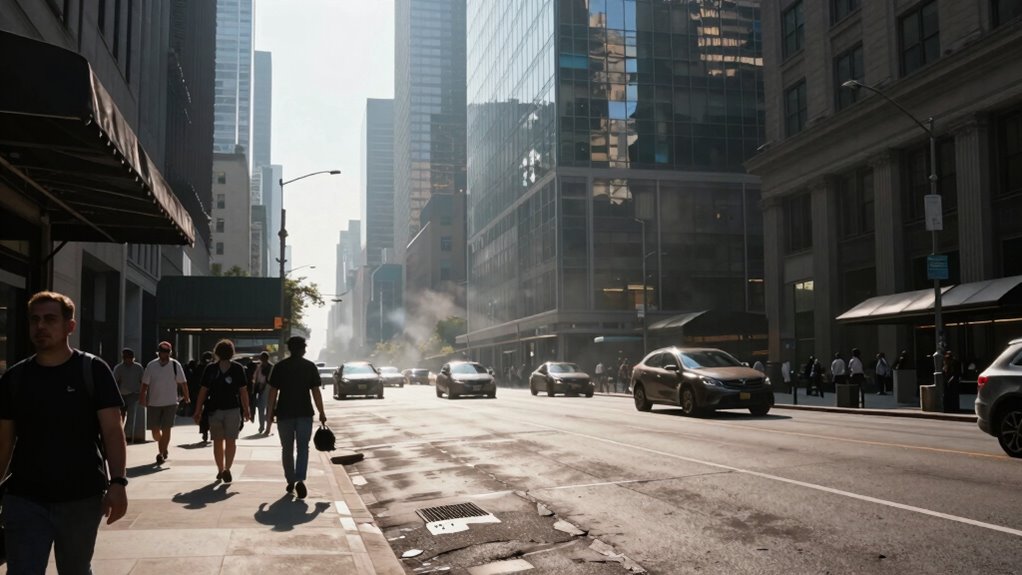
Have you noticed how cities seem to get hotter each year? It’s not just your imagination—urban areas are experiencing a significant rise in temperatures, a phenomenon driven by the heat island effect. The dense concentration of buildings, asphalt, and concrete traps heat, making cities several degrees warmer than surrounding rural areas. This heat island effect turns urban environments into sweltering zones, especially during summer months, and it’s becoming impossible for cities to ignore the consequences.
Cities are getting hotter each year due to the heat island effect, trapping heat with concrete and asphalt.
The heat island effect isn’t just uncomfortable; it’s dangerous. Higher temperatures increase energy consumption as residents crank up air conditioning, which in turn releases more greenhouse gases, fueling climate change further. Vulnerable populations, like the elderly and those with health issues, face heightened risks of heat-related illnesses and even fatalities. Cities are starting to see how this escalating heat crisis threatens public health, economic stability, and overall livability.
To combat this, urban planners and policymakers are turning to green infrastructure as an essential solution. Green infrastructure includes parks, green roofs, urban gardens, and tree-lined streets that help cool the environment naturally. These features absorb heat, provide shade, and promote evapotranspiration, all of which help reduce the heat island effect. When you incorporate more greenery into urban landscapes, you’re not just beautifying the city—you’re actively cooling it and making it more resilient against rising temperatures.
Implementing green infrastructure isn’t just about planting trees; it’s a strategic approach to creating sustainable urban environments. Green roofs, for example, are layers of vegetation installed on rooftops that insulate buildings and diminish heat absorption. Green corridors and pocket parks break up large expanses of concrete, offering shade and cooling zones for residents and wildlife alike. When cities prioritize these measures, they don’t just fight the heat—they also improve air quality, manage stormwater, and boost biodiversity. Additionally, climate adaptation strategies like these are vital for building resilience against ongoing climate change impacts. A well-planned green infrastructure network can also enhance urban resilience by mitigating the impacts of extreme weather events. Furthermore, incorporating urban greenery can significantly reduce the ambient temperature and improve the overall quality of life for city inhabitants. The integration of green infrastructure into urban planning is essential for addressing the complex challenges posed by the heat island effect and climate change.
Research shows that urban heat can be substantially mitigated through strategic design and the increased presence of vegetation, making cities more livable and sustainable for future generations.
As an affiliate, we earn on qualifying purchases.
Frequently Asked Questions
How Does Urban Heat Affect Local Wildlife?
Urban heat impacts local wildlife by disrupting their habitats and challenging their ability to adapt. As temperatures rise, many species struggle with habitat loss, forcing them to migrate or face decline. Your efforts to reduce heat through green spaces help wildlife adapt better, providing cooler areas for animals to thrive. Without intervention, the increasing heat can lead to decreased biodiversity and the loss of essential species in urban environments.
What Are the Economic Costs of Rising Urban Temperatures?
You’ll find that rising urban temperatures hit your wallet hard, from higher energy bills to increased healthcare costs. These expenses challenge your city’s economic resilience, making climate adaptation essential. When cities don’t act, they risk ballooning costs that strain budgets and reduce productivity. Investing in cooling infrastructure and green spaces helps curb these costs, ensuring your community stays economically stable despite the heat’s growing threat.
How Do Heat Waves Impact Urban Infrastructure Longevity?
Heat waves accelerate the deterioration of urban infrastructure, reducing its longevity. You need to focus on building resilience through infrastructure upgrades, such as improved cooling systems and heat-resistant materials. These measures help withstand extreme temperatures, preventing cracks, warping, and other damages caused by intense heat. By proactively upgrading infrastructure, you guarantee city systems remain functional longer, saving costs and safeguarding residents from the escalating impacts of climate-induced heat waves.
Are There Successful City-Specific Strategies to Combat Heat?
Yes, cities successfully combat heat by implementing strategies like green roofs and cooling corridors. Green roofs absorb heat, reduce urban temperatures, and improve air quality, while cooling corridors connect parks and shaded areas to facilitate airflow and lower local temperatures. These approaches create cooler urban environments, protect infrastructure, and enhance residents’ well-being. By adopting such targeted solutions, cities can effectively address the escalating urban heat crisis.
How Does Urban Heat Influence Air Quality Levels?
Have you noticed how urban heat worsens air quality? It causes pollutants like ozone and particulate matter to increase, making air less breathable. Green roofs and reflective pavements help combat this by reducing heat absorption and cooling city environments. These strategies lower temperatures, which in turn diminishes the formation of harmful pollutants, improving overall air quality, and making city air safer for everyone. Wouldn’t you want cleaner, cooler urban air?
As an affiliate, we earn on qualifying purchases.
Conclusion
You can’t afford to ignore the urban heat crisis any longer. As cities grow and temperatures rise, the theory that urban development exacerbates heat islands gains more support. Implementing green infrastructure and sustainable policies isn’t just smart—it’s necessary for your city’s future. Ignoring this issue risks worsening health, economic strain, and environmental damage. Addressing urban heat isn’t just about comfort; it’s about ensuring resilience in the face of a warming world.
As an affiliate, we earn on qualifying purchases.
stormwater management green infrastructure
As an affiliate, we earn on qualifying purchases.
As an affiliate, we earn on qualifying purchases.
Halloween Picks
halloween
As an affiliate, we earn on qualifying purchases.