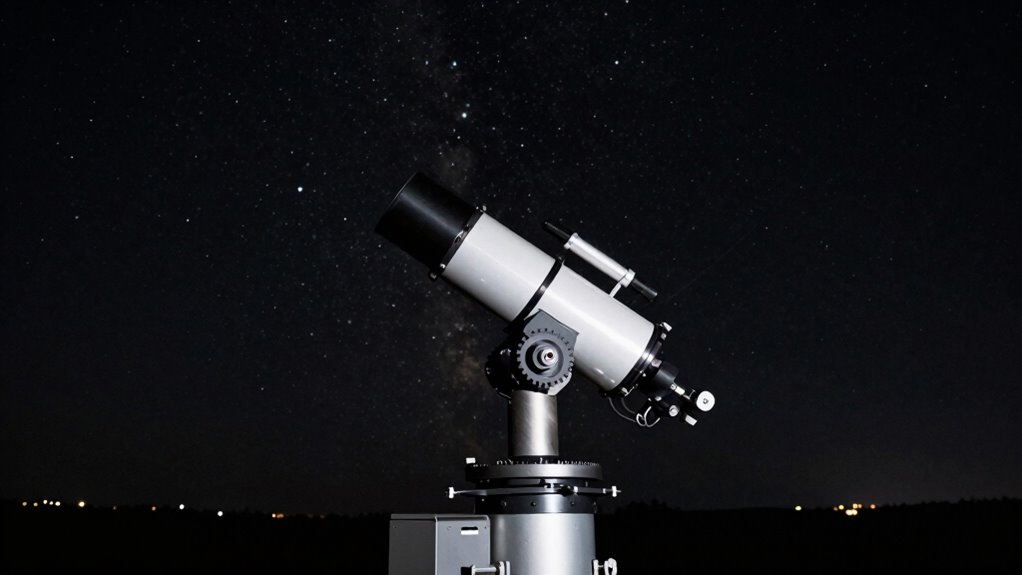

Your camera alone can’t fix tracking errors caused by a misaligned or unstable mount. To get sharp, clear astrophotos, you need to properly align and calibrate your mount, especially through polar alignment and guide scopes. Regular calibration helps keep your tracking accurate during long exposures. Upgrades or software adjustments won’t resolve fundamental issues with your mount’s setup. mastering alignment techniques ensures your images stay crisp, and if you stick around, you’ll discover the key steps to improve your astrophotography results.
Key Takeaways
- Proper mount alignment and calibration are essential for accurate tracking, which cameras alone cannot correct.
- Long exposure quality depends on precise polar alignment and guiding techniques, not just camera upgrades.
- Regular calibration of the mount ensures consistent tracking accuracy, improving astrophotography results.
- Image stacking enhances image quality but relies on good tracking; software can’t fix poor mount alignment.
- Upgrading cameras or filters won’t compensate for mis-tracking; focus on mount setup and alignment first.

Have you ever wondered how astronomers capture stunning images of distant galaxies and stars? It’s not just about having a powerful telescope camera; it’s about making certain that your setup is perfectly aligned and stable. One of the most critical steps in astrophotography is mount alignment. If your mount isn’t properly aligned, your images will suffer from star trails, blurring, or streaking, no matter how advanced your camera is. Proper mount alignment ensures that your telescope’s tracking system follows celestial objects smoothly across the sky. When your mount is accurately aligned with the celestial pole, it can compensate for Earth’s rotation, allowing you to take longer exposures without star trails. This is vital because no matter how sophisticated your camera or image processing techniques are, they can’t fix a mount that’s out of alignment.
Even if you’re diligent about aligning your mount, you might still encounter issues with tracking accuracy. That’s where image stacking comes into play. Image stacking involves taking multiple shorter exposures and combining them into a single, clearer image. This technique helps reduce noise and enhances details that would be lost in a single long exposure. However, image stacking isn’t a magic fix for bad tracking—it works best when your mount’s tracking is already reasonably accurate. If your mount drifts or wobbles during exposures, stacking can’t completely compensate for those errors, and your final image will still show streaks or blurring. So, dedicating time to precise mount alignment is vital before you start stacking images. Additionally, regularly calibrating your mount using guide scope alignment techniques can significantly improve tracking precision. Ensuring your mount is properly polar aligned is equally important for long-term tracking success.
You might think that upgrading your camera or using fancy filters will instantly improve your astrophotos, but without a properly aligned mount and accurate tracking, those improvements won’t matter much. The key is to get your mount’s tracking as precise as possible through careful alignment and calibration. Once your mount is well aligned, capturing multiple images becomes more effective because each frame will be aligned properly, making stacking more successful. This process allows you to reveal faint details and produce sharp, detailed images of distant objects. Remember, no camera or software can completely fix a poorly aligned or mis-tracked mount. Your best results come from paying attention to mount calibration, ensuring solid alignment, and then confidently stacking your images. Additionally, using mount calibration techniques can help stabilize your setup for more consistent tracking results.

Celestron Polar Finderscope for CG-5 German Equatorial Mount
- Compatibility: For CG-5, CGEM, Advanced VX mounts
- Easy Installation: Insert into mount port easily
- Hemispheric Use: Works in North and South Hemispheres
As an affiliate, we earn on qualifying purchases.
As an affiliate, we earn on qualifying purchases.
Frequently Asked Questions
Can Software Alone Improve Tracking Accuracy?
Software alone can’t substantially improve tracking accuracy. You need a combination of autofocus techniques and hardware upgrades, like better mount motors or guiding systems, to enhance precision. Software can help refine your tracking, but without solid hardware, you’ll still face issues. Focus on upgrading your mount and using advanced autofocus techniques, then use software to fine-tune. This combined approach ensures more accurate tracking during your astrophotography sessions.
What Are the Signs of Poor Telescope Tracking?
You’ll notice poor telescope tracking when stars appear as elongated or streaked instead of pinpoint; this indicates mount instability or misaligned polar settings. If your images show trailing or inconsistent star positions, it’s a sign your mount isn’t stable or your polar alignment needs adjustment. Ensuring your mount is secure and precisely aligned with the celestial pole is key. Proper setup and maintenance prevent these issues and improve tracking accuracy.
How Often Should I Calibrate My Tracking System?
You should calibrate your tracking system regularly, ideally before each observing session, to guarantee peak performance. Focus on camera calibration to maintain accurate star tracking and monitor mount stability, as any vibrations or looseness can cause errors. Frequent calibration helps detect and correct drift early, keeping your images sharp. If you notice tracking issues during your session, perform an immediate calibration check to improve accuracy and prevent further problems.
Do Better Mounts Always Guarantee Perfect Tracking?
A better mount isn’t a magic wand, but it’s your steady ship in a storm. It can improve tracking, but only if it offers true mount stability and gear precision. Even the best mount can falter if it’s unbalanced or shaky. So, while upgrading helps, you still need proper setup, regular calibration, and patience. Perfect tracking requires consistency in every element, not just a shiny new mount.
Can Environmental Factors Affect Tracking Performance?
Yes, environmental factors like atmospheric turbulence and light pollution can affect your tracking performance. Atmospheric turbulence causes air density variations, leading to image distortion and tracking inconsistencies. Light pollution interferes with your telescope’s ability to accurately follow celestial objects by reducing contrast and clarity. To improve tracking, you should consider observing during calm, clear nights with minimal light interference and guarantee your mount is properly aligned and stable.
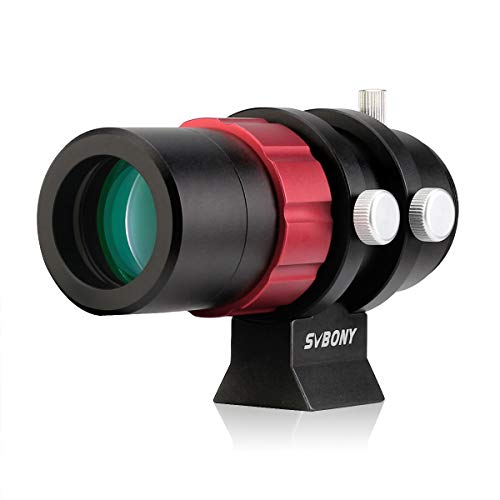
SVBONY SV165 Guide Scope, 30mm Focal Ratio F4 Mini Finder and Guide Scope
- Compatibility: Works with mainstream auto guiding cameras
- Mount Interface: 1.25-inch and M42 mounts for compatibility
- Image Quality: Sharp, bright images with multilayer coated lens
As an affiliate, we earn on qualifying purchases.
As an affiliate, we earn on qualifying purchases.
Conclusion
So, while upgrading your telescope camera might seem like the fix, remember that it’s only part of the equation. Good tracking is what truly keeps your images sharp and clear, like a steady hand guiding a brush. Without it, even the best camera can’t compensate for shaky, blurred results. Focus on mastering your tracking first; then, let your camera capture the universe’s beauty, crystal clear and awe-inspiring.

Astronomical Telescope Fine Tuning Rod, Equatorial Mount Adjustment Lever with Anti-Slip Hand Wheel, Aluminum Alloy Trimmer Rod for 130EQ 114EQ 127EQ Telescopes
- Material: High-strength aluminum alloy
- Ease of Use: Anti-slip hand wheel for smooth adjustments
- Secure Attachment: Safety lock mechanism for secure connection
As an affiliate, we earn on qualifying purchases.
As an affiliate, we earn on qualifying purchases.

FANAUE SkyGuider Pro Base Mount for Star Tracker Low Latitude Version, Precision CNC Aluminum Base, Stable Polar Alignment Platform for Astrophotography & Star Tracking
- Designed for Low-Latitude Regions: Optimized for accurate polar alignment near the equator
- Improves Polar Alignment Precision: Ensures stable star tracking and longer exposures
- CNC Machined Aluminum Construction: Provides lightweight, durable, and stable support
As an affiliate, we earn on qualifying purchases.
As an affiliate, we earn on qualifying purchases.