The quiet revolution in solid-state cooling is transforming how you control temperature efficiently and eco-friendlily. Advances in nanomaterials and thermoelectric devices enable compact, durable, and silent cooling solutions that don’t rely on harmful refrigerants. By manipulating nanoscale structures and phonon transport, researchers boost device performance, making cooling more accessible across consumer electronics and industrial uses. Keep exploring to discover how these innovations could reshape your approach to sustainable, low-noise climate control.

Get the latest gadgets delivered free with Prime
- Fast, free delivery on millions of items
- Prime Video, Amazon Music and more included
- Member-only deals all year
Key Takeaways
- Advances in nanomaterials enhance thermoelectric efficiency, enabling quieter, more compact cooling devices.
- Solid-state thermoelectric coolers operate silently, reducing noise pollution compared to traditional systems.
- Research focuses on controlling phonon transport at the nanoscale to improve cooling performance.
- Scalable manufacturing of efficient thermoelectric modules supports widespread, low-noise cooling applications.
- Future developments aim for sustainable, energy-efficient cooling solutions with minimal environmental impact.
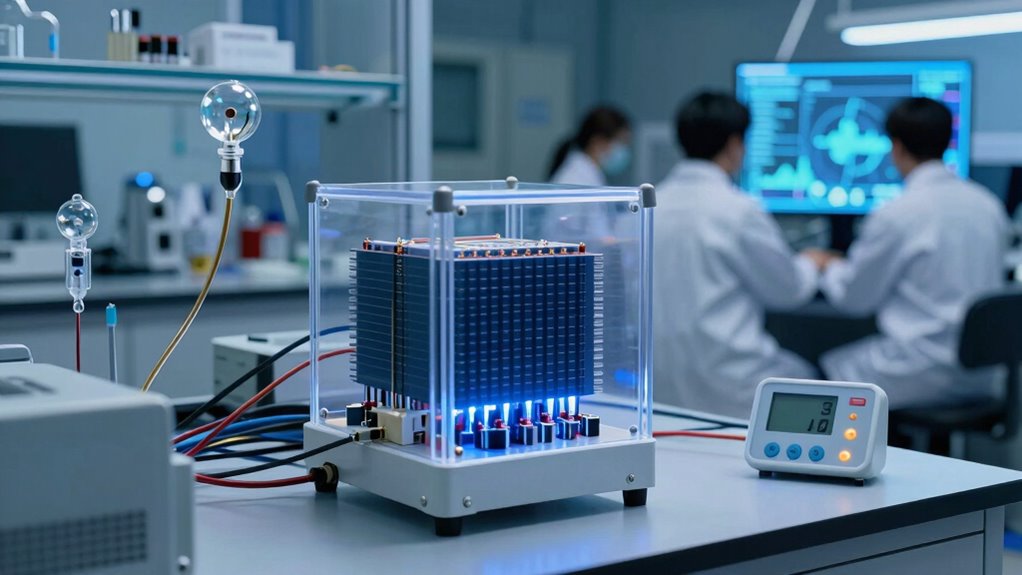
Solid-state cooling research is transforming how we approach temperature regulation by focusing on environmentally friendly and energy-efficient alternatives to traditional refrigeration methods. This shift hinges on innovations in materials and mechanisms that reduce reliance on harmful refrigerants and cut energy consumption. One of the most promising areas fueling this revolution is the development of thermoelectric devices, which convert electrical energy directly into cooling or heating. Their appeal lies in their compactness, durability, and quiet operation, making them ideal for applications where noise and maintenance are concerns.
Solid-state cooling offers eco-friendly, efficient, and quiet temperature regulation through innovative thermoelectric technology.
A key driver behind advancements in thermoelectric technology is nanomaterial research. By manipulating materials at the nanoscale, scientists are dramatically improving thermoelectric efficiency. These nanomaterials—like nanostructured semiconductors—allow for precise control over electrical and thermal conductivity. This means you can design materials that conduct electricity well but block heat flow, a critical factor in boosting thermoelectric performance. As a result, devices become more efficient, providing stronger cooling effects with less energy input. Additionally, the ability to tailor nanostructures enhances the overall performance of thermoelectric devices, opening new avenues for optimization. Moreover, understanding phonon transport at the nanoscale is essential for further improving device efficiency.
A further benefit of nanomaterials is their potential to enable scalable manufacturing, which is crucial for widespread adoption and commercial viability.
Nanomaterial advancements are also enabling better control over phonon transport—the primary mechanism of heat transfer in solids. When phonons are scattered effectively within nanostructures, heat flow diminishes, enhancing the material’s thermoelectric figure of merit (ZT). Higher ZT values translate directly into more efficient thermoelectric cooling devices. This progress means you could soon see portable, solid-state coolers that are not only more effective but also environmentally friendly, thanks to their reduced energy demands and lack of refrigerants. Additionally, the integration of advanced materials is helping to optimize these devices for diverse applications.
Furthermore, these material innovations accelerate the development of scalable, cost-effective thermoelectric modules suited for widespread use. Instead of bulky, inefficient systems, you’ll find compact, silent units that can be integrated into various settings—from consumer electronics to industrial processes. The quiet operation, in particular, makes them ideal for environments where noise pollution is a concern, such as hospitals or residential buildings.
In addition, ongoing research into nanomaterials and phonon transport is crucial for advancing thermoelectric technologies, enabling the creation of more efficient and environmentally friendly cooling solutions. In essence, the combination of nanomaterial advancements and increased thermoelectric efficiency is creating a landscape where solid-state cooling becomes more accessible, sustainable, and practical. You’re witnessing a quiet revolution that could redefine how we cool everything from personal devices to large-scale infrastructure, all while minimizing environmental impact. As research continues to push the boundaries of material science, expect even more innovative, energy-efficient cooling solutions to emerge, shaping the future of temperature regulation in a cleaner, smarter way.
solid-state thermoelectric cooler
As an affiliate, we earn on qualifying purchases.
As an affiliate, we earn on qualifying purchases.
Frequently Asked Questions
What Are the Main Challenges Preventing Widespread Adoption of Solid-State Coolers?
You face challenges like limited thermal conductivity in some materials, which hampers heat transfer efficiency. Additionally, many solid-state coolers haven’t yet achieved ideal energy efficiency compared to traditional systems. These issues make it tough to justify widespread adoption, especially when costs are high and performance can vary. Overcoming these barriers requires advances in material science and engineering to improve thermal conductivity and boost energy efficiency, making solid-state coolers more practical and appealing.
How Do Solid-State Cooling Devices Compare in Cost to Traditional Refrigeration?
Imagine comparing a sleek, new sports car to an old, trusted bicycle. Solid-state coolers often have higher initial costs but promise better efficiency metrics and less maintenance over time. Their cost comparison to traditional refrigeration shows they’re usually pricier upfront, yet their energy savings and durability can make them more economical long-term. As you consider your options, weigh the initial investment against ongoing operational benefits.
What Materials Are Most Promising for Future Solid-State Cooling Technologies?
You should focus on materials like thermoelectrics, ferroelectrics, and shape memory alloys because they show great promise for future solid-state cooling. Material innovation drives efficiency optimization, making these materials more effective and practical. Advances in nanostructured materials and layered composites also enhance performance, reducing energy consumption. By exploring these promising options, you can contribute to developing more sustainable, compact, and reliable cooling solutions that could revolutionize the industry.
Are There Environmental Concerns Associated With New Solid-State Cooling Methods?
Think of new solid-state cooling methods as a double-edged sword; while they promise eco-friendly benefits, they also raise environmental impact concerns. You might face regulatory challenges as governments scrutinize materials and energy use. It’s essential to weigh their advantages against potential environmental risks, ensuring these innovations don’t turn into unintended pollution sources. Proactive research and strict regulations can help harness their benefits while minimizing harm.
How Long Do Solid-State Cooling Devices Typically Last Before Needing Replacement?
Solid-state cooling devices usually last around 10 to 20 years, depending on their energy efficiency and device durability. You can expect longer lifespans if you maintain the device properly and operate it within recommended parameters. While they’re designed for durability, factors like usage frequency and environmental conditions can influence their longevity. Regular maintenance helps guarantee your device stays efficient and reliable for as long as possible.
quiet thermoelectric cooling device
As an affiliate, we earn on qualifying purchases.
As an affiliate, we earn on qualifying purchases.
Conclusion
You’re on the brink of witnessing a revolution that could transform cooling technology more profoundly than any other innovation in history. Solid-state cooling research is advancing at a lightning-fast pace, promising more efficient, eco-friendly solutions that could redefine comfort and sustainability. As you follow this quiet revolution, remember, it’s not just progress—it’s a seismic shift poised to reshape the future, making traditional cooling methods seem almost archaic in comparison. The possibilities are truly limitless.
nanomaterial thermoelectric module
As an affiliate, we earn on qualifying purchases.
As an affiliate, we earn on qualifying purchases.
As an affiliate, we earn on qualifying purchases.
Fall Picks
fall essentials
As an affiliate, we earn on qualifying purchases.