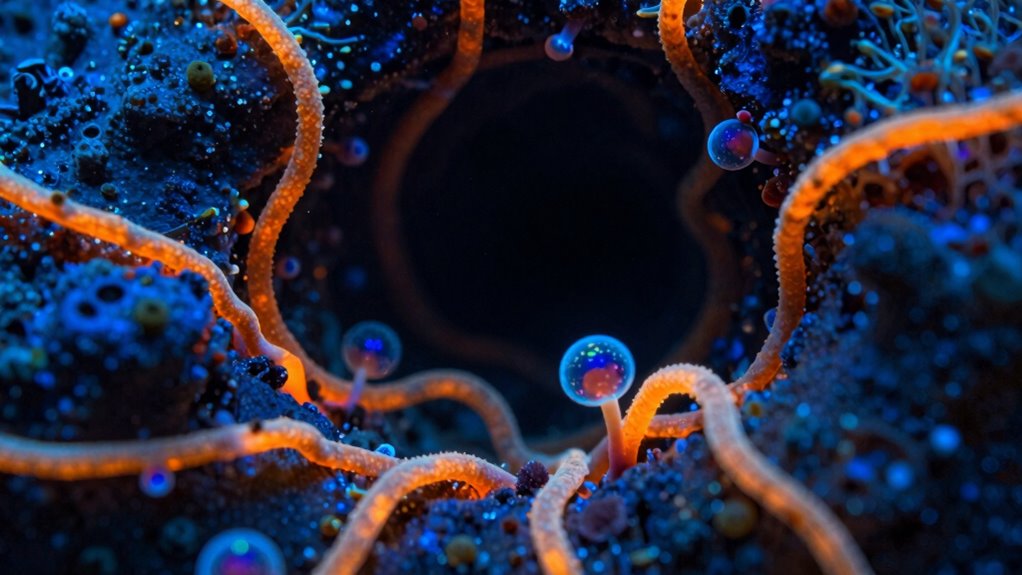

Extremophiles are microorganisms that live in Earth’s most extreme environments, like boiling hot springs or frozen Arctic ice. They teach you how life can survive under conditions once thought impossible, revealing incredible resilience. Their unique enzymes and genetic adaptations inspire new biotech applications, from waste treatment to space exploration. By exploring these hardy organisms, you gain insights into life’s limits and potential. Keep exploring further, and you’ll discover even more fascinating ways extremophiles expand our understanding of survival.
Key Takeaways
- Extremophiles thrive in Earth’s most extreme environments, demonstrating life’s remarkable adaptability and expanding our understanding of biological limits.
- They provide robust enzymes and bio-processes for industrial applications like waste treatment and biofuel production.
- Studying extremophiles reveals survival mechanisms under harsh conditions, informing genetic engineering and biotechnology innovation.
- They offer insights into potential extraterrestrial life, guiding astrobiology and life-detection missions on planets like Mars.
- Extremophiles inspire technological advances and solutions for environmental challenges, space exploration, and understanding life’s resilience.
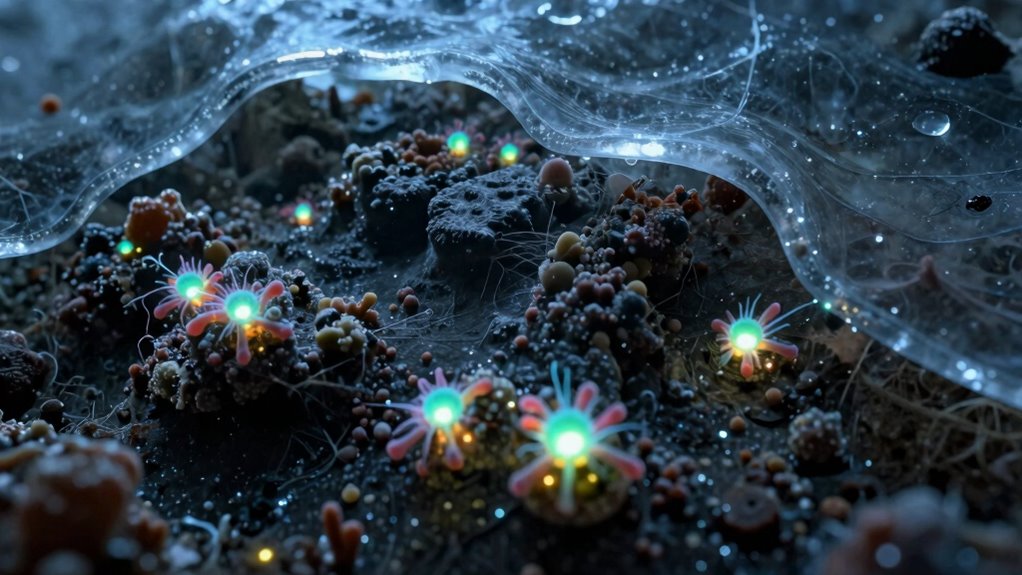
Extremophiles are microorganisms that thrive in some of the most inhospitable environments on Earth, from boiling hot springs to frozen Arctic ice. Their resilience challenges our understanding of life’s limits and opens doors to groundbreaking scientific discoveries. These tiny organisms have evolved unique adaptations that allow them to survive extreme conditions—high acidity, radiation, pressure, or salinity—that would annihilate most life forms. By studying extremophiles, you gain insight into the fundamental mechanisms that sustain life under harsh conditions, which has profound implications across various fields.
Extremophiles thrive in Earth’s harshest environments, revealing life’s resilience and inspiring groundbreaking scientific and technological innovations.
In bioengineering, extremophiles inspire innovations by providing natural templates for designing robust enzymes, bio-processes, and sustainable solutions. For instance, enzymes derived from these microorganisms can operate at high temperatures or extreme pH levels, which is invaluable for industrial applications like waste treatment, biofuel production, and pharmaceuticals. Their ability to withstand environmental stressors enables bioengineers to develop resilient biotechnologies that perform reliably in challenging settings. This translates into more efficient, eco-friendly processes that reduce energy consumption and minimize environmental impact. Essentially, extremophiles serve as biological blueprints, helping you engineer systems that mimic nature’s toughest survivors. Understanding these adaptive mechanisms also enhances our knowledge of extreme environment survival strategies, which can be applied to various scientific challenges. Additionally, recent research into their genetic makeup offers new avenues for genetic engineering with potential benefits across multiple industries.
Furthermore, the study of extremophiles has significant astrobiology implications. You can imagine how their resilience provides clues about potential life beyond Earth. Since these microorganisms thrive in conditions once thought uninhabitable, they expand the scope of environments considered suitable for extraterrestrial life. Studying extremophiles also helps scientists understand the adaptations to extreme environments, which is crucial for assessing the habitability of other planets and moons. This influences NASA and other space agencies as they explore planets and moons—such as Mars or Europa—that possess extreme environments similar to Earth’s extreme habitats. Understanding how extremophiles survive in high radiation zones or under intense pressure guides the development of life-detection missions and informs the search for biosignatures. It suggests that life could exist in places previously deemed impossible, broadening the horizons of astrobiological research and fueling your curiosity about the universe’s possibilities.
In essence, extremophiles teach you about life’s extraordinary adaptability, prompting innovations that benefit industries and deepen space exploration efforts. Their resilience not only pushes the boundaries of biology but also fuels technological advances that could reshape how you approach environmental challenges and space missions. As you explore their world, you realize that these microorganisms are more than just survivalists—they are key to accessing new frontiers in science, medicine, and understanding our place in the cosmos.
extremophile enzymes for industrial use
As an affiliate, we earn on qualifying purchases.
As an affiliate, we earn on qualifying purchases.
Frequently Asked Questions
Can Extremophiles Survive in Space?
Yes, extremophiles can survive in space conditions temporarily. Their resilience to radiation, vacuum, and extreme temperatures suggests they might endure space survival for short periods. This ability hints at the possibility of extraterrestrial life existing in harsh environments beyond Earth. Studying extremophiles helps us understand potential habitats for life elsewhere and prepares us for future space exploration missions where such microbes could survive and even thrive.
How Do Extremophiles Adapt to Their Harsh Environments?
Like explorers venturing into uncharted worlds, extremophiles adapt through unique mechanisms. You see, their adaptation mechanisms include producing protective enzymes, repairing DNA swiftly, and forming resilient biofilms. These survival strategies allow them to withstand extreme heat, acidity, or radiation. By evolving such traits, extremophiles thrive where others cannot, teaching us about resilience and survival in the harshest environments, much like legendary adventurers conquering the impossible.
Are Extremophiles Related to Early Life on Earth?
Yes, extremophiles are related to early life on Earth. You can think of them as living links to ancient organisms that thrived in the planet’s harsh conditions billions of years ago. These microbes have adapted to survive in extreme environments, giving you clues about how life might have originated and persisted during early Earth’s tumultuous times. Their resilience helps scientists understand the resilience and diversity of early life forms.
Can Extremophiles Be Used in Biotechnology?
Yes, extremophiles can be used in biotechnology, especially in genetic engineering and industrial applications. Their unique enzymes, like heat-resistant or acid-tolerant ones, help develop processes that withstand extreme conditions. Scientists investigate these microbes to harness their capabilities for cleaning up pollutants, producing biofuels, or creating durable pharmaceuticals. This ongoing research reveals how extremophiles can revolutionize industries by offering sustainable, efficient solutions in challenging environments.
Do Extremophiles Pose Any Risks to Humans?
Extremophiles generally don’t pose significant risks to humans, but some pathogenic extremophiles can produce toxins or cause infections in vulnerable individuals. You should be cautious around extremophile toxins, especially in environments where these microbes thrive, like hot springs or deep-sea vents. While most extremophiles are harmless, understanding their potential risks helps prevent infections or toxin exposure, ensuring safety when exploring extreme environments.
biotech applications extremophiles
As an affiliate, we earn on qualifying purchases.
As an affiliate, we earn on qualifying purchases.
Conclusion
As you explore the mysterious world of extremophiles, remember they whisper secrets from the edge of life’s comfort zone. These tiny pioneers gently remind us that resilience and adaptability are woven into nature’s fabric, often in places we’d never imagine. Embracing their quiet lessons, you might find yourself inspired to push boundaries and discover new possibilities. In their subtle way, extremophiles invite you to see life’s resilience in a whole new, mesmerizing light.
resilient enzymes for waste treatment
As an affiliate, we earn on qualifying purchases.
As an affiliate, we earn on qualifying purchases.
extremophile genetic engineering kits
As an affiliate, we earn on qualifying purchases.
As an affiliate, we earn on qualifying purchases.