Large-scale hyperautomation can cut car manufacturing costs by up to 30% by streamlining processes with advanced automation, AI, and real-time monitoring. Robots and interconnected systems handle repetitive tasks, detect issues early, and optimize operations, reducing labor and defect costs. Predictive maintenance prevents costly breakdowns, and digital tools speed up product development. If you want to see how these innovations drive savings and efficiency, continue exploring how hyperautomation transforms manufacturing.
Key Takeaways
- Integration of automation streamlines production, reducing manual labor and associated costs significantly.
- Real-time monitoring and AI-driven adjustments minimize defects and rework expenses.
- Predictive maintenance prevents costly machinery downtime, enhancing efficiency and saving money.
- Digital twins and simulation tools accelerate product development, reducing time and material waste.
- Workforce shifts and enhanced security optimize operations, lowering training and safety costs.
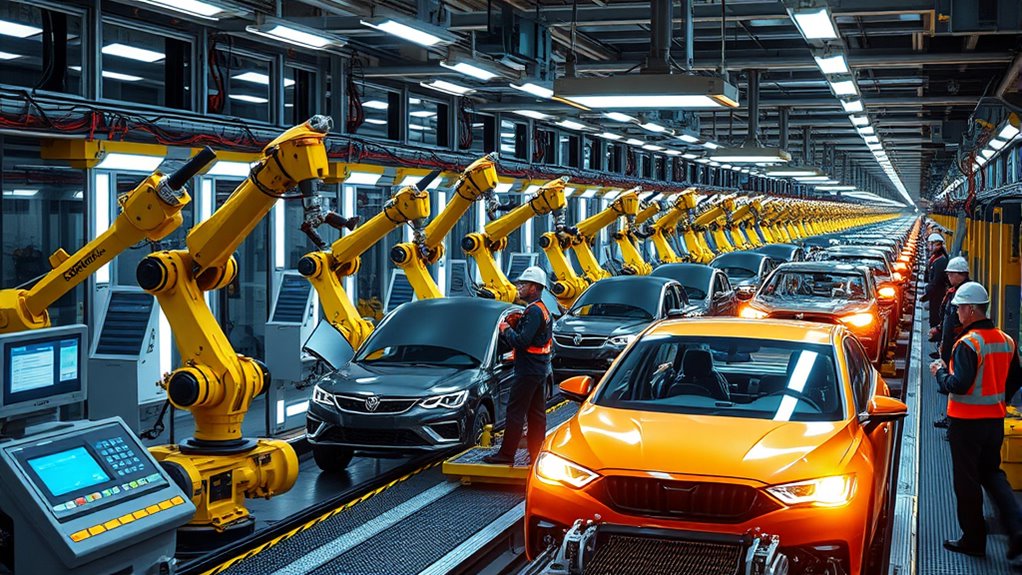
Have you ever wondered how car manufacturers are cutting costs while improving quality? The answer lies in the transformative power of large-scale hyperautomation. By integrating advanced automation technologies across every stage of production, manufacturers are streamlining operations, reducing waste, and minimizing errors. This approach isn’t just about replacing manual labor; it’s about reimagining the entire manufacturing process to make it smarter, faster, and more efficient.
Large-scale hyperautomation is transforming car manufacturing by cutting costs and enhancing quality through smarter, faster processes.
When you look at a modern car plant, you’ll notice an extensive network of interconnected systems working seamlessly together. Robots and AI-driven machines handle repetitive tasks like welding, painting, and assembling components with remarkable precision. This automation reduces the need for human intervention, which cuts labor costs considerably. But the real cost savings come from the way these systems communicate and adapt in real time. For example, sensors monitor every part of the production line, detecting issues immediately and triggering automatic adjustments. This reduces downtime, prevents defects, and ensures consistent quality, saving money that would otherwise be spent on rework or scrap.
You should also understand that hyperautomation enables predictive maintenance. Instead of waiting for machinery to break down, AI analyzes data to forecast failures before they happen. This proactive approach keeps the production line running smoothly, avoiding costly disruptions. As a result, you get higher throughput with fewer delays, all while maintaining high standards of quality. Additionally, automatic inventory management and supply chain integration help optimize raw material use and reduce excess stock, cutting costs associated with storage and procurement. Moreover, ongoing AI safety measures are essential to ensure these automated systems operate reliably and securely.
Implementing hyperautomation also accelerates product development cycles. By utilizing digital twins and simulation tools, manufacturers can test design changes virtually before physical production begins. This saves time, reduces material waste, and allows for rapid iteration, enabling manufacturers to bring new models to market faster and more cost-effectively. From a personnel perspective, automation shifts the focus towards higher-skilled roles, such as overseeing intelligent systems and maintaining advanced machinery, which ultimately enhances workforce productivity and reduces training costs.
Top picks for "large scale hyperautomation"
Open Amazon search results for this keyword.
As an affiliate, we earn on qualifying purchases.
Frequently Asked Questions
How Long Does It Take to Implement Hyperautomation in Car Factories?
Implementing hyperautomation in car factories typically takes between six months to two years, depending on your factory’s size, complexity, and existing infrastructure. You’ll need to plan carefully, integrate new technologies, train staff, and test systems thoroughly. The process involves multiple phases, from initial assessment to full deployment. While it’s a significant investment, the long-term benefits of increased efficiency and reduced costs make it worthwhile.
What Are the Initial Costs of Adopting Hyperautomation Technologies?
You’ll typically face initial costs around $1-2 million when adopting hyperautomation in your factory. For example, a mid-sized automaker might invest in robotic process automation and AI systems, covering equipment, software, and staff training. These upfront expenses can seem high, but they’re an investment that pays off quickly through increased efficiency and reduced long-term costs, ultimately helping you stay competitive in a rapidly evolving industry.
How Does Hyperautomation Impact Worker Safety and Job Security?
Hyperautomation can improve worker safety by handling dangerous tasks, reducing accidents and injuries. However, it may threaten job security as automation replaces some roles. You might find certain jobs becoming obsolete, but new opportunities could emerge in managing and maintaining automated systems. Staying adaptable, upgrading your skills, and embracing ongoing learning can help you navigate these changes and remain relevant in an evolving manufacturing environment.
What Specific Technologies Are Involved in Hyperautomation for Manufacturing?
You’ll see technologies like robotic process automation (RPA), artificial intelligence (AI), machine learning, and IoT integrated into manufacturing. These tools automate repetitive tasks, optimize production lines, and enable real-time monitoring. You might also encounter advanced sensors and digital twins that improve quality control and predict maintenance needs. By combining these technologies, you streamline operations, boost efficiency, and reduce costs while maintaining high safety and quality standards.
Can Hyperautomation Be Customized for Different Car Models and Brands?
Yes, hyperautomation can be customized for different car models and brands. You can tailor automation workflows, robotics, and AI systems to match specific design features, production processes, and quality standards. This flexibility guarantees each vehicle meets brand requirements while maintaining efficiency. By integrating adaptable technology, you can quickly modify production lines for new models or variations, making hyperautomation a versatile solution that aligns with your unique manufacturing needs.
Conclusion
You might think automation increases complexity, but the truth is, it slashes costs by 30%. While traditional methods rely on manual labor and slow processes, hyperautomation streamlines everything, making car manufacturing faster and cheaper. It’s a surprising shift—where high-tech tools replace old-school practices—showing that embracing innovation doesn’t just improve efficiency; it transforms the entire industry. So, as automation advances, expect your future car to be more affordable and built with cutting-edge precision.