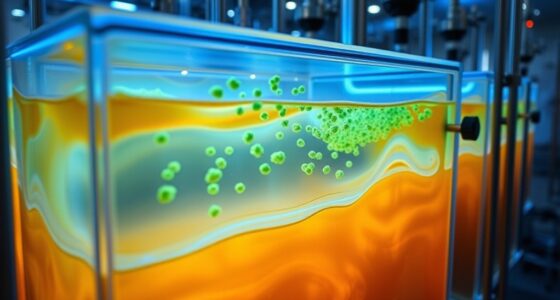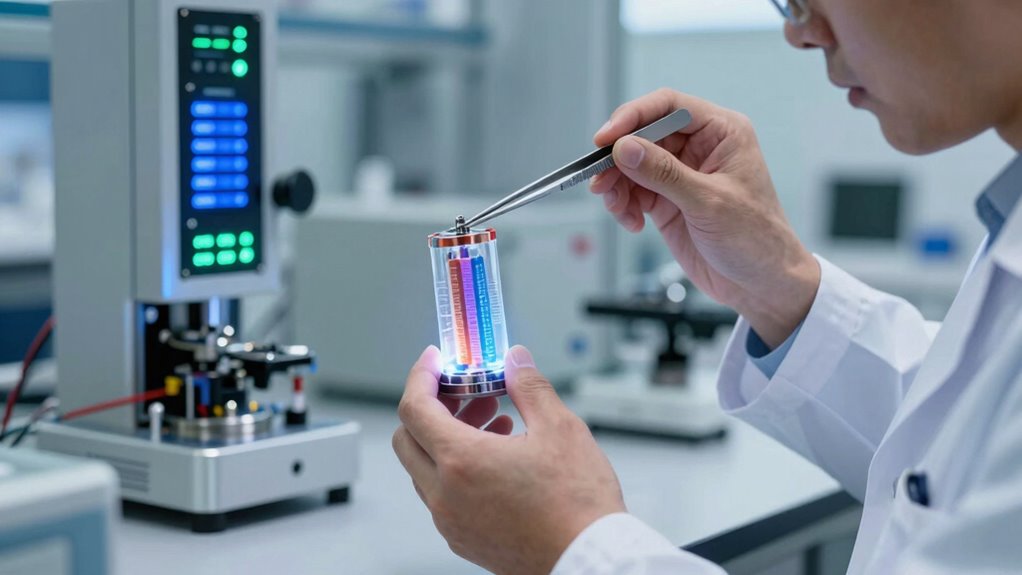

The battery chemistry race is accelerating as companies and researchers develop advanced solutions like solid-state batteries, which use safer, stable electrolytes. These batteries promise faster charging, higher energy capacity, and longer life, making electric vehicles and grid storage more efficient. Innovations in materials and manufacturing are pushing these techs toward commercial viability, emphasizing sustainability. Keep exploring to discover how these breakthroughs could fundamentally change how you store and use energy in the future.
Open a free Amazon Business account
Business pricing, bulk buying and tax-exempt orders.
As an affiliate, we earn on qualifying purchases.
Key Takeaways
- Advancements in solid state batteries promise safer, faster-charging, and higher-capacity energy storage solutions revolutionizing electric vehicles and grid systems.
- Material innovations and manufacturing techniques are critical to making solid state batteries commercially viable and more efficient.
- The race focuses on developing new chemistries that offer longer lifespan, improved safety, and greater energy density.
- Recycling and sustainability efforts are integral to reducing environmental impact and supporting the widespread adoption of advanced battery technologies.
- Material compatibility and performance optimization are essential for extending battery longevity and ensuring reliable, high-performance energy storage.

As the demand for energy storage skyrockets, companies and researchers worldwide are racing to develop the most advanced battery chemistries. This competition aims to create more powerful, safer, and sustainable energy solutions that can meet the world’s growing needs. Among the most promising developments are solid state advancements, which could revolutionize how batteries operate. Unlike traditional lithium-ion batteries that use liquid electrolytes, solid state batteries employ a solid electrolyte, making them inherently safer and more stable. You might notice that these batteries can charge faster, hold more energy, and last longer, giving a significant edge in electric vehicles and grid storage. The move toward solid state technology also reduces risks of overheating and fires, improving safety standards dramatically. As research advances, manufacturers are exploring new materials and manufacturing techniques to make solid state batteries commercially viable. These innovations could lead to significant leaps in energy density, making your devices and vehicles more efficient and reliable. Additionally, ongoing research into recycling innovations is crucial for creating sustainable energy storage solutions that minimize environmental impact. Exploring battery recycling methods can help maximize resource efficiency and reduce waste, further supporting sustainable development. Furthermore, understanding material compatibility in battery design is essential for optimizing performance and longevity. These advancements could lead to significant leaps in energy density, making your devices and vehicles more efficient and reliable.
As an affiliate, we earn on qualifying purchases.
Frequently Asked Questions
How Do New Battery Chemistries Impact Recycling Processes?
New battery chemistries considerably impact recycling processes by altering how easily materials can be recovered. With advanced chemistries, you may find improved recycling efficiency because some materials become easier to extract. However, complex chemistries can also pose challenges, making material recovery more difficult or requiring new techniques. Overall, these innovations push you to adapt recycling methods, aiming for better sustainability and less environmental impact.
What Are the Safety Concerns With Emerging Battery Technologies?
You should be aware that emerging battery technologies pose safety concerns like thermal stability issues, where overheating can cause fires or explosions, and the presence of toxic materials, which threaten health and the environment. These risks are like volatile flames and hazardous substances lurking within the cells. Ensuring proper handling, robust design, and safety protocols becomes essential to prevent accidents and protect everyone involved in manufacturing, using, or recycling these advanced batteries.
How Long Will New Batteries Take to Commercialize?
New batteries could reach commercialization within 5 to 10 years, depending on advancements in battery longevity and manufacturing scalability. You’ll see ongoing research addressing these aspects to guarantee durability and cost-effective production. As scientists improve longevity, the batteries will last longer and perform better. Manufacturing scalability will enable mass production, making these advanced batteries more accessible and affordable for consumers and industries alike, speeding up their market entry.
What Environmental Benefits Do Advanced Battery Chemistries Offer?
Advanced battery chemistries improve environmental benefits by extending battery lifespan, which reduces waste and the frequency of replacements. They also minimize harmful material sourcing, using more sustainable or abundant materials, lowering the environmental impact of extraction. By making batteries more durable and eco-friendly, you help decrease pollution and conserve natural resources, ultimately supporting a cleaner, greener future for electric power and reducing your carbon footprint.
How Do Costs Compare Between Traditional and Next-Gen Batteries?
You’ll find that next-generation batteries often have higher upfront costs than traditional ones, but their longer battery longevity means you save money over time. Manufacturers are implementing cost reduction strategies like using cheaper, abundant materials and improving manufacturing processes. While initial investments are higher for advanced batteries, their durability and efficiency can lead to significant savings, making them a smarter choice for long-term energy needs.
As an affiliate, we earn on qualifying purchases.
Conclusion
As you follow the battery chemistry race, it’s clear that breakthroughs could revolutionize your everyday life, from longer-lasting phones to faster-charging electric vehicles. Did you know that lithium-ion batteries now power over 90% of portable electronics worldwide? Imagine what future innovations could bring—more sustainable, powerful, and affordable energy sources that keep you connected and moving. Staying informed about these advancements means you’re part of shaping a cleaner, more efficient future.
As an affiliate, we earn on qualifying purchases.
As an affiliate, we earn on qualifying purchases.
Flea & tick season Picks
flea and tick prevention
As an affiliate, we earn on qualifying purchases.