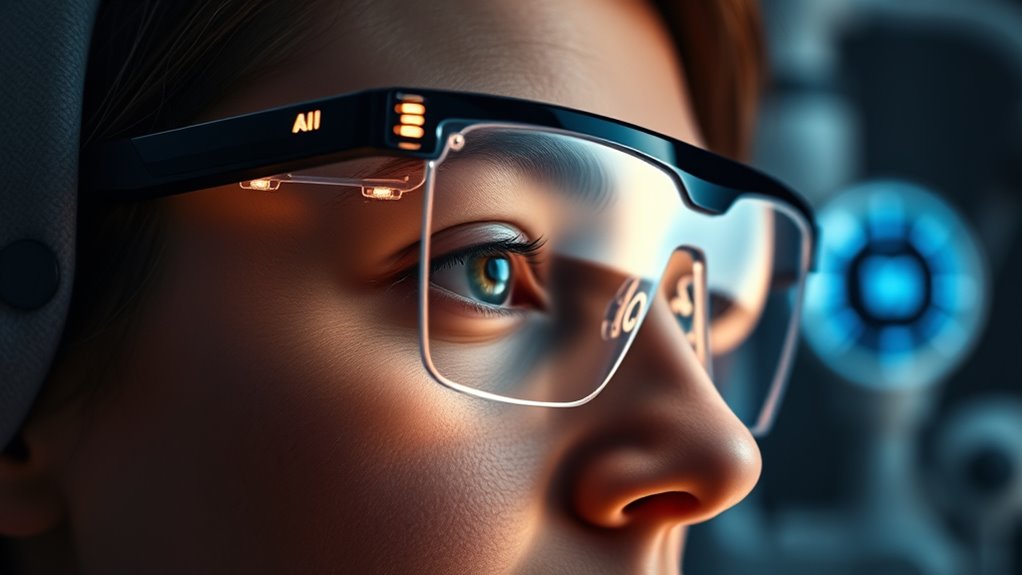

The PRIMA implant uses AI-enhanced smart glasses combined with a discreet eye implant to help restore and improve your vision, especially if you have degenerative eye conditions. The glasses analyze your environment in real time, identifying objects, reading text, and recognizing faces to give you clearer visuals and greater independence. They adapt to lighting and obstacles, customizing the experience for your needs. If you want to discover how this groundbreaking technology works, keep exploring to learn more.
Key Takeaways
- The PRIMA implant works with AI-enhanced smart glasses to restore vision for degenerative eye conditions.
- The glasses analyze the environment in real-time, providing visual enhancements and object recognition.
- AI personalization tailors visual output to user preferences, improving clarity and navigation.
- The minimally invasive implant pairs with lightweight glasses, enabling independence in daily activities.
- Continuous AI advancements aim to increase the accuracy and accessibility of vision restoration technologies.
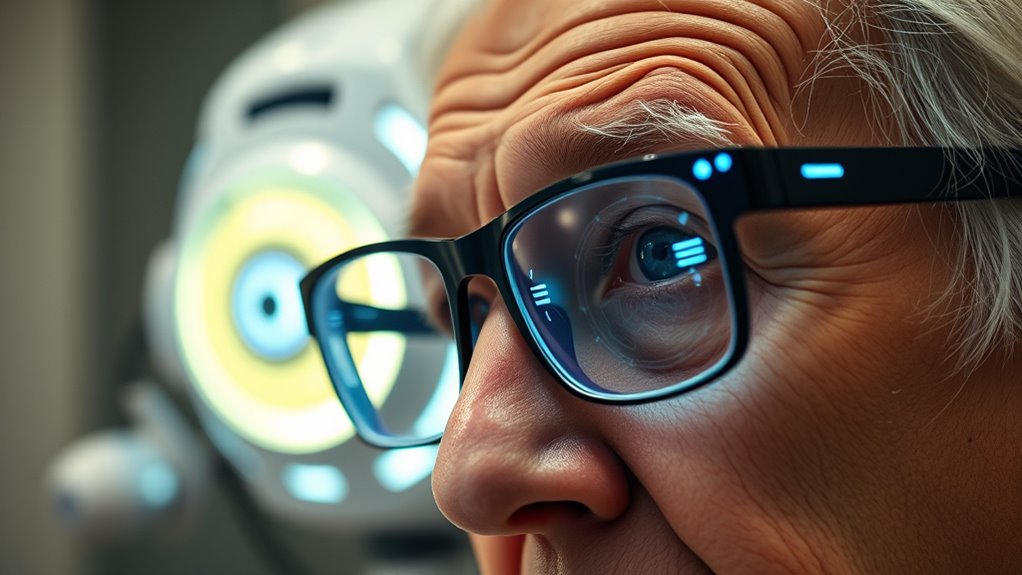
Imagine a future where your vision is augmented directly through smart glasses powered by advanced artificial intelligence. This isn’t some distant dream; it’s becoming a reality with innovations like the PRIMA implant. Designed to restore vision, these AI-enhanced glasses work seamlessly with a small, discreet implant in your eye, providing a new level of clarity and independence. When you wear these glasses, they act as a bridge between your brain and the external world, interpreting signals and delivering real-time visual enhancements. This technology is especially transformative for individuals with degenerative eye conditions, offering hope where traditional treatments might fall short.
Future vision restored through AI-powered smart glasses and discreet implants, transforming lives with real-time visual enhancements.
The AI system continuously analyzes the environment around you, identifying objects, reading text, and even recognizing faces. As you go about your day, the glasses process visual data instantly, translating it into clear images or information that your brain can understand. For example, if you’re trying to read a street sign or navigate a busy room, the AI enhances the visual input, making it easier to interpret your surroundings. It’s like having a personal guide, constantly assisting you and filling in visual gaps caused by impairment. The glasses adapt to different lighting conditions, shadows, or obstructions, ensuring you get accurate visuals regardless of external factors.
What makes the PRIMA implant truly revolutionary is its integration with artificial intelligence. The system learns your preferences and habits over time, customizing the visual output to suit your needs. If you’re in a crowded place, it might focus on identifying faces or reading text aloud, while in a more relaxed setting, it could optimize for clarity and comfort. The AI also detects and compensates for visual distortions, providing a stable, sharp image even if your eyes struggle with focus or clarity. This personalized approach enhances not just your vision but also your confidence, enabling you to engage more fully with your environment. Additionally, advancements in hardware technology are making these devices more compact and accessible for widespread use.
Installing the implant is minimally invasive, similar to getting a routine eye procedure, and the glasses are lightweight and comfortable. Once set up, the system requires minimal user input, functioning automatically to enhance your sight. The real beauty of this technology lies in its ability to restore a sense of independence, allowing you to read, recognize faces, or navigate unfamiliar places without constant assistance. It’s a step toward a future where visual impairment no longer confines you, giving you the power to see the world clearly again. As AI continues to evolve, these glasses will only get smarter, bringing vision restoration closer to reality for millions worldwide.
Top picks for "prima implant uses"
Open Amazon search results for this keyword.
As an affiliate, we earn on qualifying purchases.
Frequently Asked Questions
How Long Do the AI Glasses’ Batteries Last During Daily Use?
Your AI-enhanced glasses typically last about 8 to 10 hours on a full charge during daily use. This duration can vary depending on how intensively you use the features, such as real-time image processing or connectivity. To guarantee continuous use, it’s best to keep a charging case handy or recharge overnight. Regularly checking the battery indicator helps you stay aware of remaining power, so your vision restoration remains uninterrupted.
Are There Any Side Effects From Wearing the Ai-Enhanced Glasses?
You might experience mild eye strain or headaches initially, especially if you wear the glasses for long periods. For example, a user reported temporary discomfort during their first week of use, which subsided with regular breaks. Typically, side effects are minimal and manageable. It’s important to follow usage guidelines and consult your doctor if you notice persistent issues. Most users adapt quickly with proper usage.
Can the Glasses Be Customized for Different Types of Vision Loss?
Yes, the glasses can be customized for different types of vision loss. You can work with your eye care professional to adjust the settings, ensuring they target your specific needs, whether it’s for macular degeneration, glaucoma, or other conditions. The AI technology adapts to your vision profile, providing tailored enhancements. This customization helps maximize your visual clarity and comfort, making the glasses more effective for your unique situation.
What Is the Cost of the AI Glasses for Patients?
You’ll be amazed at the affordability of these AI glasses—they’re surprisingly priced to make restoring your vision within reach! While exact costs can vary depending on your specific needs and healthcare coverage, most patients find the price to be a game-changer, offering incredible value for such cutting-edge technology. Think of it as investing in a future where clear, vibrant vision is no longer just a dream but a reality you can afford.
How Quickly Can Users Expect to See Improvements After Implantation?
You can expect to see improvements within days to a few weeks after implantation. The AI-enhanced glasses work quickly to process visual information, allowing your brain to adapt and improve your vision. Keep in mind that individual results may vary, and some users might notice faster progress than others. Regular follow-ups with your healthcare provider will help monitor your recovery and optimize your visual outcomes.
Conclusion
With the PRIMA implant and AI-enhanced glasses, you’re stepping into a brighter world where shadows soften and details come into gentle focus. Imagine a morning where the dawn’s first light whispers clarity, guiding your way with subtle reassurance. Though the journey may still have gentle turns, this innovation paints a hopeful picture—like a delicate brushstroke—restoring a sense of sight and opening new paths where once there were only veiled horizons.