
Your weather station’s accuracy depends heavily on where you mount it. Position it in an open, elevated spot at least 1.5 to 2 meters above ground, avoiding obstructions like trees and buildings that can block airflow or cast shadows. Guarantee sensors face prevailing winds and are protected from heat sources or reflective surfaces. Proper mounting and regular maintenance keep data reliable. Keep exploring to learn the essential tips for maximum weather station placement.

Get the latest gadgets delivered free with Prime
- Fast, free delivery on millions of items
- Prime Video, Amazon Music and more included
- Member-only deals all year
Key Takeaways
- Proper placement in open, elevated areas minimizes obstructions and airflow disruptions for accurate readings.
- Mount sensors away from heat sources, reflective surfaces, and structures that can create false data.
- Orient sensors correctly to capture representative environmental conditions, especially wind direction.
- Secure the station firmly to prevent movement caused by wind or environmental factors.
- Regular maintenance and calibration ensure ongoing data accuracy and reliable weather monitoring.
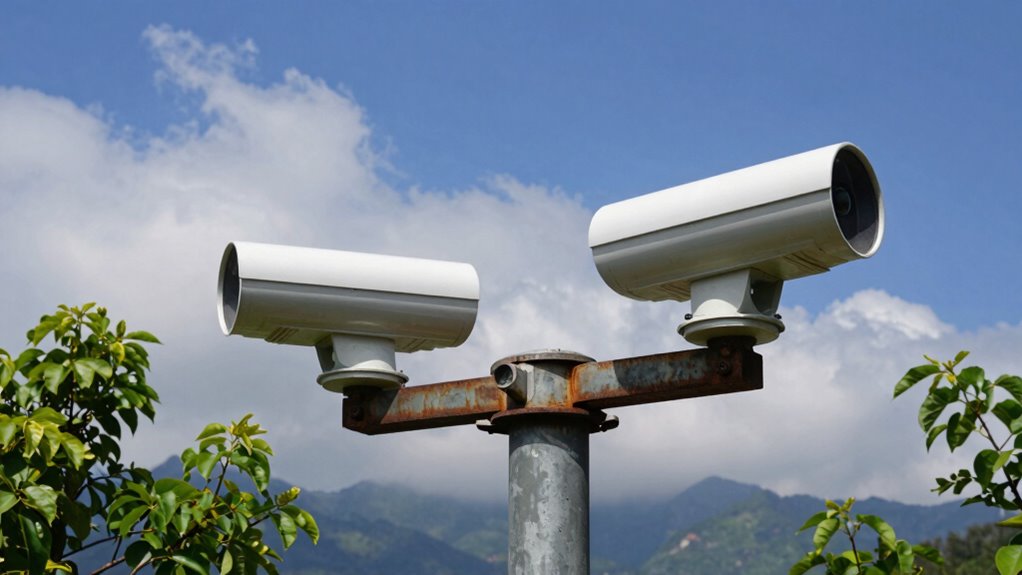
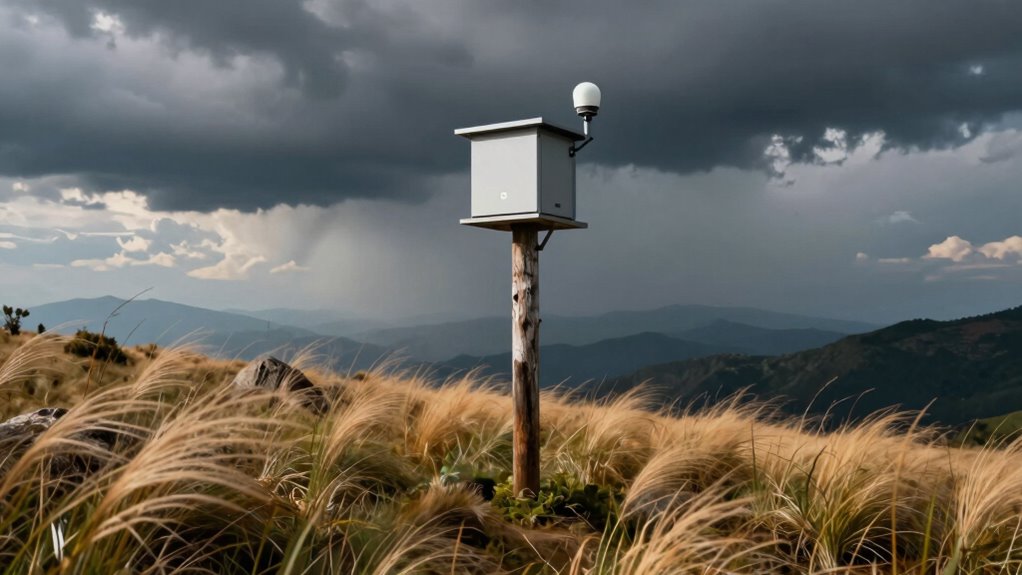
Mounting your weather station correctly is essential to guarantee accurate readings and reliable data collection. Proper installation ensures that your device can measure environmental conditions without interference, giving you trustworthy information. One of the first steps is to pay attention to sensor calibration, which is vital for maintaining accuracy over time. Before mounting, check that all sensors are properly calibrated according to the manufacturer’s instructions. Calibration helps eliminate errors caused by manufacturing variances or environmental changes, so your data remains precise. Don’t forget to regularly verify calibration, especially if you notice inconsistencies in readings. When mounting, ensure sensors are positioned according to regional climate conditions to optimize measurement accuracy. Following installation best practices is equally important. Position your weather station in a location that’s free from obstructions such as trees, buildings, or other structures that could block airflow or cast shadows. The ideal spot is usually an open, elevated area—think rooftops, poles, or mounts that are at least 1.5 to 2 meters above ground level. This height allows for better airflow and helps your device capture representative weather conditions. Avoid placing the station near heat sources, air conditioning units, or reflective surfaces, which can skew temperature and humidity readings. When mounting, make sure the device is secure and stable to prevent movement caused by wind or other forces. Use sturdy brackets or mounts that can withstand environmental elements. If you’re installing a solar-powered station, position the solar panel where it can receive maximum sunlight without shading from nearby objects. Proper orientation of sensors—especially for wind and solar radiation measurements—is key to capturing accurate data. For example, wind sensors should face prevailing wind directions and be clear of turbulence caused by nearby structures. Regular cleaning and re-calibration are necessary to maintain accuracy, especially when environmental factors like dirt, debris, or corrosion come into play. Maintaining sensor integrity through proper installation and maintenance helps ensure long-term measurement reliability. Additionally, monitoring sensor performance regularly can help identify potential issues before they impact your data quality. Ensuring your station is mounted in a stable location also minimizes the risk of accidental damage or dislodgement over time. Proper installation practices, including choosing the right mounting height and orientation, can significantly improve data accuracy. When installing, document the exact placement and orientation of sensors, so you can replicate or adjust them during maintenance. This consistency helps guarantee that your readings remain reliable and comparable over different periods.
Products Worth Considering

Jackery Explorer 2000 v2 Portable Power Station with Two 200W Solar Panels

Jackery Solar Generator 1000 V2 with 200W Solar Panel

Jackery Explorer 300 Portable Power Station, 292Wh
As an affiliate, we earn on qualifying purchases.
Frequently Asked Questions
How Often Should I Calibrate My Weather Station?
You should calibrate your weather station regularly to maintain sensor accuracy. Typically, check calibration every three to six months, especially if you notice inconsistent readings. Environmental factors like extreme weather or placement can affect accuracy, so more frequent calibration might be necessary. Keep an eye on sensor performance and follow the manufacturer’s guidelines to guarantee your station provides reliable data. Regular calibration keeps your weather data precise and trustworthy.
Can I Mount a Weather Station Indoors?
Yes, you can mount a weather station indoors. For accurate readings, place it in an indoor location with good airflow, away from direct sunlight, heating vents, or windows that could skew data. Guarantee pest protection by avoiding damp or cluttered areas. Indoor placement is convenient, but remember that indoor readings may differ from outdoor conditions. Regular calibration helps maintain accuracy regardless of where you mount it.
What Tools Are Needed for Mounting a Weather Station?
To mount a weather station, you’ll need basic tools like a drill, screwdriver, level, and possibly a wrench. Focus on proper sensor placement and mounting height—ideally, about 5-6 feet above ground for accurate readings. Make certain it’s secure and level to avoid skewed data. Check the manufacturer’s instructions for specific requirements, but these tools and considerations will help you set up your weather station effectively.
How Do I Protect My Weather Station From Pests?
To protect your weather station from pests, use pest-proof mounting techniques like sealing entry points and choosing sturdy, resistant materials. Implement wildlife deterrent strategies such as installing deterrent devices or barriers around the station. Keep the area clean and remove any nearby nesting sites or food sources. Regularly inspect and maintain your setup to guarantee pests don’t find ways inside. These steps help keep your weather station safe and functioning accurately.
Is It Necessary to Elevate the Station Above Ground Level?
Yes, elevating your weather station above ground level is necessary for ideal placement. Placing it higher prevents interference from ground heat, moisture, and debris, ensuring accurate readings. Keep it at a height of about five to six feet, away from obstructions like trees or buildings. This positioning minimizes false data and provides a clearer picture of the actual weather conditions in your area. Proper elevation is key for reliable, precise measurements.
Conclusion
Just like a lighthouse needs to be in the right spot to guide ships safely, your weather station’s accuracy depends on where you mount it. Pick a spot that’s open, elevated, and away from obstructions for the best readings. When you find that perfect location, you’ll enjoy weather data as reliably as a lighthouse shining through fog. Remember, a good mount makes all the difference—so choose wisely and keep your weather station happy and accurate.