
TL;DR

Get the latest gadgets delivered free with Prime
- Fast, free delivery on millions of items
- Prime Video, Amazon Music and more included
- Member-only deals all year
Google DeepMind presented Genie 4 on October 27, 2026, showing an AI model that generates interactive scenes as users move through them and issue text instructions. The company says it adds synchronized audio and more realistic physics, but access is limited to trusted testers and DeepMind reports that scenes can drift after a few minutes.
Google DeepMind demonstrated Genie 4 on October 27, describing it as a real-time “world model” that generates scenes users can move through and change with text instructions. The company says the model can also produce audio alongside the visuals, but it is not yet generally available, and DeepMind warns that objects and details can drift during longer interactions.
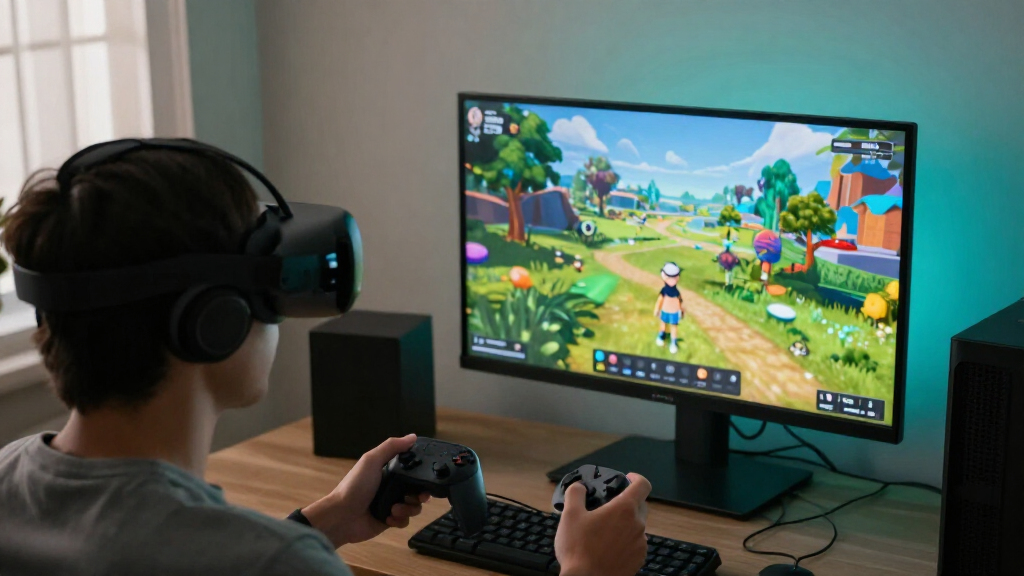
In the company’s demonstrations, a user enters a scene, moves with keyboard or mouse controls, and types instructions such as changing the weather or adding an object. Genie 4 generates what appears next rather than rendering a prebuilt game world from a stored 3D map. DeepMind says a Gemini model observes the scene, breaks goals into steps, and helps steer what the world generates.
DeepMind describes four main capabilities: live text direction, more realistic people and physics, audio generated with the visuals, and Gemini-assisted sequences of actions. The company says the model can simulate events such as collisions and aerodynamics. It calls Genie 4 its first real-time world model to generate audio natively, including environmental sounds, music, and character speech.
The examples are company-selected demonstrations, and DeepMind has not published benchmark numbers in the supplied announcement material. The company acknowledges that details and objects “can shift or drift over time” and says Genie 4 supports “a few minutes of continuous interaction.” TechCrunch and Bloomberg, as cited by heise, reported scenes lasting up to about two minutes; that specific duration does not appear in DeepMind’s own description.
Interactive AI · Research briefing · October 27, 2026
Can Genie 4 Build Worlds You Can Walk Into?
Google DeepMind says its latest world model generates interactive scenes as people move and give text instructions. Audio and more realistic physics are part of the pitch; short sessions and limited access define the current reality.
01 / What it does
A scene that responds as you explore
In DeepMind’s demonstrations, users enter a scene, move with keyboard or mouse controls, and type instructions such as changing the weather or adding an object. The model generates the next part of the experience rather than drawing from a conventional stored 3D map.
Live text changes
Users can steer the scene with instructions while interacting with it.
People & physics
DeepMind says it simulates events such as collisions and aerodynamics.
Audio with visuals
Claimed outputs include environmental sound, music, and character speech.
Gemini-assisted steps
A Gemini model observes the scene, breaks goals into steps, and helps steer generation.
02 / Interaction loop
From instruction to generated moment
The announced experience combines user control with model-generated continuity. The sequence below reflects DeepMind’s description of how people interact with Genie 4.
Enter
Start in a generated interactive scene.
Move
Explore using keyboard or mouse controls.
Direct
Type a change, such as weather or a new object.
Generate
The model predicts what happens next, with audio alongside visuals.
03 / The model family
From short clips to real-time worlds
DeepMind’s world models have progressed from simple 2D scenes toward interactive, real-time generation. The supplied announcement does not include comparative benchmark results for Genie 4.
Genie
Introduced in February. The research paper described an 11-billion-parameter model trained on unlabeled internet videos to generate simple 2D worlds.
Genie 2
Announced in December. Generated 3D worlds from a single image and maintained consistency for up to a minute; real-time use required reduced quality.
Genie 3
Introduced in August as DeepMind’s first real-time world model: 720p, 24 frames per second, with consistency for a few minutes.
Genie 4
Adds announced native audio and live text changes, alongside claims of more natural physics and people.
04 / What the evidence says
Promising demonstrations, open questions
The examples are selected by the company, and the announcement material supplied here includes no published benchmark numbers. Treat capability claims, tester feedback, and independent evidence as distinct.
| Topic | What DeepMind says | What remains unshown |
|---|---|---|
| Continuity | “A few minutes” of continuous interaction | Longer-session consistency and drift rates |
| Reported duration | Details can shift or drift over time | Media reports cited by heise say about two minutes; DeepMind gives no exact two-minute figure |
| Physics & audio | More realistic physics; native audio generation | Published quality benchmarks and comparisons |
| Robotics example | Apollo humanoid playing checkers in simulation | The Decoder reported that no physical robot took part |
| Waymo | DeepMind says the earlier Genie 3 is used in its driving simulator | No evidence here that Genie 4 is part of Waymo’s system |
05 / In the company’s words
Claims to keep in view
“A few minutes of continuous interaction”
Google DeepMind · Stated duration
“Can shift or drift over time”
Google DeepMind · Continuity limit
“Our first real-time world model to generate audio natively”
Google DeepMind · Audio claim
06 / Potential uses
Useful for exploration; not proof of production readiness
Possible applications
Prototype before building
- Testers told DeepMind they used Genie 4 for film previsualization and game prototypes. This is company-reported feedback.
- Generated settings may let teams explore interactions before building a conventional game environment.
- Simulated scenes may support robotics research by letting researchers test plans before physical trials.
- DeepMind says every video and audio output carries an invisible SynthID watermark.
Evidence still needed
Independent evaluation
- Performance measurements and comparisons with Genie 3.
- Longer interaction tests and scene-consistency rates.
- Examples from people outside company-selected demonstrations.
- Details on how reliably SynthID can be detected after editing or sharing.
07 / Access & outlook
Wider access is expected, with no date yet
DeepMind says Genie 4 is currently limited to trusted testers. The company expects to bring it soon to Google AI Ultra subscribers through Project Genie and to early Gemini API partners.
Trusted testers
Access is limited; no public release is described in the source material.
Project Genie
Google AI Ultra subscribers are expected to get access, but no firm date is given.
Gemini API
Early partners are expected to receive access. API pricing is not provided.
Wider usefulness
Use in finished games, film production, or physical robot training remains unestablished.
08 / Key questions
Genie 4, answered
What is Genie 4?
A world model that generates the next part of a scene as a user moves or gives instructions. DeepMind says it creates interactive environments rather than rendering from a conventional stored 3D map.
Can the public use it now?
No public release is described. Access is limited to trusted testers, with subscriber and early API partner access expected later. No date has been announced.
Does it generate sound?
DeepMind says it generates audio with visuals, including ambient sound, music, and character speech. The supplied material has no independent audio-quality benchmark.
How long can scenes stay consistent?
DeepMind says “a few minutes” and warns details can drift. Media coverage cited by heise reports about two minutes; that exact duration is not DeepMind’s wording.
Has it trained a real robot?
The Apollo checkers example was simulated; The Decoder reported no physical robot was involved. The source says Waymo uses Genie 3, not Genie 4, in its driving simulator.
What would clarify its value?
Outside access, longer-session tests, published comparisons, independent examples, and evidence about SynthID detection would help establish how well it performs.
A New Tool for Interactive Prototypes
If the demonstrations hold up in wider use, Genie 4 could let teams explore settings and interactions without first building a conventional game environment. DeepMind says testers have used the model for film previsualization and game prototypes. Those examples are tester feedback reported by the company, not independently established results or proof of production readiness.
The work also matters to robotics research, where simulated settings can help researchers test plans before involving physical machines. DeepMind showed a task in which a model broke an activity into steps and Genie 4 simulated an Apptronik Apollo humanoid playing checkers. As reported by The Decoder, no real robot took part in that demonstration. It shows a simulated workflow, not a robot completing the task in the physical world.
For viewers, generated scenes with matching sound may become harder to distinguish from recorded footage. DeepMind says every Genie 4 video and audio output carries an invisible SynthID watermark. The announcement does not establish how reliably that watermark can be detected after editing or sharing.
Products Worth Considering

Logitech MX Mechanical Wireless Illuminated Keyboard, Tactile Quiet, Graphite

Logitech MX Keys S Wireless Keyboard, Graphite

LG 34GX90SA-W 34-inch Ultragear WQHD OLED Curved Gaming Monitor
As an affiliate, we earn on qualifying purchases.
From Short Clips to Real-Time Worlds
Genie 4 follows a series of DeepMind world models. The first Genie, introduced in February 2024, generated simple 2D worlds; its research paper described an 11-billion-parameter model trained on unlabeled internet videos. Genie 2, announced in December 2024, generated 3D worlds from a single image and maintained consistency for up to a minute, though real-time operation required a reduced-quality version.
In August 2025, DeepMind introduced Genie 3, which it described as its first real-time world model, running at 720p and 24 frames per second and maintaining consistency for a few minutes. Genie 4’s announced additions include audio generation and live text changes, alongside claims of more natural physics and people. The available source material does not provide comparative benchmark results showing how much these capabilities improve over Genie 3.
A world model differs from a standard video generator, which makes a clip for later viewing, and from a conventional game engine, which draws scenes from a stored map and rules. Genie 4 instead predicts what comes next based on the scene so far and the user’s inputs. DeepMind says Waymo already uses the predecessor, Genie 3, in its driving simulator; that is a separate existing use and does not establish that Genie 4 is in Waymo’s system.
““a few minutes of continuous interaction””
— Google DeepMind
Access, Stability and Benchmarks
General availability has no announced date. DeepMind says access is currently limited to trusted testers and that Genie 4 is expected to come soon to Google AI Ultra subscribers through Project Genie and to early Gemini API partners. The source material gives no API price or firm launch schedule.
It is also unclear how well the model performs outside the selected clips, how often scenes lose consistency, and whether its physics and audio claims have been tested against published benchmarks. Reports of scenes lasting about two minutes come from media coverage cited in the source, while DeepMind’s own wording is “a few minutes.” The demonstrations do not settle how useful the model will be for finished games, film production, or physical robot training.
Wider Tester Access Ahead
The next stated step is access for Google AI Ultra subscribers through Project Genie and for early partners using the Gemini API. DeepMind has not given a date, detailed eligibility rules, or pricing for API access. Those details will help establish whether the system is moving beyond curated demonstrations into a tool that outside developers can assess.
Further evidence will depend on access to the model and independent evaluation. Useful disclosures would include performance measurements, longer interaction tests, examples from users outside the company’s chosen demos, and details on SynthID detection. Until then, Genie 4 is best understood as a limited-access research and prototyping system with capabilities described by its maker and known continuity limits.
Key Questions
What is Genie 4?
Genie 4 is a world model that generates the next part of a scene as a user moves or gives instructions. DeepMind says it creates interactive environments rather than drawing from a conventional stored 3D map.
Can the public use Genie 4 now?
No public release is described in the source material. DeepMind says access is limited to trusted testers, with access for Google AI Ultra subscribers and early Gemini API partners expected later. No date has been announced.
Does Genie 4 generate sound?
DeepMind says it generates audio alongside visuals, including ambient sound, music, and character speech. This is the company’s description of the model; the source material provides no independent benchmark for audio quality.
How long can a Genie 4 scene remain consistent?
DeepMind says Genie 4 supports “a few minutes” of continuous interaction and warns that details can drift. TechCrunch and Bloomberg, as cited by heise, reported scenes of up to about two minutes, but that specific figure is not in DeepMind’s own wording.
Has Genie 4 been used to train a real robot?
The described Apollo checkers demonstration was simulated; The Decoder reported that no physical robot was involved. The source says Waymo uses the earlier Genie 3 in its driving simulator, but does not say Genie 4 is used there.
Source: Thorsten Meyer AI