
TL;DR
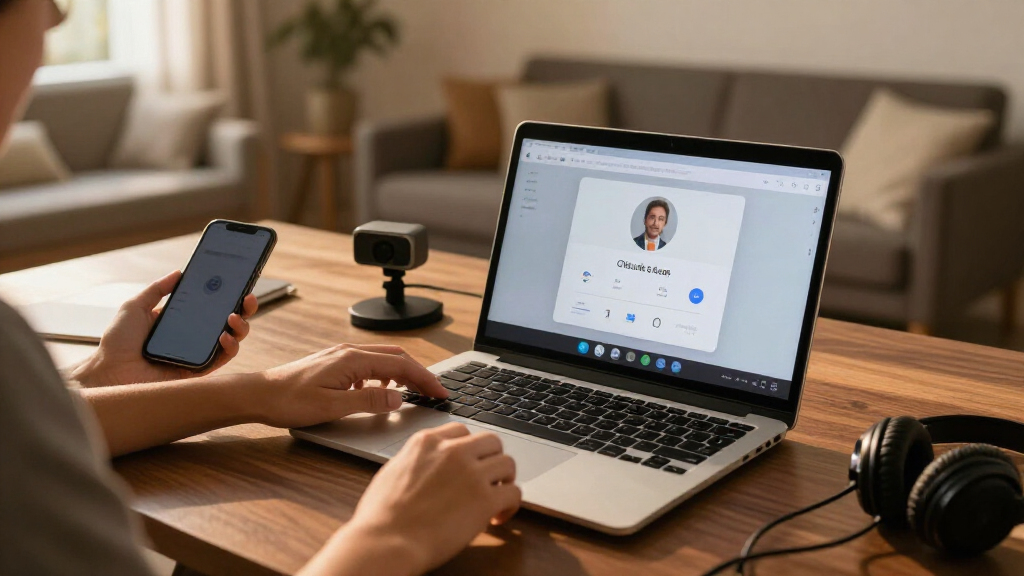
Anthropic’s Claude Meetings beta, announced November 12, adds Claude as a visible participant in Google Meet calls for Team and Enterprise customers. Before enabling it, organizations should settle who can use it, how participants will be told and asked for consent, whether guests may attend, and how meeting records will be handled. Anthropic has not published a retention period or post-February 10, 2027 pricing for meeting-created documents and whiteboards.
Anthropic launched Claude Meetings in beta on November 12, allowing Claude to join Google Meet calls as a visible participant, take notes, answer questions and create documents or other materials during the call. The feature is available on Team and Enterprise plans, but its defaults differ by plan, and Anthropic says the person adding Claude must make sure participants are comfortable being transcribed.

Get the latest gadgets delivered free with Prime
- Fast, free delivery on millions of items
- Prime Video, Amazon Music and more included
- Member-only deals all year
Anthropic says Claude Meetings saves a transcript, summary and screen descriptions, but not audio. Claude appears in the meeting and posts a notice in the call chat. It can respond to spoken or typed requests, with written answers visible to everyone in the Meet chat, and can create documents, whiteboards and slides attached to a meeting page. The meeting page also holds the live transcript and an organization-internal chat.
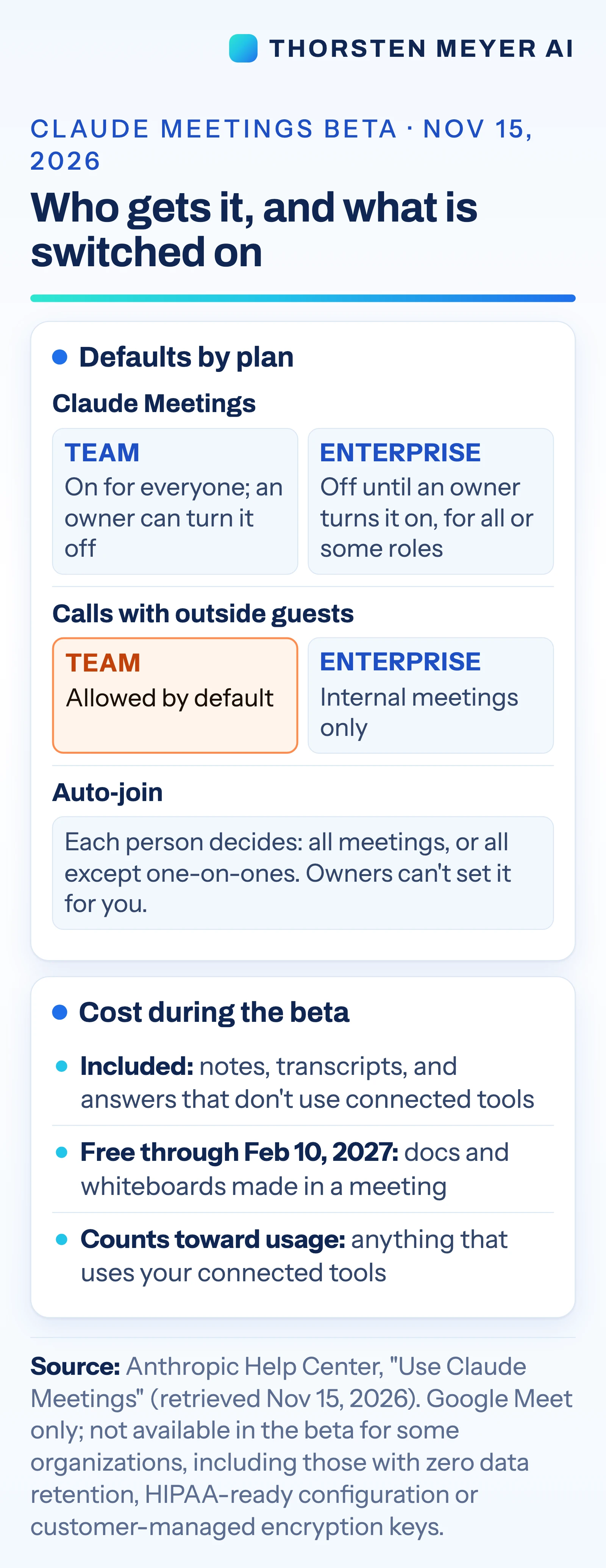
Team plans have the feature on by default, and calls with outside guests are allowed by default. On Enterprise plans it is off until an owner enables it, with use limited to internal meetings by default. An owner must first enable Google Calendar for the organization; individuals can connect calendars and choose to add Claude to a meeting or set a personal auto-join preference. Anthropic says owners cannot set auto-join for users.
Claude can use connected tools during a call, but Anthropic says it asks for each person’s permission the first time and that approval applies going forward. If a meeting includes an outside guest while guest access is disallowed, Claude leaves. If guest access is allowed, it takes notes but does not reply in chat. Anthropic says invitees receive a recap email after the meeting, while guests do not. A meeting can remain active for up to eight hours.
Consent and Records Need Decisions
The feature combines live transcription with access to connected work tools, so an organization’s decision affects both what is recorded and what Claude may do during a call. A visible participant and chat notice can alert people, but Anthropic leaves responsibility for making sure everyone is comfortable with transcription to the person who adds Claude. Teams may need a clear practice for notifying employees and guests and handling objections before the meeting starts.
Plan defaults also matter. With Team, the feature and outside-guest access are on by default; with Enterprise, an owner must enable it and meetings are internal by default. Organizations should check which plan and settings apply before relying on either behavior. The saved transcript and summary may also raise questions about who can access meeting pages and how long records remain available, topics for which the cited Anthropic materials do not specify a retention period.
Products Worth Considering

Bose TV Speaker Compact Soundbar with Bluetooth and HDMI-ARC, Black

DJI Mini 5 Pro Fly More Combo Plus with DJI RC 2

Amazon Kindle Paperwhite Signature Edition (2024), 32 GB, Metallic Black
As an affiliate, we earn on qualifying purchases.
How Claude Joins a Meet Call
Anthropic’s announcement and Help Center instructions describe a workflow in which someone selects a calendar meeting and adds Claude, or enables personal auto-join. Claude usually joins without asking; if it requests entry, the host can admit or decline it. A declined request does not prompt Claude to try again for that call unless someone adds it.
During the call, users can address Claude aloud or type in Meet chat. Anthropic’s example describes a team planning a customer event: Claude drafts a plan during the discussion, answers a question after requesting permission to consult connected information, and leaves notes and artifacts on the meeting page afterward. The company says other meeting platforms are expected, but has not given a release date. AI note-taking already exists in video calls; Anthropic’s described feature also creates working materials during the meeting and can use connected tools with permission.
““make sure everyone on your call is okay with being transcribed.””
— Anthropic Help Center, “Use Claude Meetings”
Retention and Future Pricing
Anthropic’s cited materials do not state how long meeting records are retained or provide a post-February 10, 2027 price for documents and whiteboards created in meetings. Anthropic says notes, transcripts and answers are included in Team and Enterprise plans, while meeting-created docs and whiteboards are free through that date. Use of connected tools counts toward usage.
The company has not announced when support beyond Google Meet will arrive. The beta is also unavailable to some organizations, including those using zero data retention, HIPAA-ready configuration or customer-managed encryption keys. The available source material does not detail a broader eligibility timeline or say whether the feature’s defaults may change during the beta.
Check Settings Before Calls
Before enabling Claude Meetings, administrators and meeting organizers can review the organization’s plan defaults, confirm whether external guests are permitted, and decide how participants will receive notice and indicate agreement to transcription. They can also review connected-tool permissions and identify who should have access to the meeting page and its records.
Anthropic’s next stated product development is support for other meeting platforms, described as “coming soon,” with no date provided. Customers will also need updated guidance from Anthropic on retention and pricing after February 10, 2027 to resolve those open questions.
Key Questions
What does Claude Meetings do?
Anthropic says Claude can join Google Meet as a visible participant, create a transcript and summary, answer questions in the meeting chat, and make documents, whiteboards or slides during the call.
Does Claude Meetings record audio?
Anthropic says it saves a transcript, summary and screen descriptions, “not audio.”
Is Claude Meetings on by default?
Anthropic says it is on by default for Team plans. For Enterprise plans, an owner must enable it; Enterprise meetings are limited to internal meetings by default.
What should organizers tell meeting participants?
Anthropic says the person adding Claude should make sure everyone on the call is okay with being transcribed. The feature posts a notice in the meeting chat, but the cited materials do not describe a separate consent process.
How much do meeting-created documents cost?
Anthropic says notes, transcripts and answers are included in Team and Enterprise plans. Documents and whiteboards made in meetings are free through February 10, 2027; pricing after that date has not been stated in the cited materials.
Source: Thorsten Meyer AI