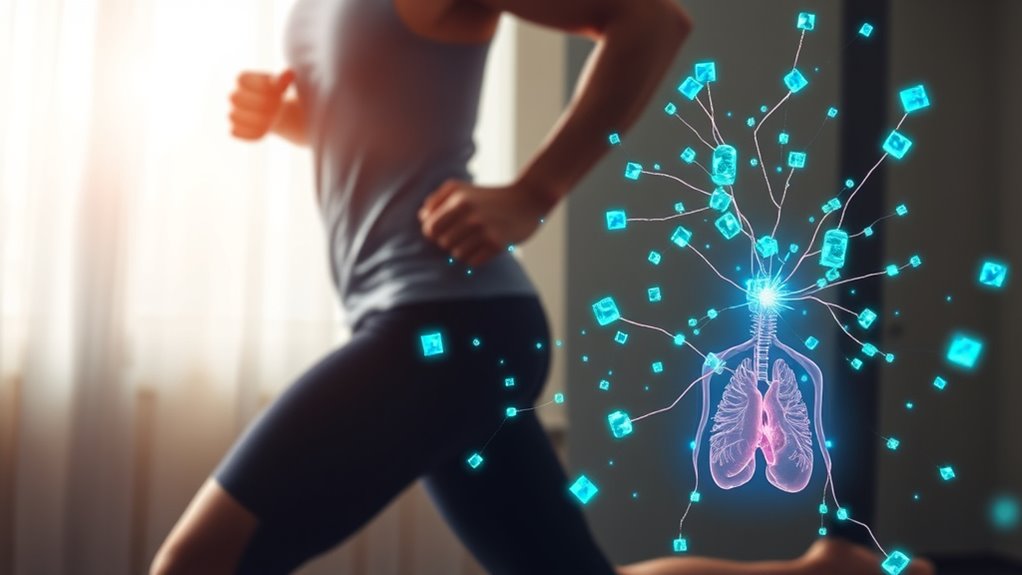

When you exercise, your muscles release molecular packages called cytokines and myokines that act as messengers, communicating with your organs. These signals help regulate metabolism, reduce inflammation, boost brain health, and support tissue repair. They encourage your body to adapt and recover, strengthening overall resilience. The more consistently you work out, the more these molecular conversations build, promoting long-term health. Keep exploring to understand how this incredible communication system works in detail.
Key Takeaways
- Exercise prompts muscles to release cytokines and myokines, which act as molecular messengers throughout the body.
- These molecular signals coordinate responses among organs, enhancing metabolism, inflammation reduction, and tissue repair.
- Hormones like adrenaline amplify molecular communication, preparing tissues for physical stress and adaptation.
- Molecular packages stimulate brain, liver, and adipose tissue, promoting neurogenesis, glucose regulation, and fat breakdown.
- This dynamic molecular dialogue supports overall health, resilience, and long-term performance improvements.

Exercise activates specific molecular packages within your body that are vital for improving health and boosting performance. When you move, your muscles don’t just contract; they send out signals in the form of molecules that travel through your bloodstream, reaching various organs and tissues. These molecular messages are like messengers, coordinating responses that enhance your overall well-being. This process isn’t random—it’s a finely tuned communication system that harnesses the power of biology to help your body adapt, recover, and grow stronger.
Exercise triggers molecular signals that enhance health, recovery, and strength through a finely tuned biological communication system.
As you engage in physical activity, your muscles release cytokines and myokines, which are specialized proteins that act as messengers. These molecules travel to your liver, brain, adipose tissue, and heart, influencing their functions. For example, some myokines promote the production of anti-inflammatory compounds, reducing chronic inflammation linked to many diseases. Others stimulate fat breakdown in adipose tissue, aiding in weight management and metabolic health. This molecular crosstalk is essential because it helps your body become more resilient, improving insulin sensitivity and decreasing the risk of metabolic disorders like diabetes.
Your organs are constantly listening for these molecular signals. When they receive them, they respond by adjusting their activities to support your physical demands. The brain, in particular, benefits from this communication. Exercise triggers the release of neurotrophic factors like BDNF (brain-derived neurotrophic factor), which promote the growth of new neurons and enhance cognitive function. This is why physical activity can boost your mood, sharpen your focus, and even protect against neurodegenerative diseases. Meanwhile, your heart responds to these molecular cues by strengthening its muscle fibers and improving blood circulation, leading to better endurance and cardiovascular health.
The liver also plays a key role, responding to exercise-induced signals by optimizing glucose metabolism and producing proteins that support immune function. These molecular messages fundamentally inform the liver to help maintain energy balance during and after your workout. Additionally, the release of hormones like adrenaline and noradrenaline during exercise further amplifies this network of communication, preparing your body to handle physical stress efficiently.
All these molecular packages work together, creating a dynamic communication system that sustains your health and performance. They coordinate across organs, ensuring your body adapts swiftly to physical stress, repairs tissues, and builds resilience over time. This intricate molecular dialogue is a demonstration of how exercise acts as a powerful catalyst—not just for immediate physical benefits but for long-term health improvements. By consistently engaging in physical activity, you activate and strengthen these molecular packages, unlocking your body’s full potential.
Frequently Asked Questions
How Quickly Do Molecular Packages Reach Different Organs After Exercise?
After exercise, molecular packages like hormones and signaling molecules can reach your organs within minutes. They travel through your bloodstream, so their arrival time depends on factors like blood flow and distance. Typically, you’ll notice effects in your muscles, liver, and heart within 5 to 15 minutes. The quicker your circulation, the faster these molecular messages reach your organs, helping your body adapt and recover efficiently.
Can These Molecular Signals Influence Mental Health or Cognition?
Like messages in a bottle crossing the sea, these molecular signals can influence your mental health and cognition. They communicate with your brain, releasing chemicals that boost mood, reduce anxiety, and enhance focus. When you exercise, you’re not just strengthening muscles—you’re also sending beneficial signals that can improve your mental well-being and sharpness. So, staying active helps your mind as much as your body, making you feel better overall.
Are There Differences in Molecular Responses Between Types of Exercise?
Yes, different types of exercise trigger distinct molecular responses. Aerobic activities like running increase endorphins and brain-derived neurotrophic factor (BDNF), boosting mood and cognition. Resistance training elevates growth factors that promote muscle growth and metabolic health. High-intensity interval training (HIIT) causes rapid changes in inflammatory markers and stress hormones. Your body adapts uniquely to each exercise type, influencing overall health and mental well-being through specific molecular pathways.
Do These Molecular Packages Have Long-Term Effects on Organ Health?
These molecular packages act like messengers, leaving a lasting imprint on your organs. They can promote long-term health by reducing inflammation, improving metabolic function, and strengthening tissues. When you exercise regularly, you’re planting seeds for a healthier future, as these molecular signals help repair and maintain organs over time. So, yes, consistent activity can be like a gentle tide that shapes your organ health for years to come.
How Do Individual Genetics Affect Molecular Communication During Exercise?
Your genetics influence how molecular communication occurs during exercise. They determine how efficiently your body produces, responds to, and clears signaling molecules, affecting recovery and adaptation. For example, some genes may enhance your ability to activate beneficial pathways, while others might slow down or alter communication, impacting overall performance and health benefits. Understanding your genetic makeup helps tailor workouts for ideal molecular responses and long-term organ health.
Conclusion
Next time you hit the gym, remember your body’s incredible response—exercise releases molecular packages that communicate with your organs. Did you know that just 30 minutes of moderate exercise can boost your brain’s health and immunity? These tiny molecular messengers play a huge role in keeping you healthy and energized. So, lace up your shoes and enjoy the powerful, natural benefits your body offers—your organs are listening, and they’re grateful!