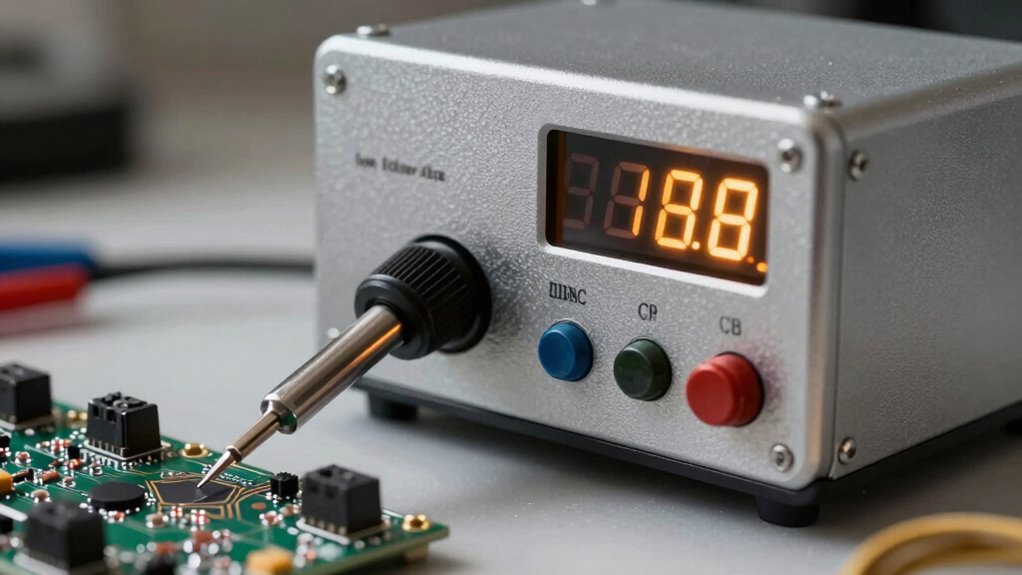

A common mistake beginners make is not calibrating their soldering station regularly, which causes inaccurate temperature control. This can lead to weak joints or damaged components. Many forget that maintaining proper temperature stability and preheating the tip helps achieve consistent results. Turning off the station when not in use also prolongs its lifespan. If you want to master these small but essential tricks for better soldering, there’s more to discover that can really improve your skills.
Key Takeaways
- Many beginners overlook the importance of regularly calibrating their soldering station for accurate temperature control.
- Relying solely on the station’s display without verifying actual tip temperature can lead to inconsistent solder joints.
- Preheating the soldering iron to the desired temperature before use ensures stable heat transfer.
- Avoid setting the temperature too high, which can cause damage or splattering, or too low, resulting in weak joints.
- Consistently cleaning and maintaining the tip helps maintain proper thermal contact and temperature stability.
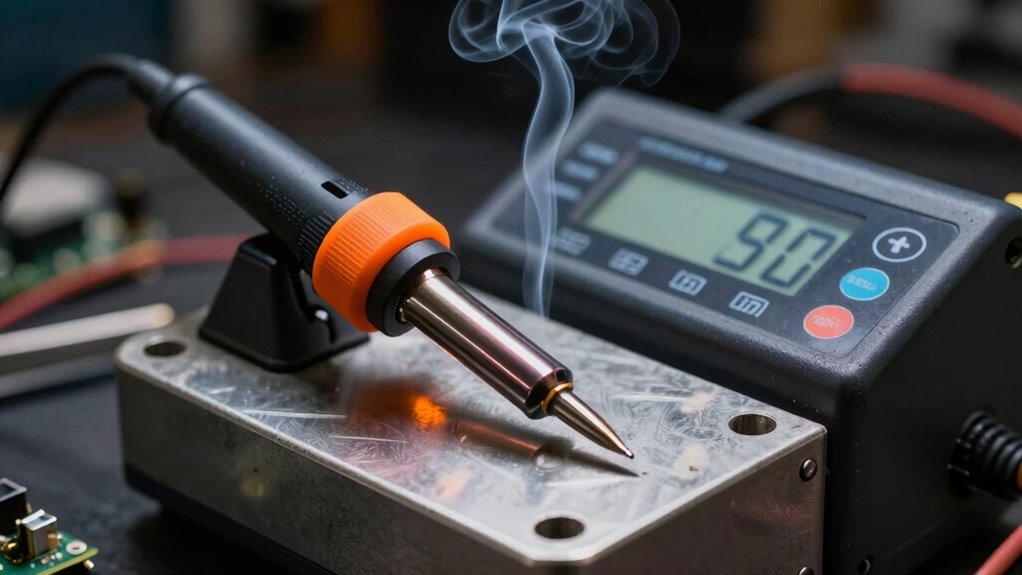
Have you ever struggled to find the perfect temperature setting for your soldering station? If so, you’re not alone. Many beginners overlook a crucial aspect of soldering that can make all the difference: understanding how to properly manage your equipment’s temperature. One common mistake is neglecting soldering safety, which often goes hand-in-hand with inconsistent or incorrect temperature settings. When your soldering iron is too hot, it can cause splattering or accidental burns; too cold, and your solder won’t flow properly, leading to weak joints. Ensuring the right temperature isn’t just about getting good results—it’s also about protecting yourself and your workspace from hazards.
A key trick that many beginners miss involves equipment calibration. Your soldering station isn’t always accurate out of the box, and over time, it can drift from the desired temperature. You might set it to 350°C, but it could actually be hotter or cooler. This discrepancy can cause frustration, especially when your solder joints aren’t as shiny or durable as they should be. To avoid this, it’s essential to periodically calibrate your soldering station. Use a reliable soldering iron tip thermometer or a temperature measuring device to check the actual temperature of your iron’s tip. If you find a mismatch, adjust your station accordingly. Proper calibration ensures that what you set is truly what you’re getting, saving you time and material waste. Regularly checking your equipment’s temperature accuracy can prevent drift and ensure consistent results. Additionally, understanding temperature stability helps maintain optimal soldering conditions and reduces the need for constant adjustments. Maintaining awareness of thermal equilibrium is also vital for consistent results, as it influences how quickly the soldering tip responds to adjustments and heat transfer. Moreover, consistent heat management is crucial for preventing thermal shock to sensitive components.
Many beginners also overlook the importance of consistent temperature management during soldering. Instead of constantly adjusting the station or guessing whether the tip has cooled down, you should preheat the iron to the desired temperature and keep it stable throughout the project. This consistency prevents temperature fluctuations, which can lead to poor solder joints or damage to sensitive components. Remember, soldering safety isn’t just about handling the tools properly; it’s also about understanding and maintaining the right conditions for your work. Additionally, being aware of piercing risks and proper handling techniques can help prevent accidents or injuries while working with high-temperature tools.
Maintain a stable temperature for better solder joints and safer, more consistent results.
In addition, adopting good habits—such as turning off your station when not in use and regularly cleaning the tip—helps maintain equipment calibration and prolongs its lifespan. When your equipment functions properly, it’s easier to focus on the task at hand without worrying about inconsistent results or safety hazards. The true “trick” many beginners miss is recognizing the importance of these small but vital practices. By paying attention to proper soldering safety and regularly calibrating your equipment, you’ll find soldering becomes more precise, safer, and far less frustrating.

FEITA 191AD Soldering Tip Thermometer with AUTO & MAX Hold Feature, C and F Digital Display Soldering Iron Temperature Tester
With ∅0.2mm 191-212 sensor can accurately and quickly measure solder tip temperature, the sensor is supplied with a…
As an affiliate, we earn on qualifying purchases.
As an affiliate, we earn on qualifying purchases.
Frequently Asked Questions
How Do I Calibrate My Soldering Station Temperature Accurately?
You can calibrate your soldering station accurately by using calibration tools like a digital thermometer or thermocouple. First, set your station to the desired temperature, then compare it with the readings from your calibration tool. Adjust the temperature control if your station allows, ensuring temperature stability for consistent results. Regular calibration helps maintain accuracy, making your soldering work more precise and reducing the risk of damage to sensitive components.
What Is the Ideal Temperature for Different Solder Types?
You might think there’s a one-size-fits-all temperature, but it varies with solder alloy compatibility. For leaded solder, 350°C (662°F) usually works well, while lead-free solder needs around 370°C (698°F). Always check your solder’s recommendations and use temperature memory settings to maintain consistency. Investigate the specific alloy you’re using, as proper temperature guarantees good flow and joint quality, preventing damage or weak connections.
Can Temperature Fluctuations Damage Electronic Components?
Yes, temperature fluctuations can damage electronic components. When your soldering station’s temperature isn’t stable, it can cause heat damage, reducing component longevity. Sudden changes in temperature may crack delicate parts or weaken solder joints, leading to failures. To avoid this, maintain a consistent soldering temperature, especially when working with sensitive components. Proper temperature control protects your electronic devices from unnecessary heat damage, ensuring they function reliably over time.
How Often Should I Replace the Soldering Tip?
Think of your soldering tip like a paintbrush—eventually, it wears out. You should replace it after about 20-30 uses or when you notice poor heat transfer, uneven solder joints, or oxidation. Regularly maintaining your tip guarantees better soldering techniques and improves component compatibility. If you ignore signs of wear, you risk damaging components or creating weak joints, so stay attentive and replace the tip when needed for ideal soldering results.
What Safety Precautions Are Essential When Adjusting Temperature?
When adjusting your soldering station’s temperature, always wear safety gear like gloves and eye protection to avoid burns or sparks. Keep an eye out for warning signs such as overheating or unusual smells, which indicate potential hazards. Make certain the station is unplugged before making adjustments, and handle the temperature control carefully. These precautions help prevent accidents and ensure safe, effective soldering sessions.
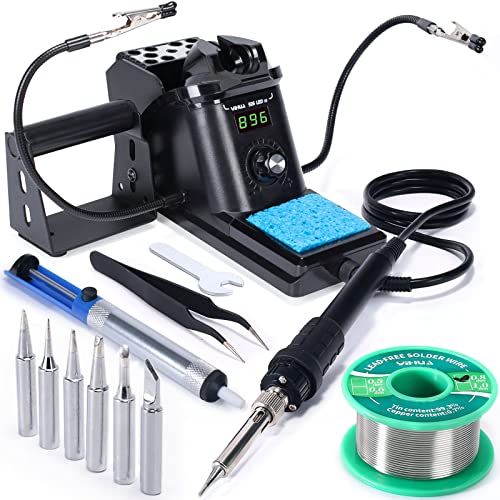
YIHUA 926 III 60W Digital Display Soldering Iron Station Kit w 2 Helping Hands, 6 Extra Iron Tips, Lead-Free Solder, Solder Sucker, S/S Tweezers, °C/ºF Conversion, Auto Sleep & Calibration Support
Fast Heating & Adjustable Temperature – This digital soldering station heats up fast and has a wider temperature…
As an affiliate, we earn on qualifying purchases.
As an affiliate, we earn on qualifying purchases.
Conclusion
So, next time you’re fussing over your soldering station’s temperature, remember this little trick. It’s so simple, even a beginner like you can’t miss it—unless you’re intentionally trying to turn your project into a molten mess. Don’t be that guy who overthinks everything while your components melt away. Keep this secret in your toolkit, and watch your soldering skills go from “oops” to “wow”—or at least, not “uh-oh.” Happy soldering!

Soldering Iron Kit, 80W 110V LCD Digital Solder Iron Pen with Ceramic Heater, Portable Welding Tools with 5pcs Tips, Stand, Solders Wire, Sponge, Paste, for Metal,Electric Repairs, DIY
🔧【Upgrade Technology】The soldering iron is upgraded 80W High Power, and can make the soldering iron quickly heat up…
As an affiliate, we earn on qualifying purchases.
As an affiliate, we earn on qualifying purchases.

Weller Soldering Brass Sponge Tip Cleaner with Silicone Holder | WLACCBSH-02
Reduce Residue on Tip: Weller's Soldering Brass Sponge effectively remove residual solder from your soldering tools without damaging…
As an affiliate, we earn on qualifying purchases.
As an affiliate, we earn on qualifying purchases.