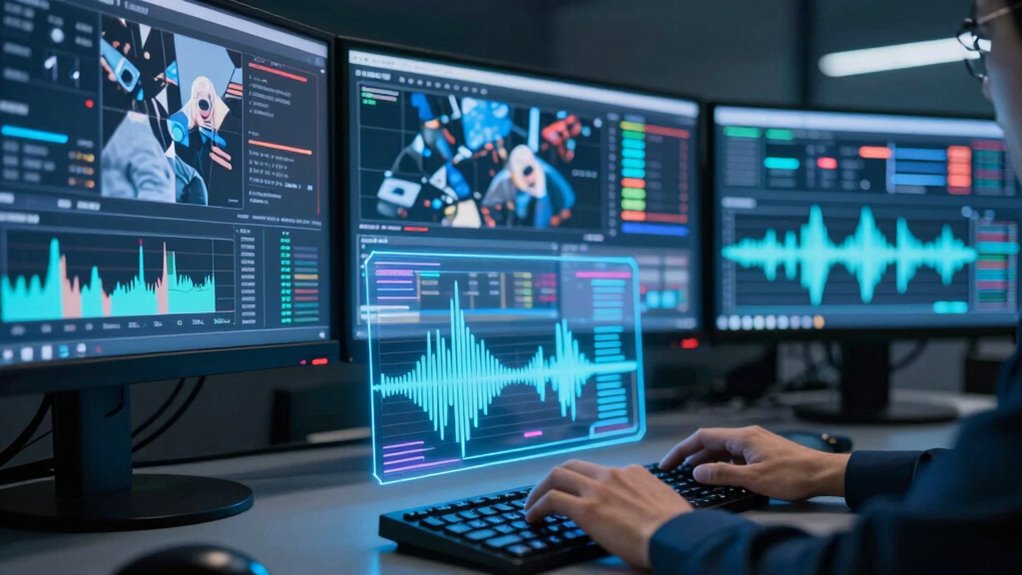

AI-generated audio and video threats have become part of election security because they make fake content look and sound real, making misinformation harder to spot. Malicious actors can quickly produce convincing deepfakes of politicians or officials, spreading false claims that can manipulate your opinions and erode trust in elections. This technology challenges traditional fact-checking and verification methods. If you keep exploring, you’ll discover how experts are working to counter these risks and protect democracy.
Key Takeaways
- AI enables rapid creation of realistic fake audio and video content, challenging traditional election security measures.
- Deepfakes can manipulate public perception by depicting false statements from officials or candidates.
- Detecting AI-generated misinformation is difficult due to highly convincing synthetic media.
- Fake media can undermine trust in election results and erode public confidence in democracy.
- Strengthening verification tools and digital literacy is essential to counter AI-driven election threats.
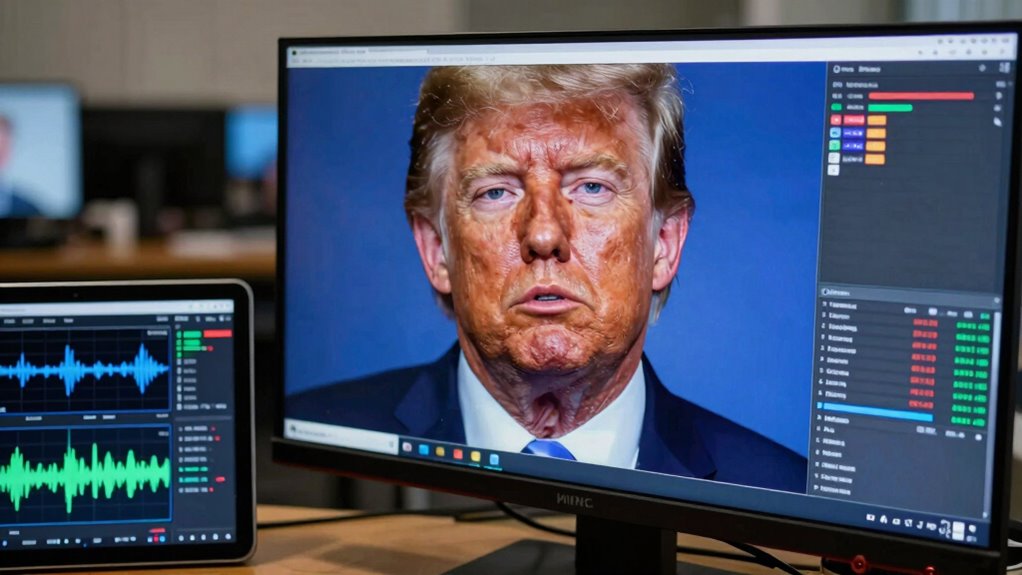
As artificial intelligence advances, election security faces new challenges from AI-generated audio and video threats that can manipulate public perception and undermine trust in the democratic process. These sophisticated tools make it easier than ever for malicious actors to produce realistic but fake content, which can be used to spread misinformation and sway voters’ opinions. These digital forgeries can be created rapidly and at scale, increasing the urgency for effective detection methods. When you consider how critical voter trust is to a healthy democracy, it’s clear that these AI-driven threats pose a serious risk. They can create convincing deepfake videos or audio clips of politicians, officials, or voters saying things they never said, leading to confusion, false accusations, and even chaos during election cycles.
Because AI can generate content that looks and sounds authentic, the spread of misinformation becomes much more dangerous. Unlike traditional false information, these AI-generated clips can be indistinguishable from real footage, making it harder for the public to tell what’s true and what’s fabricated. As you consume news and social media posts, you might unknowingly encounter a deepfake that appears to show a candidate making controversial remarks or an official endorsing a policy they oppose. This misinformation spread can influence your perception of candidates and issues, subtly shaping your voting decisions based on false premises.
AI-generated content is increasingly indistinguishable from real, making misinformation more convincing and harder to detect online.
The ability of AI to produce such realistic content means malicious actors can craft targeted disinformation campaigns that undermine confidence in election results. For example, a fabricated video could falsely depict election officials tampering with ballots or declare a candidate’s victory prematurely, sowing chaos and doubt. When you see these kinds of fake videos circulating, it becomes harder to trust the legitimacy of the election process, especially if the content goes viral before fact-checkers can debunk it. The erosion of voter trust isn’t just a technical problem; it’s a threat to democracy itself, as people may become disillusioned and disengaged if they believe their votes no longer count or if the election outcomes are manipulated. This underscores the importance of understanding side-channel attacks and their potential for covertly influencing perceptions or revealing sensitive information. Recognizing media manipulation techniques is crucial for developing effective countermeasures against these digital threats. Moreover, ongoing research into media authenticity verification is vital to restoring confidence in digital content.
Addressing these AI audio and video threats requires new strategies for verification and public awareness. You need tools that can detect deepfakes and authenticate media sources, along with improved digital literacy so you can critically evaluate the content you encounter online. Additionally, the development of detection algorithms that can analyze media for inconsistencies is crucial in staying ahead of increasingly sophisticated forgeries. The challenge is ensuring that the integrity of elections remains intact in this new digital landscape, where AI’s power to manipulate and deceive is growing rapidly. Protecting voter trust and curbing misinformation spread are essential steps to safeguard democratic processes in the age of AI.

Resemble AI User Guide: Mastering AI Voice Generation and Deepfake Detection: Your Complete Handbook for Secure, Scalable Voice AI Solutions
As an affiliate, we earn on qualifying purchases.
As an affiliate, we earn on qualifying purchases.
Frequently Asked Questions
How Do Ai-Generated Videos Influence Voter Trust?
AI-generated videos can critically influence your trust in elections by fueling voter skepticism. When you encounter realistic yet fake videos, it becomes harder to distinguish truth from manipulation, eroding confidence in legitimate sources. That’s why media literacy is essential—you need to learn how to identify deepfakes and misleading content. By improving your media literacy, you can better assess the authenticity of videos and protect your trust in the electoral process.
What Legal Measures Exist Against AI Deepfakes in Elections?
You’ll find that legal frameworks and policy initiatives are evolving to combat AI deepfakes in elections. Many countries are enacting laws that criminalize malicious creation and distribution of fake audio and video content. Some regions implement stricter penalties, while others promote technological solutions like detection tools. These measures aim to protect election integrity and voter trust, making it harder for false content to sway public opinion. It’s a continuous effort that adapts as technology advances.
Can AI Detect Manipulated Audio and Video Content Effectively?
AI can effectively detect manipulated audio and video content by analyzing synthetic authenticity and employing advanced audio verification techniques. You can utilize these tools to identify deepfakes and other malicious content, as they analyze inconsistencies in speech patterns, lip movements, and background details. While no system is perfect, ongoing advancements are making AI increasingly capable of safeguarding election integrity by identifying fake media before it influences voters.
How Quickly Can Ai-Generated Misinformation Spread Online?
Once misinformation hits the internet, it spreads like wildfire, often faster than you can blink. AI misinformation can go viral within hours, especially on social media platforms where sharing is second nature. This rapid spread challenges digital authenticity, making it harder to distinguish real from fake. Your best defense is staying vigilant, questioning what you see, and relying on trusted sources to verify content before sharing or believing it.
What Role Do Social Media Platforms Play in Combating AI Threats?
Social media platforms play a essential role in combating AI threats by embracing social responsibility and implementing platform regulation. You need to guarantee content moderation tools are effective against deepfakes and AI-generated misinformation. By actively monitoring and removing false content, platforms help protect electoral integrity. Your engagement in promoting responsible use and supporting policies that limit AI abuse is critical for safeguarding democracy from emerging AI audio and video threats.

GT Media V8 Finder2 Satellite Finder Digital FTA DVB-S/S2/S2X Signal Measuring Meter Detector Receiver LCD Screen for Adjusting Sat TV Dish with Backpack
【PLEASE NOTE!】The V8 Finder2 is NOT compatible with DIRECTV and ATSC. V8 Finder2 SAT finder is a DVB-S/S2…
As an affiliate, we earn on qualifying purchases.
As an affiliate, we earn on qualifying purchases.
Conclusion
As you navigate today’s election landscape, remember that AI audio and video threats are like wolves in sheep’s clothing—hard to spot but potentially devastating. Staying vigilant and informed is your best defense, much like a lighthouse guiding ships through stormy waters. By understanding these threats, you can better safeguard the integrity of the vote and ensure democracy remains strong. Don’t let fake content be the wolf that tears apart what we’ve fought so hard to build.

Cognitech VideoActive14 Forensic Video Software User Manual: English language
As an affiliate, we earn on qualifying purchases.
As an affiliate, we earn on qualifying purchases.

7-in-1 Hidden Camera Detectors, AI Chip Anti-Spy Camera Finder & 6 Modes
【Built-in AI-Driven Detection】This camera detector is equipped with an upgraded AI chip for improved anti-interference performance and faster…
As an affiliate, we earn on qualifying purchases.
As an affiliate, we earn on qualifying purchases.