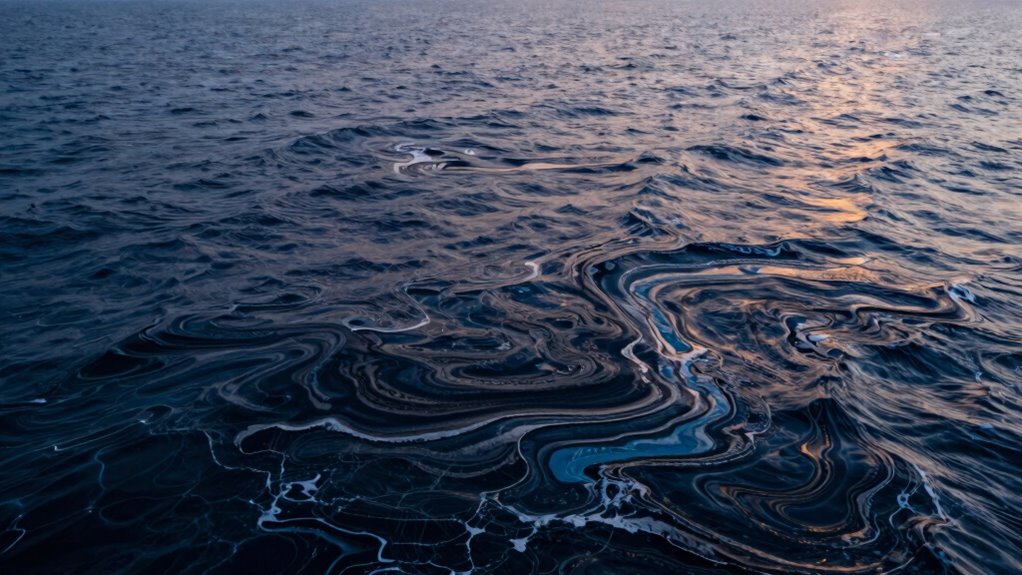

Ocean circulation is one of climate science’s biggest questions because it controls how heat, nutrients, and gases move around the planet, impacting weather patterns and climate stability. You might not realize how delicate this process is—small changes in temperature, salinity, or freshwater input can disrupt the entire system. Understanding these shifts helps predict future climate changes and prepares us for potential impacts. Keep exploring to discover how scientists are working to uncover these ocean mysteries.
Key Takeaways
- Ocean circulation significantly influences global climate by redistributing heat and maintaining temperature balance across regions.
- Disruptions from climate change, such as melting glaciers and freshwater input, threaten to alter deep water movement.
- The vastness and depth of oceans make data collection and modeling of circulation patterns complex and challenging.
- Changes in circulation patterns can lead to severe climate shifts, affecting weather, ecosystems, and human societies.
- Understanding ocean circulation is crucial for accurate climate predictions and developing effective climate change mitigation strategies.
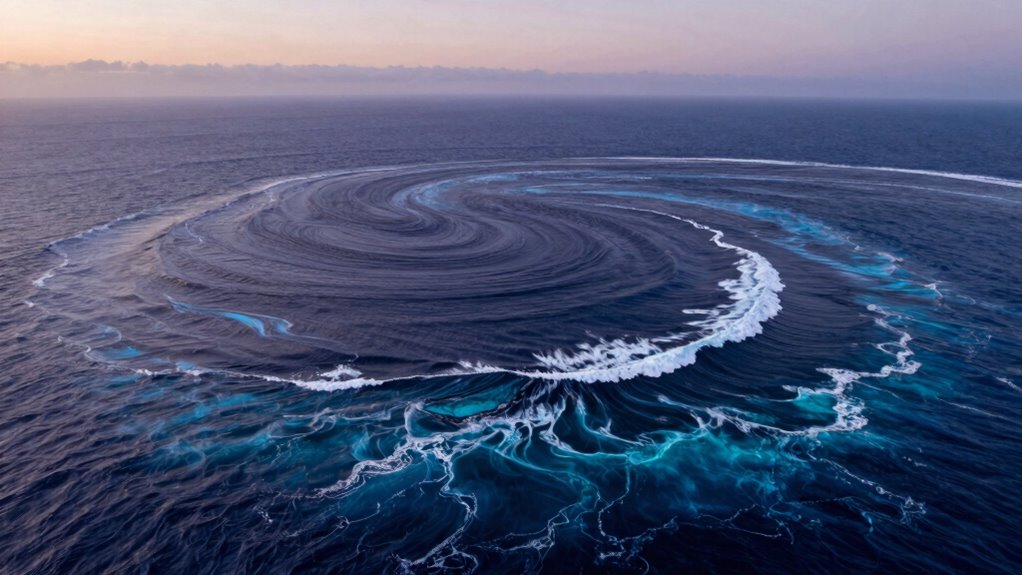
Have you ever wondered how the vast oceans influence our climate? It’s a fascinating question because the oceans are more than just a massive body of water—they’re a dynamic system that plays an essential role in regulating global weather patterns. Central to this process is the movement of deep water through a complex network known as thermohaline circulation. This deep-water circulation acts like a global conveyor belt, transporting heat, nutrients, and gases across the planet’s oceans. It’s a slow but powerful force, shaping climate patterns over centuries and even millennia.
The oceans are dynamic systems that regulate climate through slow, powerful thermohaline circulation, shaping weather patterns over centuries.
The thermohaline circulation is driven by differences in water density, which depend on temperature and salinity. When surface water becomes colder and saltier, it sinks into the deep ocean, creating a flow that moves vast amounts of water across the globe. This deep water then rises again in different regions, completing the cycle. This process is essential because it redistributes heat from the equator toward the poles, helping to moderate climate extremes. Without this deep water movement, parts of the world would experience much more extreme temperatures, and the delicate balance that sustains many ecosystems would be thrown off.
Understanding how this circulation works is one of climate science’s biggest questions because of its complexity and the critical role it plays in climate regulation. Changes in surface temperature, salinity, or freshwater input—caused by melting glaciers or shifts in rainfall—can disrupt the delicate balance of thermohaline circulation. Such disruptions could slow down or even halt parts of this deep water movement, leading to abrupt and potentially severe climate shifts. For instance, a slowdown could cause colder conditions in Europe or alter monsoon patterns in Asia and Africa. These potential consequences make scientists keenly interested in monitoring and understanding the factors that influence deep water movement.
However, studying the thermohaline circulation isn’t easy. The vastness of the oceans, the slow pace of deep water movement, and the difficulty of collecting data from the deep ocean all pose significant challenges. Researchers use advanced models and deep-sea sensors to grasp how these currents behave and how they might change with global warming. Gaining a clearer understanding of deep water circulation isn’t just about scientific curiosity; it’s essential for predicting future climate scenarios and preparing for potential shifts. Ultimately, the more we learn about this intricate system, the better equipped we’ll be to understand and mitigate the impacts of climate change on a global scale. Additionally, the complex interactions between temperature, salinity, and ocean currents make studying this system particularly challenging but vital for accurate climate modeling.
ocean thermohaline circulation model
As an affiliate, we earn on qualifying purchases.
As an affiliate, we earn on qualifying purchases.
Frequently Asked Questions
How Do Ocean Currents Affect Regional Weather Patterns?
Ocean currents influence your regional weather by transporting heat across vast areas, moderating temperatures, and impacting rainfall patterns. As you navigate marine routes, you might notice how currents affect aquatic ecosystems, shaping fish migrations and nutrient distribution. These movements also determine storm paths and intensity, which directly affect your climate. Understanding these processes helps scientists predict weather changes and manage marine navigation more effectively, ensuring safer, sustainable interactions with our planet’s oceans.
What Role Do Ocean Currents Play in Carbon Absorption?
Ocean currents help absorb carbon dioxide from the atmosphere, influencing climate regulation. As you learn, these currents facilitate nutrient distribution, supporting marine biodiversity, which in turn impacts carbon uptake processes. You should note that regions with strong circulation patterns often have higher biological activity, enhancing carbon absorption. Understanding these dynamics helps scientists predict how ocean circulation might mitigate or exacerbate climate change effects, emphasizing their crucial role in Earth’s climate system.
How Might Ocean Circulation Change With Climate Change?
You might see ocean circulation change with climate change due to shifts in deep water formation and salinity. As temperatures rise, polar ice melts and freshwater input increases, disrupting salinity levels. This can weaken or alter deep water currents that drive global circulation. These salinity shifts and temperature changes could slow or reroute current patterns, impacting climate regulation, marine ecosystems, and carbon absorption worldwide.
Can We Accurately Model Ocean Circulation Systems?
Think of modeling ocean circulation like mapping a vast, swirling gyre in the deep sea. While scientists have made significant progress, accurately capturing the complex gyre dynamics remains challenging. You can simulate surface currents well, but deep-sea flows and their interactions are harder to predict. Advances in technology and data collection improve models, yet uncertainties persist, making precise predictions a continuous effort that keeps climate science on its toes.
What Are the Long-Term Impacts of Disrupted Ocean Currents?
Disrupted ocean currents can severely impact marine biodiversity by altering habitats and migration patterns. You might notice shifts in fish populations and coral health. Additionally, oceanic heat distribution becomes uneven, leading to more intense storms and changing climate patterns. These long-term effects threaten ecosystems and human communities alike, emphasizing the importance of understanding and protecting ocean circulation to maintain the balance of life and climate stability worldwide.
deep sea sensors for ocean monitoring
As an affiliate, we earn on qualifying purchases.
As an affiliate, we earn on qualifying purchases.
Conclusion
Understanding ocean circulation is essential for predicting our climate’s future, yet many mysteries remain. You might wonder, why does it matter so much? Because these currents regulate weather patterns, influence sea levels, and even impact global ecosystems. Without fully grasping their complexities, can we truly prepare for the changes ahead? Keep asking questions and pushing for answers—solving this puzzle is key to safeguarding our planet’s climate for generations to come.
ocean current data collection tools
As an affiliate, we earn on qualifying purchases.
As an affiliate, we earn on qualifying purchases.
climate change ocean research equipment
As an affiliate, we earn on qualifying purchases.
As an affiliate, we earn on qualifying purchases.