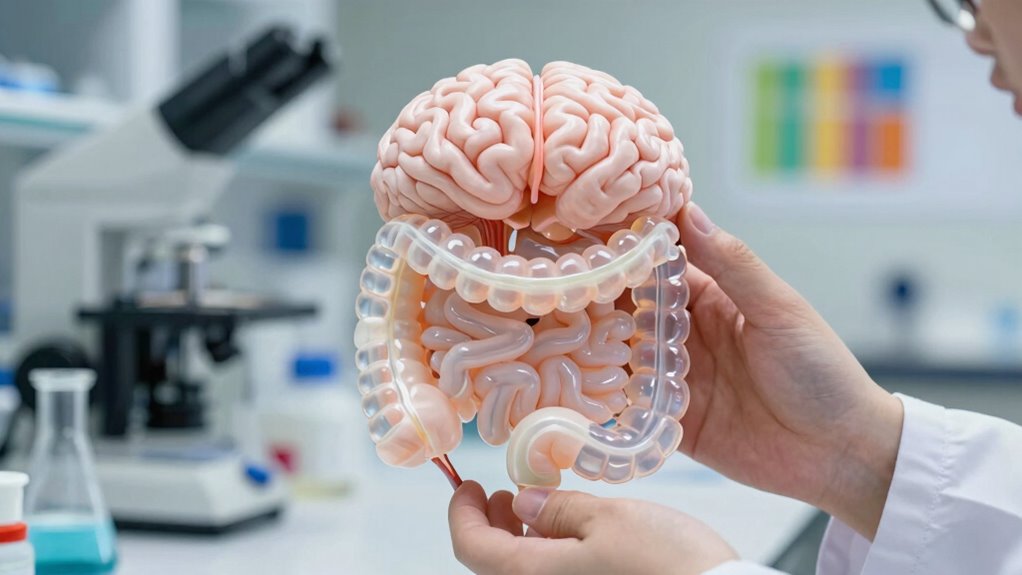
Researchers are captivated by the human gut-brain link because it deeply influences your mental health, mood, and behavior through complex interactions in the microbiome. They discover how gut bacteria communicate with your brain via nerves, hormones, and immune signals. This connection offers new ways to improve conditions like anxiety and depression by targeting gut health. If you keep exploring, you’ll uncover more about how your gut could hold the key to better mental well-being.
Key Takeaways
- The gut-brain axis reveals how gut health influences mental well-being and neurological functions.
- Microbiome manipulation offers potential new treatments for anxiety, depression, and cognitive disorders.
- Disruptions in gut bacteria due to stress can exacerbate mental health issues.
- Understanding the gut-brain connection supports holistic, personalized mental health therapies.
- Advances in this field could revolutionize mental health care with targeted, microbiome-based interventions.
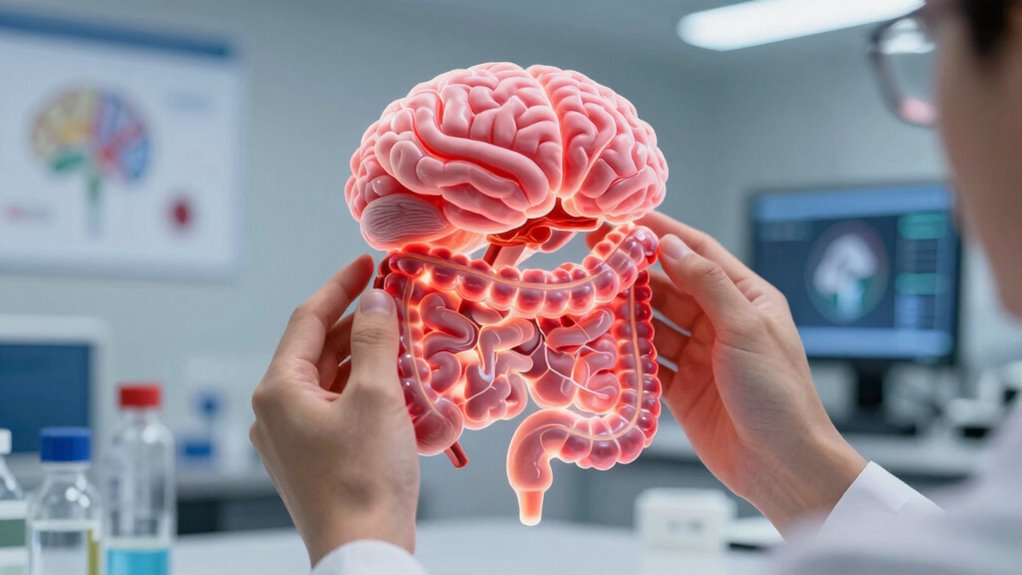
Recent studies have revealed a fascinating connection between your gut and brain, showing that the health of your digestive system can directly influence your mental well-being. This discovery has sparked intense interest among researchers, who now see the gut as a crucial player in your overall health. Central to this exploration is the microbiome, the trillions of microbes residing in your digestive tract. These tiny organisms communicate with your brain via the gut-brain axis, a complex network involving nerves, hormones, and immune signals. Understanding this relationship opens doors to innovative treatments aimed at improving mental health through gut-focused therapies.
Your gut health influences your mental well-being through the complex gut-brain axis and microbiome communication.
One of the most promising avenues is microbiome therapy, which involves altering or restoring your gut bacteria to promote better mental and physical health. By introducing beneficial microbes or encouraging the growth of specific bacterial strains, scientists hope to influence brain function positively. For example, certain probiotic strains have been linked to reduced anxiety and depression symptoms, illustrating how targeted microbiome interventions can modulate your mental state. Microbiome therapy isn’t just about improving digestion; it’s about harnessing the power of your gut bacteria to support emotional resilience and cognitive clarity.
Stress modulation is another key reason why the gut-brain link captivates researchers. Chronic stress can disrupt your gut microbiome, leading to inflammation, altered neurotransmitter production, and increased intestinal permeability—often called “leaky gut.” These changes can feed back into your brain, exacerbating feelings of anxiety and depression. Conversely, a healthy gut microbiome can help regulate your stress response, making you more resilient to daily pressures. Scientists are exploring how manipulating gut bacteria can serve as a natural way to modulate stress, potentially reducing reliance on pharmaceutical interventions.
Researchers are also intrigued by how the gut-brain connection can be harnessed to treat mental health conditions more holistically. Instead of focusing solely on medication, they’re investigating how microbiome therapy and stress modulation strategies can complement traditional therapies. This integrated approach might involve dietary interventions, probiotics, or even personalized microbiome-based treatments tailored to your unique microbial profile.
In essence, your gut isn’t just about digestion; it’s a dynamic, communicative hub that influences your mood, cognition, and overall mental health. As research advances, you can expect more personalized, gut-centered strategies to improve mental well-being—making the gut-brain link a frontier of modern medicine that promises to transform how we approach mental health care.
probiotic supplements for anxiety and depression
As an affiliate, we earn on qualifying purchases.
As an affiliate, we earn on qualifying purchases.
Frequently Asked Questions
How Quickly Can Gut Bacteria Influence Mood Changes?
Gut bacteria can influence your mood within hours due to microbial communication and neurotransmitter production. When your gut microbiota balance shifts, they send signals through the gut-brain axis, affecting your brain’s chemistry quickly. For instance, certain bacteria produce serotonin or GABA, which can alter your mood rapidly. This fast communication showcases how your gut microbes play a vital role in your emotional well-being, often impacting your feelings within a short time frame.
Are There Specific Diets That Enhance the Gut-Brain Connection?
Yes, certain diets can enhance your gut-brain connection. Incorporate probiotic-rich foods like yogurt, kefir, or sauerkraut to boost probiotic benefits, supporting healthy gut bacteria. Additionally, eating plenty of dietary fiber from fruits, vegetables, and whole grains nurtures your gut microbiome, which can improve mood and cognitive function. By focusing on these foods, you actively support a balanced gut-brain axis, promoting overall mental and physical well-being.
Can Gut Health Impact Mental Health Disorders?
Think of your gut as a bustling city, where microbiome diversity and neurotransmitter production shape your mental health. If this city faces chaos—like poor gut health—your mood and anxiety can suffer. Studies show imbalances in gut bacteria are linked to depression and anxiety disorders. When your microbiome thrives, it supports healthy neurotransmitter levels, potentially easing mental health issues. So, caring for your gut can truly impact your mental well-being.
What Are the Potential Risks of Manipulating Gut Microbiota?
Manipulating your gut microbiota can pose risks like disrupting microbial diversity, which might impair immune modulation. If you alter your microbiome too aggressively, it could lead to infections, inflammation, or digestive issues. Additionally, changes might negatively affect your immune system’s ability to respond properly. It’s essential to approach microbiota interventions cautiously and consult healthcare professionals to avoid unintended consequences that could impact your overall health.
How Do Genetics Affect the Gut-Brain Relationship?
You should know that genetics play a significant role in the gut-brain relationship, with studies revealing that about 40% of microbiome composition is inherited. Your genetic predispositions influence which microbes thrive in your gut, affecting mood, behavior, and mental health. Microbiome inheritance means your genes help shape your gut environment from birth, impacting your overall well-being and how your brain responds to various stimuli.
As an affiliate, we earn on qualifying purchases.
Conclusion
As you explore the fascinating world of the gut-brain connection, it’s clear why researchers are so captivated. Uncovering this delicate dance could gently guide us toward better mental health, sharper focus, and overall well-being. By understanding the subtle whispers between your gut and mind, you’re opening the door to a future where nurturing one might effortlessly enhance the other. It’s a journey worth exploring, promising whispers of hope and hidden treasures along the way.
As an affiliate, we earn on qualifying purchases.
stress relief probiotic capsules
As an affiliate, we earn on qualifying purchases.
As an affiliate, we earn on qualifying purchases.