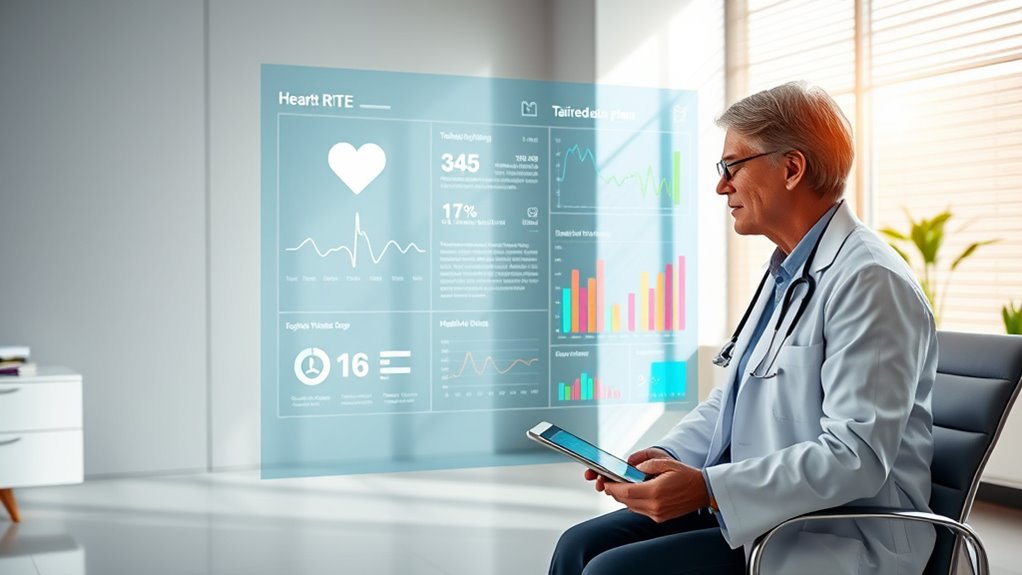

Hyper-personalized healthcare uses your real-time data from wearables, genetic tests, and mobile apps to create tailored treatments and prevention plans just for you. It moves beyond generic approaches, offering insights into your unique biology and lifestyle. This proactive method helps detect issues early and supports healthier choices. By actively involving you in your care, it empowers better decisions and quick responses. If you want to discover how this personalized approach can transform your health journey, keep exploring.
Key Takeaways
- Utilizes wearable devices and mobile apps for continuous health monitoring and personalized data collection.
- Enables tailored treatment plans that adapt based on real-time data and individual health profiles.
- Empowers patients through insights and real-time communication, promoting active engagement in care decisions.
- Leverages AI and machine learning to predict health risks and recommend preventive interventions.
- Reduces hospital visits and enhances well-being by focusing on proactive, data-driven healthcare management.

Advancements in technology are transforming healthcare from a one-size-fits-all approach to hyper-personalized services tailored to each individual’s unique biology and lifestyle. Instead of relying solely on broad treatment protocols, you’re now at the center of a data-driven revolution that considers your genetic makeup, habits, environment, and even real-time health metrics. This shift means your care isn’t generic; it’s specifically designed to optimize your health outcomes and improve your quality of life. Wearable devices, mobile health apps, and remote monitoring tools continuously gather data on your vital signs, activity levels, sleep patterns, and more. This constant flow of information provides your healthcare providers with a detailed picture of your health, allowing for more accurate diagnoses and tailored interventions.
With this wealth of data, your medical team can develop personalized treatment plans that adapt over time as your circumstances change. For example, if a wearable detects irregular heart rhythms, your doctor can promptly adjust medications or recommend lifestyle modifications, often before symptoms become severe. This proactive approach minimizes risks and enhances prevention. Data analytics also enable the identification of patterns and risk factors unique to you, supporting early detection of potential issues. Additionally, your genetic information can reveal predispositions to certain conditions, guiding preventive measures and personalized therapies that work best given your individual biology. Incorporating personalized medicine approaches ensures that treatments are more effective and aligned with your unique health profile.
Engagement becomes more meaningful when you understand how your actions impact your health. Data-driven insights empower you to make informed decisions about your lifestyle, diet, exercise, and medications. For instance, if your activity tracker shows that you’re not reaching your daily movement goals, you might be motivated to adjust your routine. Your healthcare providers can communicate with you through secure apps, providing timely advice, reminders, and support tailored to your specific needs. This ongoing interaction fosters a partnership where you’re actively involved in your health management, rather than passively receiving treatment.
Furthermore, the integration of artificial intelligence and machine learning enhances the personalization process. These technologies analyze massive datasets to predict health risks and suggest personalized interventions, often in real-time. They enable your healthcare team to respond swiftly to subtle changes in your health status, often before symptoms appear. As a result, your care becomes more preventive and less reactive, reducing hospital visits and improving overall well-being. The combination of advanced data collection, analysis, and continuous engagement ensures that your healthcare experiences are more precise, proactive, and personalized—ultimately empowering you to take control of your health like never before.
Frequently Asked Questions
How Does Data Privacy Impact Personalized Healthcare Delivery?
Data privacy profoundly impacts personalized healthcare delivery by ensuring your sensitive information remains secure and confidential. When your data is protected, you’re more likely to trust healthcare providers and share accurate information, which leads to better treatment plans. Conversely, concerns about data breaches can cause hesitation and reduce engagement. Maintaining strict privacy standards encourages transparency, boosts confidence, and enables providers to deliver truly tailored care without risking your personal information.
What Technologies Enable Real-Time Patient Data Analysis?
Imagine you’re using a futuristic smartwatch, much like a Star Trek tricorder, to monitor your health. Technologies like IoT sensors, wearable devices, and advanced AI algorithms enable real-time patient data analysis. These tools collect and interpret data instantly, allowing healthcare providers to make quick decisions. Cloud computing also plays a vital role, ensuring seamless data storage and access. Together, they create a dynamic, responsive healthcare experience tailored to your unique needs.
How Is Patient Consent Managed in Personalized Health Services?
You manage patient consent in personalized health services by using clear, transparent communication about data use, ensuring patients understand what they’re agreeing to. You obtain explicit consent through digital forms or secure platforms, allowing patients to review and authorize their data sharing. You also provide options for patients to modify or withdraw consent easily. Regularly updating consent preferences and maintaining compliance with privacy regulations keeps the process trustworthy and respectful of patient autonomy.
What Are the Cost Implications of Hyper-Personalized Healthcare?
You’ll find that hyper-personalized healthcare can increase costs initially due to advanced technology, data analysis, and specialized staff. However, it can also reduce long-term expenses by preventing complications and optimizing treatments. While upfront investments might be high, the improved outcomes and efficiency can lead to savings over time. You’ll need to weigh these initial costs against the potential for better health results and overall cost-effectiveness.
How Can Underserved Populations Access Personalized Healthcare Solutions?
Imagine a bridge spanning gaps in healthcare access—you can cross it by advocating for expanded telehealth services and mobile clinics tailored to underserved communities. You can push for government funding, partner with local organizations, and support policies that lower costs and improve infrastructure. By doing so, you open doors for everyone to step into personalized care, turning the promise of tailored healthcare into a reality for those who need it most.
Conclusion
So, congratulations—you’re now officially the star of your very own health drama, personalized just for you! Thanks to data-driven magic, your doctor knows your quirks better than your best friend (and maybe even your pet). Soon, you’ll get tailored treatments faster than you can say “hyper-personalized.” Who knew healthcare could be so glamorous? Just sit back, relax, and enjoy the show—your very own hyper-tailored health saga, brought to you by the wonders of data!