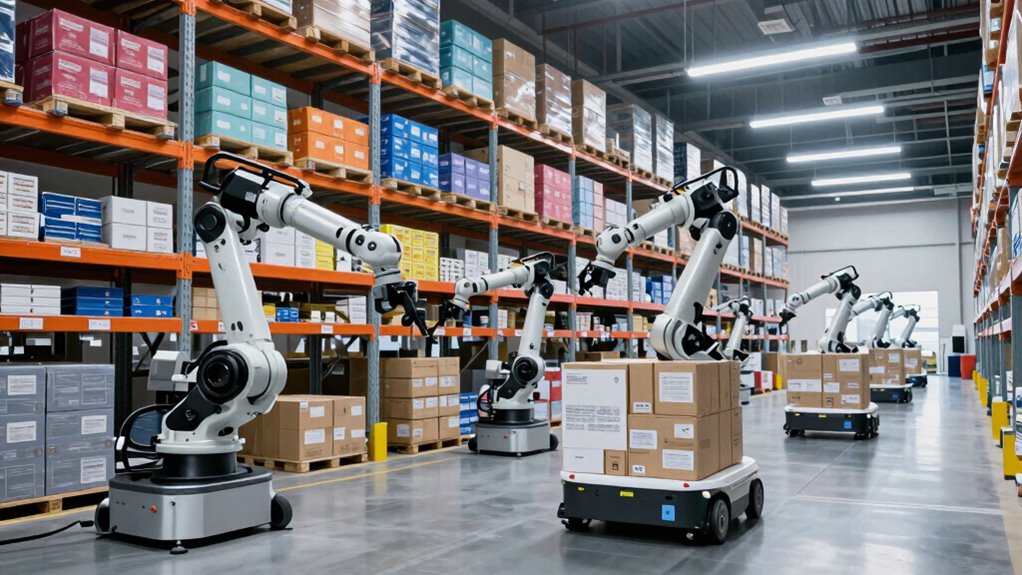

Warehouse robotics are revolutionizing fulfillment speed by enabling automated navigation, inventory management, and streamlined workflows. You can expect robots to move seamlessly around obstacles, update stock data in real time, and work alongside conveyor systems to quickly pick, transport, and deliver items. These advanced systems reduce manual effort, minimize errors, and increase efficiency, helping you meet rising order demands faster. Keep exploring how these innovations continue to transform the speed and reliability of warehouse operations.
Key Takeaways
- Autonomous navigation allows robots to move swiftly and efficiently around obstacles, reducing transit times within warehouses.
- Robotic inventory management enables rapid item retrieval and real-time stock updates, speeding up order fulfillment.
- Integrated automated workflows streamline picking, transporting, and sorting processes, minimizing delays and bottlenecks.
- Adaptive robots quickly reconfigure routes and layouts, ensuring continuous operations despite changing warehouse conditions.
- Real-time data synchronization and system integration enhance responsiveness, enabling faster decision-making and higher throughput.
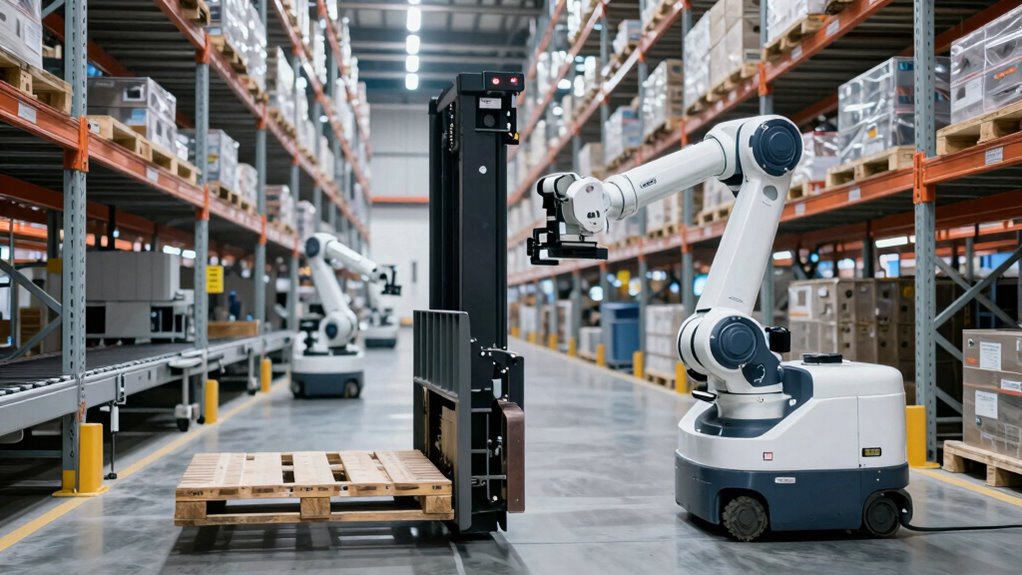
In today’s fast-paced e-commerce landscape, warehouse robotics are transforming how quickly orders are fulfilled. They streamline operations, reduce errors, and increase efficiency, making it possible to meet rising customer expectations for rapid delivery. One of the key innovations behind this transformation is autonomous navigation. Robots equipped with advanced sensors and AI-powered mapping systems navigate warehouse floors without human intervention. This technology allows robots to move seamlessly around obstacles, optimize routes, and work continuously, even in complex environments. As a result, order picking and transportation become faster and more reliable, minimizing delays caused by human fatigue or errors.
You’ll notice that robotic inventory management plays a crucial role in boosting fulfillment speed. These robots are designed to handle inventory with precision, constantly updating stock levels and locating items swiftly. Using robotic inventory systems, warehouses can maintain real-time data on product locations, which speeds up order assembly. Instead of manually searching through aisles, robots can retrieve specific items immediately, ensuring quick turnaround times. This automation not only accelerates fulfillment but also reduces stock discrepancies and improves overall inventory accuracy.
The integration of autonomous navigation with robotic inventory systems creates a highly synchronized workflow. Robots can move freely while maintaining awareness of their surroundings, thanks to embedded sensors and AI algorithms. This means they can work in harmony with other automated systems, such as conveyor belts and sorting stations, to create a cohesive fulfillment line. When an order comes in, robots quickly pick, transport, and deliver items to packing stations, all without human assistance. This continuous, automated process minimizes downtime and maximizes throughput, allowing warehouses to handle higher volumes with less labor. Additionally, integrating different robotic systems can optimize overall operational efficiency and adaptability. Incorporating real-time data updates further enhances the responsiveness of robotic systems, ensuring they adapt promptly to dynamic warehouse conditions. These advancements also contribute to enhanced safety protocols, making warehouse environments safer for human workers.
Furthermore, autonomous navigation enhances safety and flexibility. Robots can adapt to changing warehouse layouts or unexpected obstacles, maintaining speed without compromising safety standards. You won’t have to worry about bottlenecks or slowdowns, as robots can reroute and recalibrate their paths instantly. Incorporating sensors and AI algorithms further optimizes their ability to navigate complex environments efficiently. This integration of autonomous navigation and robotic systems enables warehouses to reconfigure layouts easily or expand operations without significant disruptions, further boosting fulfillment speed.

SMART LOGISTICS AND SUPPLY CHAIN AUTOMATION: Warehouse robotics tracking systems and operational analytics
As an affiliate, we earn on qualifying purchases.
As an affiliate, we earn on qualifying purchases.
Frequently Asked Questions
How Do Robotics Impact Warehouse Employee Safety?
Robotics improve warehouse employee safety by enabling better human-robot collaboration, which reduces manual handling and risky tasks. You benefit from safety protocol implementation that minimizes accidents and injuries. Robots handle heavy or repetitive work, letting you focus on safer, more skilled tasks. This collaboration creates a safer environment, decreasing hazards and ensuring compliance with safety standards, ultimately protecting you and enhancing overall warehouse safety.
What Is the Initial Investment Cost for Warehouse Robotics?
You’ll find that the initial investment cost for warehouse robotics varies widely, often ranging from tens of thousands to millions, depending on scale and complexity. To navigate this, compare costs carefully and explore funding strategies like leasing, grants, or phased deployment. This approach helps you visualize a future where automation accelerates your fulfillment process, making the investment worthwhile as your warehouse transforms into a high-speed, efficient operation.
How Adaptable Are Robots to Different Warehouse Layouts?
Robots have remarkable layout flexibility, allowing you to adapt them easily to various warehouse configurations. Their automation adaptability means you can reprogram or reconfigure them as your space evolves, without major overhaul costs. This flexibility helps optimize your workflow, enhances efficiency, and future-proofs your investment. You can confidently incorporate robotics into different warehouse layouts, knowing they’ll seamlessly adjust to your changing needs, boosting overall productivity.
What Maintenance Is Required for Warehouse Robotics Systems?
You need to perform regular maintenance on your warehouse robotics systems, including system calibration to guarantee accuracy and efficiency. Predictive maintenance plays a vital role by analyzing data to anticipate issues before they cause downtime, saving you time and money. Keep software updated and check mechanical parts periodically. This proactive approach helps maintain peak performance, minimizes unexpected breakdowns, and extends the lifespan of your robotic systems.
How Do Robots Affect Overall Warehouse Operational Costs?
Robots greatly reduce overall warehouse operational costs by enhancing inventory accuracy and energy efficiency. They streamline processes, minimize errors, and lower labor expenses. With precise inventory tracking, you avoid costly mistakes, while energy-efficient robots cut utility bills and environmental impact. By automating repetitive tasks, you save time and resources, making your warehouse more productive and cost-effective. This leads to faster fulfillment and improved profitability in your operations.

Autonomous Mobility Assistant Robot, Companion Mobility Robot, Intelligent Guiding AI Assistant with Obstacle Sensors, Voice Commands, Auto Return Docking, Senior Support & Daily Travel Aid
Customizable Options – Our AI robots are available in different models and support customization. The price listed is…
As an affiliate, we earn on qualifying purchases.
As an affiliate, we earn on qualifying purchases.
Conclusion
As you embrace warehouse robotics, you’re opening the floodgates to a new era of fulfillment speed. These machines are the engines driving your supply chain, transforming chaos into a well-orchestrated symphony. Like a swift river carving its path, robotics streamline operations, ensuring products reach customers faster than ever. With each innovation, you’re not just keeping pace—you’re setting the current, shaping the future of fulfillment with relentless momentum and precision.

Warehouse Management and Inventory Control System
As an affiliate, we earn on qualifying purchases.
As an affiliate, we earn on qualifying purchases.
automated fulfillment conveyor system
As an affiliate, we earn on qualifying purchases.
As an affiliate, we earn on qualifying purchases.