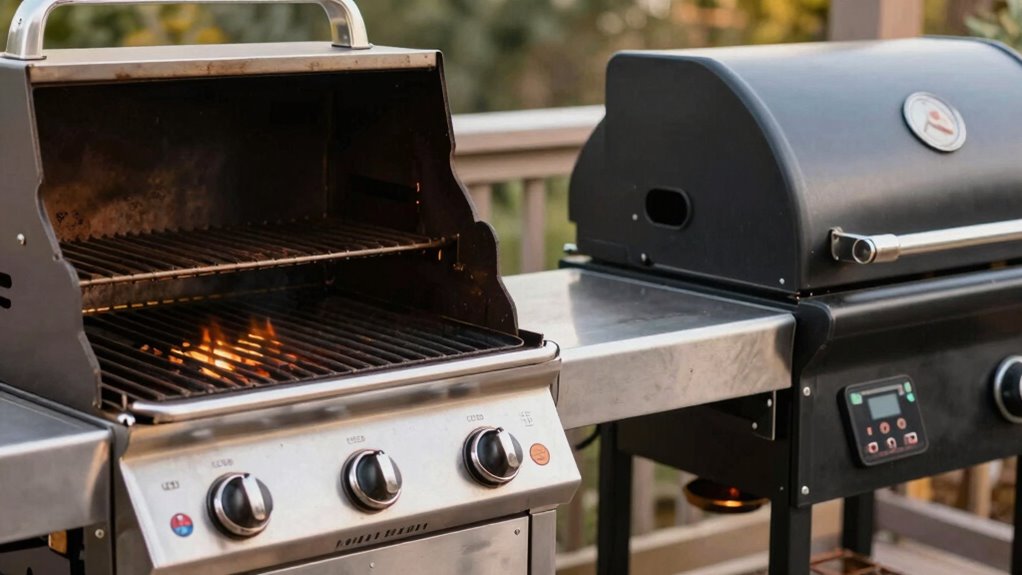

If you prioritize convenience and quick start-up, gas grills are perfect—they heat fast, are easy to use, and require minimal maintenance. But if you’re after richer smoky flavors and more cooking versatility, pellet grills excel by infusing your food with wood smoked taste and allowing for grilling, smoking, or baking. To discover how to balance ease with flavor and find the best fit for your outdoor cooking style, continue exploring the differences.

Get the latest gadgets delivered free with Prime
- Fast, free delivery on millions of items
- Prime Video, Amazon Music and more included
- Member-only deals all year
Key Takeaways
- Gas grills offer quick startup and precise temperature control for convenience and consistent cooking.
- Pellet grills provide smoky flavors and versatility for smoking, baking, and roasting.
- Gas grills require minimal maintenance, while pellet grills need filling, cleaning, and pellet quality management.
- Gas grills produce cleaner taste, with added flavor options via smoker boxes; pellet grills naturally infuse smoky richness.
- Choose gas for speed and ease, or pellet for flavor complexity and diverse cooking styles.
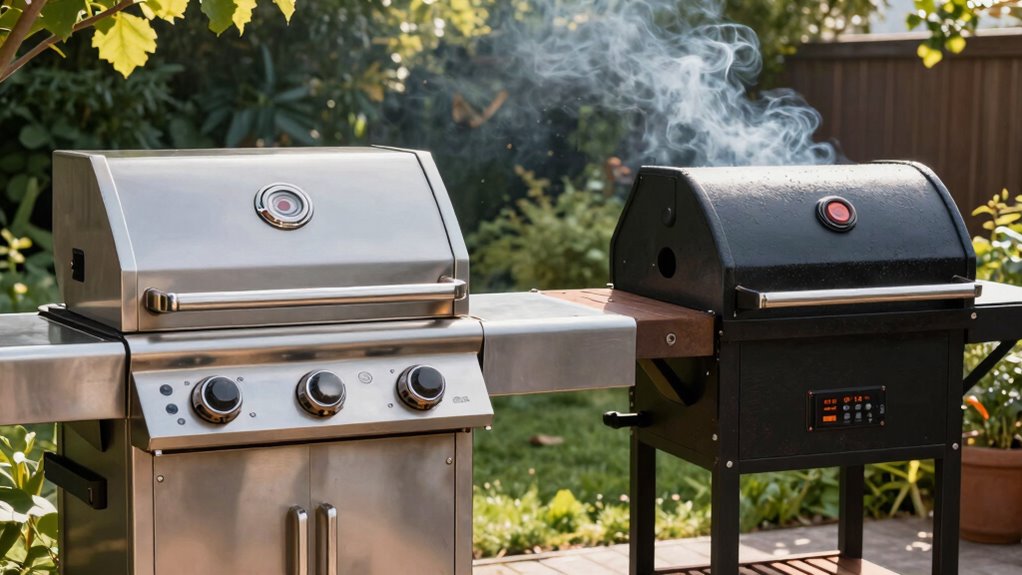
Are gas grills or pellet grills better suited for your outdoor cooking needs? That depends on what you prioritize most—convenience, flavor, or versatility. Gas grills are known for their quick startup and straightforward operation. You turn a knob, and within minutes, you’re ready to cook. This makes grill maintenance relatively simple because you don’t have to worry about managing pellets or cleaning complex parts. Plus, with gas, temperature control is precise, allowing you to sear steaks or cook delicate foods evenly and consistently. If you’re someone who hosts frequent barbecues or enjoys spontaneous cookouts, a gas grill offers the ease and speed you need.
Gas grills offer quick, easy start-up and precise temperature control for convenient outdoor cooking.
On the other hand, pellet grills provide a different experience with their exceptional cooking versatility. They use wood pellets that come in various flavors—hickory, apple, mesquite—to infuse your food with smoky richness. This makes pellet grills ideal if you want to explore different types of smoked meats, roasts, or even baked goods. The ability to switch seamlessly from grilling to smoking, roasting, or even baking adds a level of flexibility that gas grills can’t match. However, this versatility comes with a bit more grill maintenance since pellet grills require you to fill the hopper, clean out ash, and occasionally check pellet quality to prevent jam-ups or inconsistent heat. Additionally, pellet quality can impact the overall cooking experience and flavor. Proper maintenance practices are essential to keep your pellet grill functioning optimally and prolong its lifespan.
When it comes to flavor, pellet grills often win because of their smoky profile, which enhances meats and vegetables alike. Gas grills, while convenient, usually produce a cleaner, less smoky taste. That doesn’t mean they lack flavor—adding a smoker box or wood chips can help, but it’s not as integrated as a pellet grill’s design. If you value a rich, smoky flavor and enjoy experimenting with different cooking styles, pellet grills make it easy to expand your culinary repertoire.
Ultimately, your choice hinges on what matters most to you. If you want quick, fuss-free grilling and easy maintenance, a gas grill might be your best bet. But if you’re after flavorful, smoky dishes and cooking versatility, a pellet grill is worth the extra effort. Whichever you pick, understanding the differences will help you make a decision that fits your outdoor cooking style and keeps your backyard flavorful and fun.
best gas grills for outdoor cooking
As an affiliate, we earn on qualifying purchases.
As an affiliate, we earn on qualifying purchases.
Frequently Asked Questions
Which Grill Type Is More Environmentally Friendly?
You’ll find pellet grills tend to be more eco-friendly because they use sustainable wood pellets made from recycled materials, reducing your carbon footprint. Gas grills often rely on propane or natural gas, which produce more emissions. When choosing, look for grills made with eco-friendly materials and energy-efficient features. By selecting a pellet grill, you contribute less to environmental pollution, making it a better option for eco-conscious grilling.
How Do Maintenance Costs Compare Over Time?
Over time, maintenance costs for gas grills tend to be lower because they require less frequent cleaning and simpler parts, making them more fuel-efficient in the long run. Pellet grills, however, often need more upkeep due to their complex mechanisms and pellet delivery systems, which can increase long-term expenses. If you prioritize lower maintenance costs and fuel efficiency, gas grills might be the better choice for you.
Can Pellet Grills Be Used for Outdoor Baking?
Yes, pellet grills can be used for outdoor baking, including pizza and bread. In fact, around 60% of pellet grill owners enjoy baking outdoors, thanks to their consistent heat and smoky flavor. With the right accessories, you can create crusty outdoor pizza or fresh bread, just like in a traditional oven. Pellet grills provide versatile cooking options, making them a great choice for outdoor baking enthusiasts.
Are Gas Grills Safer to Operate?
Gas grills are generally safer to operate because they include safety features like automatic shut-off valves and flame tamers that reduce risk. Your user experience improves with these features, giving you peace of mind while grilling. Always follow the manufacturer’s safety instructions, keep the grill well-maintained, and operate it in a well-ventilated area to guarantee maximum safety during use.
Which Grill Heats up Faster?
Imagine turning a dial, and within minutes, your grill roars to life, ready to cook. Gas grills heat up faster than pellet grills, offering immediate temperature consistency thanks to quick fuel ignition. You’ll notice gas grills are more fuel-efficient for rapid heating, making them perfect for last-minute meals. As you light it, the flame ignites swiftly, providing a hot, even surface, unlike the slower warm-up of pellet grills.
As an affiliate, we earn on qualifying purchases.
Conclusion
So, here’s the irony: whether you choose the quick, convenient gas grill or the slow, smoky pellet grill, you’re still chasing that perfect flavor. Both promise ease or authenticity, but rarely deliver both at once. In the end, maybe it’s not about the grill itself but the effort you’re willing to put in. So go ahead—pick your poison and embrace the delicious mess, because that’s what grilling’s really all about.
As an affiliate, we earn on qualifying purchases.
wood pellet grill for smoking and baking
As an affiliate, we earn on qualifying purchases.
As an affiliate, we earn on qualifying purchases.
Fall Picks
fall essentials
As an affiliate, we earn on qualifying purchases.