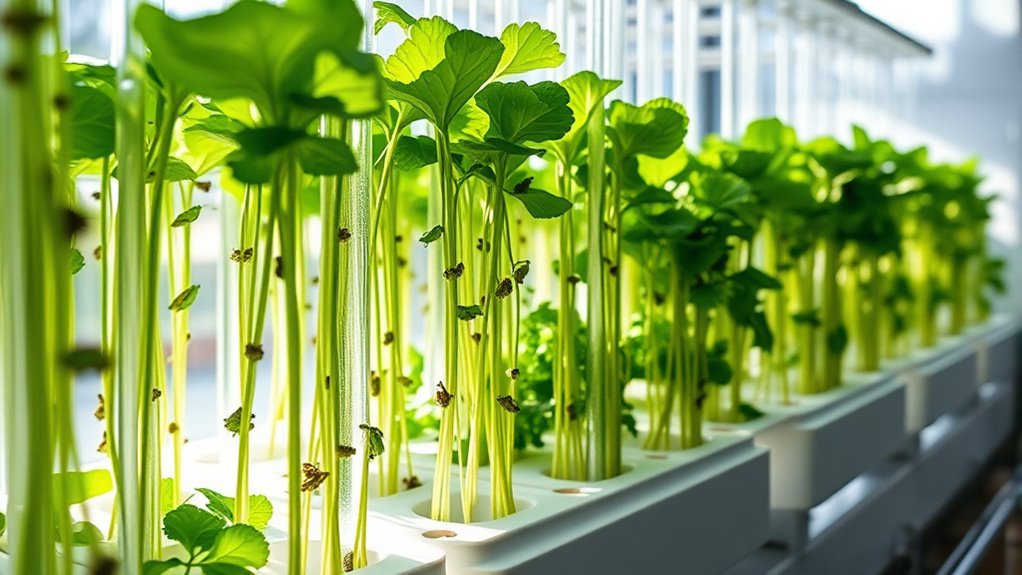

Hydroponic gardening at home lets you grow plants indoors without soil, making it ideal for year-round cultivation. It’s faster than traditional gardening, using nutrient-rich water and supporting space-efficient setups. You control light, temperature, and nutrients, reducing pests and mess. With proper monitoring, you can enjoy fresh vegetables and herbs anytime. If you want to learn how to set up and maintain your own hydroponic system, plenty of tips and tricks await you.
Key Takeaways
- Hydroponic gardening allows you to grow plants indoors without soil using nutrient-rich water solutions.
- Setting up involves choosing a system, filling it with nutrients, and supporting roots with suitable growing media.
- Regularly monitor and adjust water pH, nutrient levels, and environmental conditions for optimal plant health.
- Controlled environments reduce pests and soil-borne diseases, ensuring cleaner and easier plant care.
- Hydroponic systems enable faster growth and year-round cultivation of fresh vegetables and herbs at home.
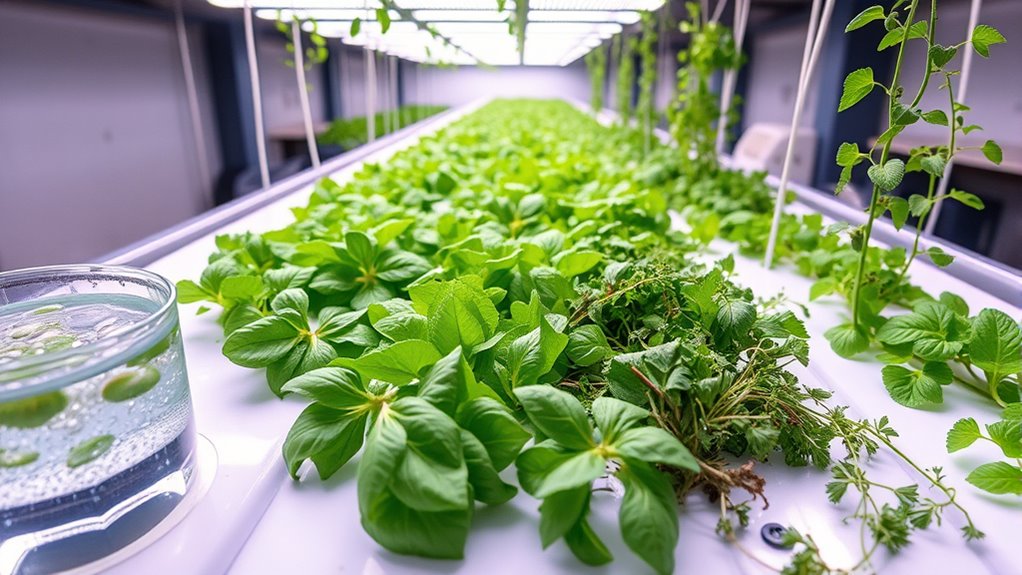
Hydroponic gardening allows you to grow plants indoors without soil, making it an efficient and space-saving way to enjoy fresh vegetables and herbs year-round. Instead of dealing with traditional gardening’s mess and soil-borne pests, you can set up a clean, controlled environment right in your home. All you need is a suitable system, some nutrient solutions, and a little bit of patience to start harvesting your own greens and produce in a matter of weeks.
Grow fresh herbs and vegetables indoors with hydroponics—clean, efficient, and perfect for year-round gardening.
One of the biggest advantages of hydroponics is how quickly plants grow compared to traditional soil gardening. Without soil, plants access nutrients directly through water, which accelerates their development. You’ll notice faster germination, healthier roots, and bigger yields in less time. Plus, because hydroponic systems use water more efficiently, you’ll conserve resources while still producing abundant crops. This makes it an eco-friendly choice, especially if you’re concerned about sustainability or living in areas with limited outdoor space.
Getting started is straightforward. You’ll choose a system that fits your space, such as a simple tray or a more elaborate setup with grow lights and pumps. Once you’ve set up your container, fill it with a nutrient-rich water solution formulated specifically for hydroponics. Then, plant your seeds or seedlings in a growing medium like coconut coir, rockwool, or clay pellets that support the roots without soil. Regularly monitor the water levels and nutrient concentration to keep your plants healthy, and ensure they get plenty of light—whether natural sunlight or grow lights—so they can photosynthesize effectively.
Maintaining a hydroponic garden is mostly about consistency. You’ll need to check pH levels and nutrient concentrations weekly, adjusting as necessary to keep everything balanced. Unlike traditional gardening, you don’t have to worry about weeds or pests invading your plants, which simplifies overall care. If you notice any issues like yellowing leaves or slow growth, it’s often a sign that adjustments are needed in your nutrient mix or watering schedule.
Growing indoors also means you can control environmental factors such as temperature and humidity, creating ideal conditions for your plants to thrive. This control reduces stress on your plants and minimizes disease risks. Additionally, since you’re growing your own produce, you can enjoy fresher, tastier vegetables and herbs that are free from pesticides and chemicals used in commercial farming.
In short, hydroponic gardening offers a practical, efficient, and rewarding way to cultivate fresh food at home. With minimal space and effort, you get to enjoy the satisfaction of gardening and the convenience of having healthy, homegrown produce whenever you want.
Top picks for "hydroponic garden home"
Open Amazon search results for this keyword.
As an affiliate, we earn on qualifying purchases.
Frequently Asked Questions
What Are the Initial Costs of Setting up a Hydroponic System?
You can start a hydroponic system for around $50 to $200, depending on the setup you choose. Basic kits with essential equipment like a grow tray, reservoir, and pump are affordable, while more advanced systems with automation and LED lighting cost more. You might also need nutrients and pH testers, which add to your initial investment. Overall, it’s a manageable expense to grow plants without soil at home.
How Do I Troubleshoot Common Nutrient Deficiencies?
Think of your plants as silent storytellers, revealing their needs through their leaves. If you notice yellowing or stunted growth, check your nutrient levels and pH balance. Adjust nutrient concentrations with a balanced fertilizer, and guarantee your system circulates the solution properly. Regularly monitor your system, and respond promptly to deficiencies. This attentive care nurtures your plants’ health, turning their silent stories into vibrant, thriving tales of growth.
Can Hydroponic Systems Be Scaled for Commercial Use?
Yes, you can scale hydroponic systems for commercial use. You’ll need to invest in larger, more automated setups to handle increased capacity, ensuring proper nutrient delivery and environmental control. Focus on optimizing your system’s efficiency and maintaining consistent quality. With proper planning and technology, you can produce high yields and meet market demands, making hydroponic farming a viable, profitable option for large-scale operations.
What Are the Best Plants for Beginners in Hydroponics?
If you’re a beginner, you’d think choosing complex plants is the way to go, but simple is better. Start with lettuce, basil, or spinach—they grow fast and tolerate beginner mistakes. These plants thrive in hydroponic systems and give you quick, satisfying results. Don’t overcomplicate your first try; focus on easy wins. Once you master these, you’ll confidently grow more challenging plants, turning your home into a lush, soil-free garden.
How Do I Maintain Water Quality Over Time?
You should regularly test your water’s pH and nutrient levels, adjusting them as needed to keep everything balanced. Change the water every couple of weeks to prevent buildup of salts and contaminants. Keep an eye on water temperature, making sure it stays within the ideal range for your plants. Using quality filtration and aeration systems also helps maintain water clarity and oxygen levels, promoting healthy plant growth.
Conclusion
Now that you know how simple and rewarding hydroponic gardening can be, why not give it a try yourself? Imagine growing fresh herbs and vegetables right in your kitchen, without soil mess or worries. With just a little setup and care, you’ll enjoy lush plants all year round. So, are you ready to transform your space into a thriving garden oasis and experience the joy of soil-free growing? The choice is yours—happy gardening!