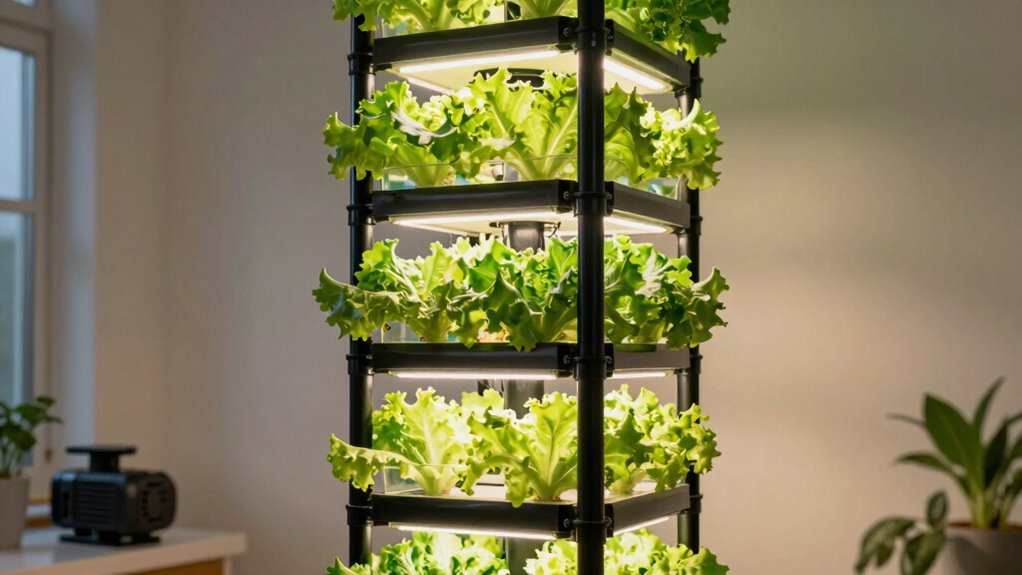

Hydroponic towers look sleek and efficient, but pump noise can disrupt your living space. Continuous operation of pumps is essential for system health, yet they produce background sounds that can be intrusive, especially in quiet areas. Using vibration-dampening pads or quiet models can help, but increased system complexity often means higher energy and maintenance costs. If you’d like to discover how to minimize this problem and keep your space peaceful, there’s more to explore.

Get the latest gadgets delivered free with Prime
- Fast, free delivery on millions of items
- Prime Video, Amazon Music and more included
- Member-only deals all year
Key Takeaways
- Pump noise in aquaponics systems can disrupt the sleek, modern appearance of hydroponic towers when placed indoors.
- Continuous pump operation increases energy use and maintenance, making systems less practical in quiet living spaces.
- Noise levels vary by pump model but are generally intrusive, affecting concentration, relaxation, and sleep.
- Solutions like vibration dampers and soundproof enclosures can reduce pump noise impact on indoor environments.
- Emerging nanotech innovations aim to develop quieter, energy-efficient pumps, mitigating noise concerns in future systems.
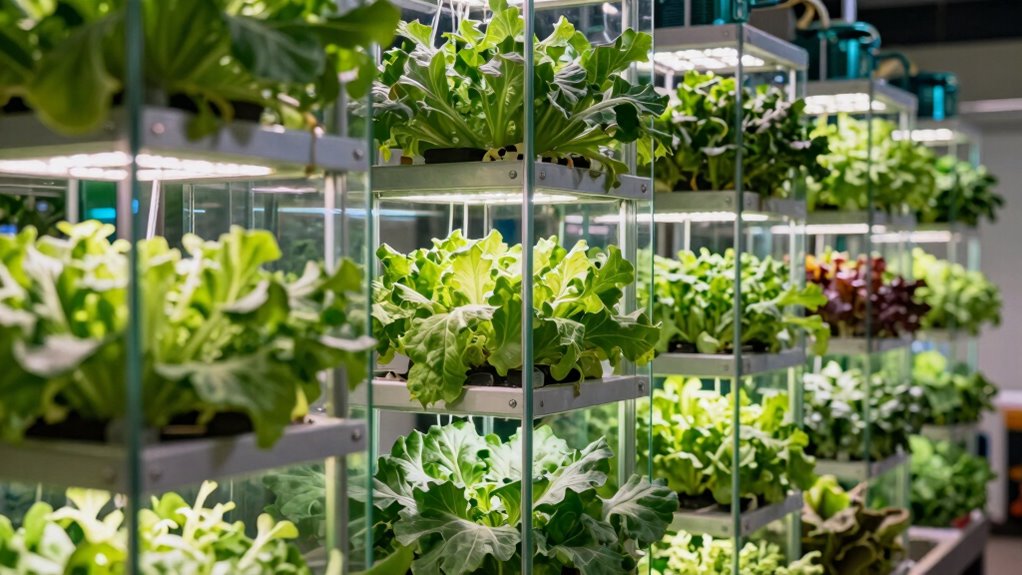
Hydroponic towers are a popular way to grow plants vertically, maximizing space and efficiency. They look sleek and futuristic, often giving the impression of a highly efficient gardening system. But when you add in aquaponics integration, things can get more complicated. Aquaponics combines fish and plant cultivation in a symbiotic setup, which can increase productivity and sustainability. However, this integration also means pumps run more frequently, circulating water and nutrients between the fish tanks and the plants. That’s where energy consumption comes into play. These systems tend to require more power than simple hydroponic setups because of the constant operation of pumps and aerators. While the energy cost might be manageable in a controlled environment, it becomes noticeable when you’re growing indoors or in a shared space.
Here’s where the real issue starts—pump noise. When you’re investing in a hydroponic tower to enhance your living or working space, the last thing you want is the constant hum or clatter of equipment disrupting your environment. Pumps are essential for circulating water and maintaining the health of your aquaponics system, but they’re also the primary source of noise. Some pumps are quieter than others, but even the most silent models emit a constant background noise that can become intrusive over time, especially in quiet rooms or bedrooms. The noise isn’t just a minor annoyance; it can interfere with your concentration, relaxation, or sleep. If your hydroponic tower is located in a shared space or an area that needs peace and quiet, pump noise can quickly diminish the appeal of your setup.
You might think about ways to minimize the noise—placing pumps on vibration-dampening pads, using soundproof enclosures, or opting for low-noise models. But these solutions often add to the overall energy consumption, which means your electricity bill climbs alongside the noise level. The more complex your aquaponics system, the higher your energy use becomes, and that translates directly into more frequent maintenance and higher costs. So, while hydroponic towers look efficient and space-saving, the reality of pump noise and energy demands can turn that efficiency into a challenge. You need to weigh the benefits of aquaponics integration and increased productivity against the practical issues of noise and power consumption. Ultimately, a well-considered setup can minimize disruptions, but it’s important to be aware that what looks sleek and modern on the surface might come with some unavoidable noise and energy trade-offs.
In addition, understanding molecular-scale circuits and nanotech fabrication challenges can inspire innovative solutions to reduce noise and energy consumption in such systems. Emerging research in nanoengineering offers promising pathways to develop quieter, more energy-efficient pumps that could revolutionize aquaponic systems in the future.
Products Worth Considering
Logitech MX Mechanical Wireless Illuminated Keyboard, Tactile Quiet, Graphite

Amazon Kindle Scribe Colorsoft 64GB (1st Generation)

Sony WH-1000XM4C Wireless Noise-Cancelling Headphones, Black
As an affiliate, we earn on qualifying purchases.
Frequently Asked Questions
How Long Do Hydroponic Towers Typically Last?
Hydroponic towers typically last between 2 to 5 years, depending on how well you maintain them. Regularly checking plant nutrient levels and ensuring proper water circulation can extend their lifespan. Over time, components may wear out or crack, but proper care minimizes this. Keep the pump clean and the water circulating smoothly, and your tower can stay productive and efficient for several growing seasons.
Are Hydroponic Towers Suitable for All Types of Plants?
While hydroponic towers may not be perfect for every plant, they work well for many, especially those with similar growth needs. You’ll find that plant compatibility varies, so choose crops suited for vertical growth and controlled environments. To optimize growth, guarantee you select the right plants and conditions. Keep in mind, some plants might require additional adjustments, but overall, hydroponic towers can be a versatile solution for a wide variety of greenery.
Can Pump Noise Be Completely Eliminated in Indoor Settings?
You can’t completely eliminate pump noise indoors, but you can considerably reduce it with effective noise reduction and soundproofing techniques. Using insulated enclosures, vibration dampers, and placing the pump on a stable, cushioned surface minimizes sound transmission. Additionally, adding acoustic panels or foam around the setup helps absorb residual noise. While total silence is tough, these methods can make pump noise barely noticeable, maintaining a peaceful indoor environment.
What Are the Energy Costs Associated With Running Hydroponic Towers?
Think of your hydroponic tower as a steady heartbeat, with energy consumption fueling its growth. Running these systems does add to your electricity bill, but the cost analysis shows they’re quite efficient. Powering pumps and LED lights requires energy, but the overall costs are manageable, especially if you use energy-saving devices. You’ll want to balance the benefits of fresh produce against the ongoing expenses to keep your garden thriving without breaking the bank.
How Often Should the Pump Be Maintained or Replaced?
You should perform pump maintenance every 3 to 6 months to guarantee peak performance and prevent clogging or wear. Replacement frequency depends on the pump’s quality and usage, but typically, pumps last 1 to 2 years. Regular pump maintenance helps identify issues early, extending its lifespan. Keep an eye on noise levels and flow rates, and replace the pump if it becomes noisy or inefficient to avoid disrupting your living space.
Conclusion
So, you see, hydroponic towers seem like a sleek, efficient solution—until the pump noise disrupts your peace. You invest in the setup, you enjoy the fresh greens, but then you face the constant hum. It’s a reminder that convenience often comes with a trade-off. You want thriving plants and a quiet space, but sometimes, you get loud pumps instead. Balance your expectations, and maybe find a way to hush that noise.