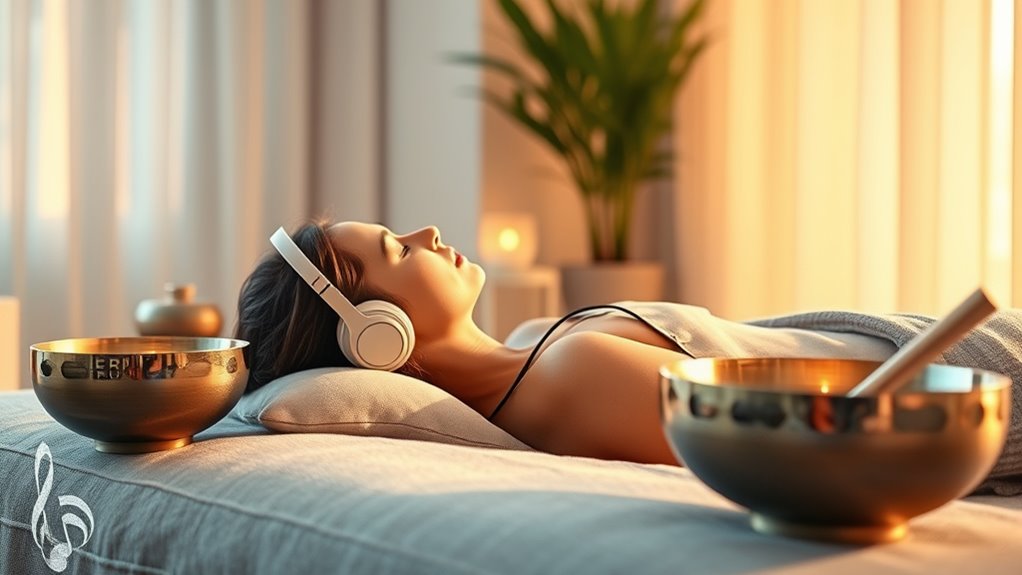

Sound therapy uses music and specific frequencies to help you relax and reduce stress effectively. Listening to calming melodies or rhythmic sounds can trigger your brain to release feel-good neurotransmitters like dopamine and serotonin, boosting your mood. It also targets brainwaves associated with relaxation and sleep, helping you unwind after a stressful day. Using tools like tuning forks or digital tracks, this gentle approach can restore your emotional balance. Keep exploring to discover how it can become part of your wellness routine.
Key Takeaways
- Sound therapy uses calming melodies and frequencies to trigger neurotransmitter release, reducing stress and elevating mood.
- Specific sound frequencies target brainwaves like alpha and delta, promoting relaxation and restful sleep.
- Frequency healing resonates with the body’s energy centers, helping to release blockages and restore balance.
- Digital platforms make sound therapy accessible, allowing consistent use to improve mental resilience and emotional well-being.
- Incorporating sound therapy into daily routines naturally reduces anxiety and fosters overall mental health.
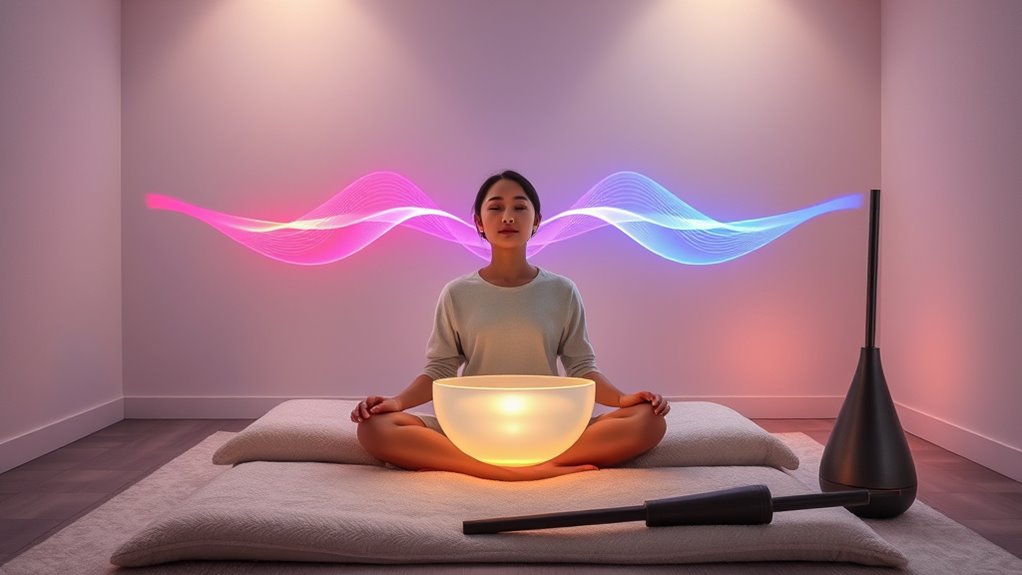
Have you ever wondered how certain sounds can influence your mood and well-being? It’s fascinating to realize that your environment’s auditory elements can profoundly impact your stress levels and emotional health. Sound therapy taps into this power by using specific frequencies, music, and vibrations to promote relaxation, reduce anxiety, and foster healing. When you listen to calming melodies or rhythmic sounds, your brain responds by releasing neurotransmitters like dopamine and serotonin, which elevate your mood and create a sense of tranquility. This natural response helps counteract the effects of stress, making sound therapy an accessible and non-invasive way to improve your mental health.
Sound therapy uses specific frequencies and vibrations to reduce stress and boost emotional well-being naturally.
Imagine lying down in a quiet space, headphones on, as gentle tones wash over you. These sounds aren’t random; they’re carefully chosen to target particular brainwaves associated with different states of mind. For instance, delta waves promote deep sleep, while alpha waves encourage relaxation. By aligning your brain activity with these frequencies, sound therapy can help you unwind after a hectic day or ease into restful sleep. You might notice your breathing slowing, muscles relaxing, and your mind clearing of clutter—all thanks to the therapeutic power of sound. This process is simple yet effective, requiring only your willingness to listen and be present.
Frequency healing, a core aspect of sound therapy, involves using specific sound frequencies believed to resonate with your body’s energy centers or chakras. When these frequencies match your body’s natural vibrations, they can help release blockages, restore balance, and promote physical and emotional healing. Many practitioners use tuning forks, singing bowls, or digital soundtracks to produce these therapeutic frequencies. As you experience these sounds, you may find your stress melting away, replaced by a sense of harmony and well-being. It’s as if the sounds reset your internal state, harmonizing your mind and body in a way that fosters resilience against daily stressors.
Additionally, the integration of digital innovation in sound therapy has expanded access to personalized healing experiences through apps and online platforms. You don’t need any special skills or equipment to benefit from sound therapy—just a quiet moment and an open mind. Whether you listen to calming music, nature sounds, or specific frequency tracks, you’re engaging in a practice that leverages the natural connection between sound and emotion. Over time, consistent use can improve your overall mood, boost your ability to cope with stress, and even enhance your focus and creativity. As you explore sound therapy, you’ll discover its gentle yet profound capacity to uplift your spirit and support your health, making it a valuable tool in your wellness journey.
Frequently Asked Questions
Can Sound Therapy Replace Traditional Medical Treatments?
Sound therapy can’t replace traditional medical treatments, but it can complement them effectively. You should see it as a supportive tool that may reduce stress, promote relaxation, and improve your overall well-being. Always consult your healthcare provider before relying solely on sound therapy, especially for serious health conditions. Combining sound therapy with conventional treatments can enhance your healing process, but it shouldn’t be used as a substitute for professional medical care.
How Quickly Can I Expect to Feel the Benefits of Sound Therapy?
You might start noticing benefits from sound therapy within just a few sessions, especially if you’re consistent. Some people feel calmer and more relaxed after one or two sessions, while others may take a few weeks to experience significant changes. It varies based on your individual response and the frequency of your sessions. Keep an open mind, and with regular practice, you’ll likely see gradual improvements in your stress levels.
Is Sound Therapy Suitable for Children or Pregnant Women?
Yes, sound therapy can be suitable for children and pregnant women, but you should consult with a healthcare provider first. For children, gentle music or sounds tailored to their age can promote relaxation. Pregnant women might find specific frequencies soothing, but it’s important to guarantee the therapy is safe and appropriate. Always seek professional guidance to determine the best approach for your unique situation.
What Are the Risks or Side Effects Associated With Sound Therapy?
You might experience minor side effects like temporary dizziness, headaches, or nausea when trying sound therapy. Some people find certain frequencies or sounds overwhelming, which can increase stress instead of reducing it. If you have hearing issues, neurological conditions, or are pregnant, you should consult your healthcare provider first. Generally, sound therapy is safe, but paying attention to your body’s reactions helps prevent any adverse effects.
How Do I Choose the Right Sound Therapy Practitioner or Program?
You should look for a certified and experienced sound therapy practitioner or program. Check their credentials, training, and reviews to guarantee credibility. Trust your instincts and choose someone who makes you feel comfortable and confident. Ask about their techniques, session structure, and goals to see if they align with your needs. Ultimately, select a practitioner who listens to you and tailors sessions to your unique stress relief goals.
Conclusion
Sound therapy acts like a gentle wave washing over your mind, easing stress and restoring balance. By immersing yourself in calming music and healing frequencies, you create a peaceful sanctuary within. Just as a soothing breeze clears away clouds, sound therapy clears mental clutter, leaving you refreshed and centered. Embrace these sounds daily to *release* relaxation and find harmony amidst life’s chaos. Let music be your healing tide, guiding you to tranquility.