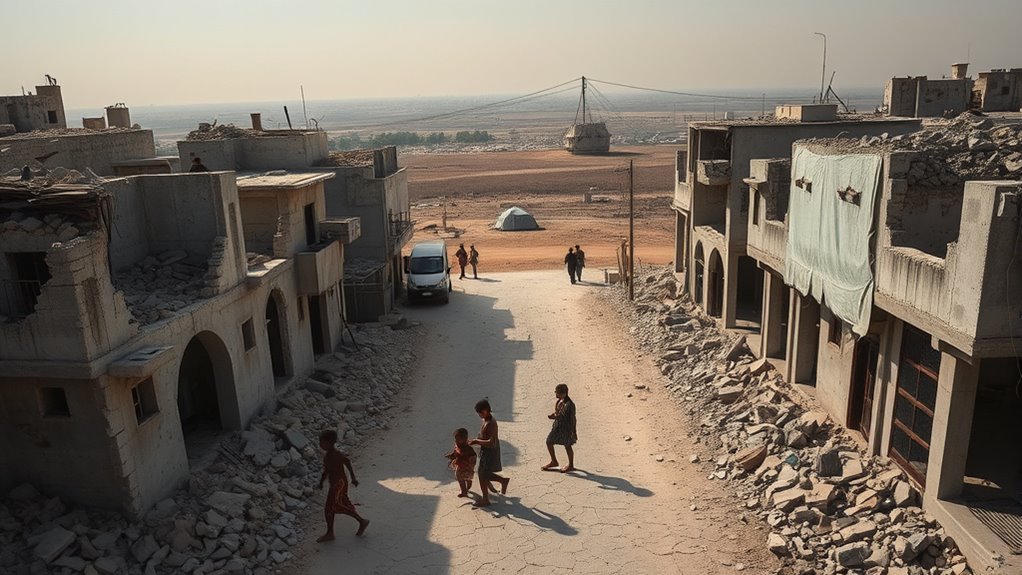

The Gaza Strip famine causes widespread suffering by limiting access to food, clean water, and medical care. Many families go hungry daily, and hospitals face shortages of nutrition and supplies. Ongoing conflicts and blockades damage infrastructure and disrupt food supply chains, making aid delivery difficult. The crisis deepens health problems, increases disease risks, and affects children’s development. To understand how these hardships persist and impact lives, you’ll find valuable insights if you explore further.
Key Takeaways
- The famine in Gaza results from ongoing blockades, conflict, and disrupted supply chains, severely limiting access to food and essentials.
- Widespread malnutrition impacts children’s growth, immune health, and cognitive development, increasing vulnerability to disease.
- Damaged infrastructure and restricted movement hinder aid delivery, food production, and access to clean water and sanitation.
- Humanitarian efforts face logistical and security challenges, intensifying health crises, disease outbreaks, and economic hardship.
- Despite hardships, communities show resilience, but systemic issues and continued conflict threaten future stability and well-being.

The Gaza Strip is experiencing a severe famine that has left millions struggling to access enough food. You can see how this crisis affects every aspect of daily life, from basic survival to long-term health and well-being. With limited imports, ongoing blockades, and disrupted supply chains, food shortages have become widespread, forcing families to make impossible choices. Children go to bed hungry, and adults often skip meals to stretch what little food they have. Hospitals report a rise in malnutrition cases, especially among vulnerable groups like children and the elderly. This scarcity isn’t just about hunger; it deeply impacts physical health, immune systems, and cognitive development. The crisis also highlights the importance of supply chain resilience** in ensuring access to essential goods during times of conflict. As you look closer, you realize how interconnected the famine is with the broader political and economic struggles in the region. The blockade restricts the flow of essential goods, and repeated conflicts damage infrastructure, making it difficult to restore normal food supplies. Farmers face obstacles like destroyed fields and limited access to seeds and fertilizers, reducing local food production even further. You might see aid organizations attempting to deliver supplies, but logistical hurdles and security issues often hinder these efforts, leaving many without the assistance they desperately need. The scarcity of clean water and proper sanitation only worsens the humanitarian toll, fueling disease outbreaks that threaten lives already weakened by malnutrition. The psychological toll becomes evident as you witness the despair on families’ faces. Parents worry about their children’s futures, knowing that persistent hunger compromises not just their health but their ability to learn and grow. Schools may close or operate under difficult conditions, depriving children of education and a semblance of normalcy. The sense of helplessness can be overwhelming, with many feeling trapped in a cycle of deprivation they see no immediate way out of. You also understand that this famine perpetuates poverty; families lose their ability to work, and economic opportunities diminish further, trapping entire communities in hardship. Despite international aid efforts, you recognize that the crisis persists because of systemic issues rooted in political conflict and restrictions. Every day, you see how the famine strips away resilience, leaving communities vulnerable and fragile. The human toll is heartbreaking: lives cut short, potential lost, and a future that seems increasingly bleak. Yet, amid this suffering, you also notice the resilience of the people—finding ways to survive, support each other, and hope for a better tomorrow** despite the overwhelming odds stacked against them.
Top picks for "understand gaza strip"
Open Amazon search results for this keyword.
As an affiliate, we earn on qualifying purchases.
Frequently Asked Questions
How Has the Famine Impacted Children’s Education in Gaza?
Imagine a classroom where children’s dreams are like fragile seedlings struggling to grow. The famine has drastically disrupted Gaza’s education, causing school closures and shortages of supplies. Many kids face hunger and trauma, making concentration impossible. According to reports, over 300,000 children have missed classes, risking a lost generation. Without urgent aid, these young minds risk remaining stunted, unable to bloom and achieve their potential.
What Role Do International Organizations Play in Alleviating the Famine?
International organizations play a vital role in alleviating the famine by providing emergency food aid, medical supplies, and water. You see, they coordinate humanitarian efforts, mobilize resources, and advocate for political solutions. Their teams deliver crucial aid directly to affected communities, ensuring vulnerable populations get essential support. You can also support their work through donations or raising awareness, helping to reduce suffering and promote stability in Gaza.
Are There Long-Term Health Effects From the Famine on Gaza’s Population?
You’ll likely carry scars from the famine long after it ends, like invisible ink on your health record. Malnutrition weakens immune systems, stunts growth, and can cause lifelong cognitive and physical impairments. Chronic hunger leaves a lasting imprint, making you more vulnerable to disease and mental health struggles. These effects can ripple through generations, turning today’s suffering into tomorrow’s persistent shadows that dim overall well-being.
How Does the Famine Affect Mental Health Among Residents?
You likely experience increased anxiety, depression, and trauma due to the famine’s ongoing hardships. The constant stress of food scarcity, uncertainty, and violence takes a toll on your mental health, making it harder to cope daily. You might feel hopeless or overwhelmed, which can lead to long-term psychological issues. The famine’s relentless pressure affects your overall well-being, emphasizing the urgent need for mental health support and humanitarian aid in Gaza.
What Are the Prospects for Ending the Famine in Gaza?
You might think ending the famine is impossible, but there’s always hope if international aid increases and political leaders work together. If you push for more humanitarian assistance, pressure governments to lift blockades, and support peace talks, the situation can change dramatically. While the road ahead is tough, collective efforts could bring relief and restore hope for the people of Gaza, turning despair into a future of possibility.
Conclusion
The famine in Gaza is more than just scarcity—it’s a silent cry echoing through shattered walls and empty streets. Like a dying tree stripped of its leaves, hope struggles to survive amid the dust. Your awareness can be the rain that nourishes, the sunlight that awakens resilience. Remember, behind every empty plate lies a story waiting for compassion to turn the tide. Together, you hold the power to help restore life and hope amidst the darkness.