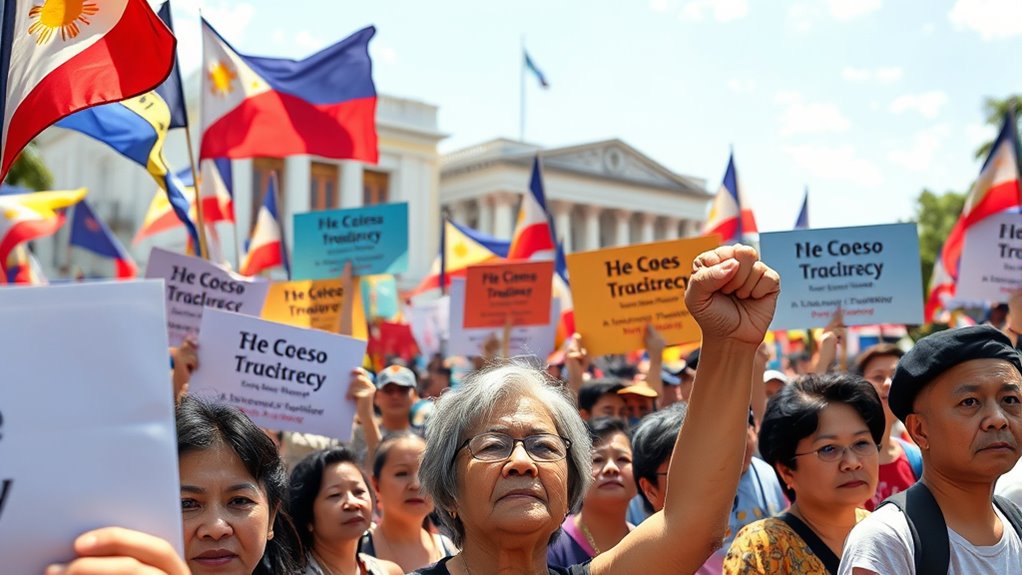

You see how widespread protests across the Philippines demand transparency and accountability from a government plagued by corruption. Citizens use streets, social media, and gatherings to voice their frustration over broken systems and unfulfilled promises. Their demonstrations highlight issues like bribery, nepotism, and shady contracts. These protests serve as a collective push for systemic reform and honest leadership, showing how unity can drive change. Keep exploring deeper, and you’ll learn more about how these voices are shaping the future.
Key Takeaways
- Citizens organize protests to demand accountability and transparency from government officials involved in corruption.
- Social media amplifies awareness, sharing stories of injustice and rallying support nationwide.
- Protests highlight issues like bribery, nepotism, and misuse of public resources.
- Demonstrations aim to pressure authorities into enacting stronger anti-corruption laws and reforms.
- Collective public action emphasizes the importance of honesty and transparency for good governance.
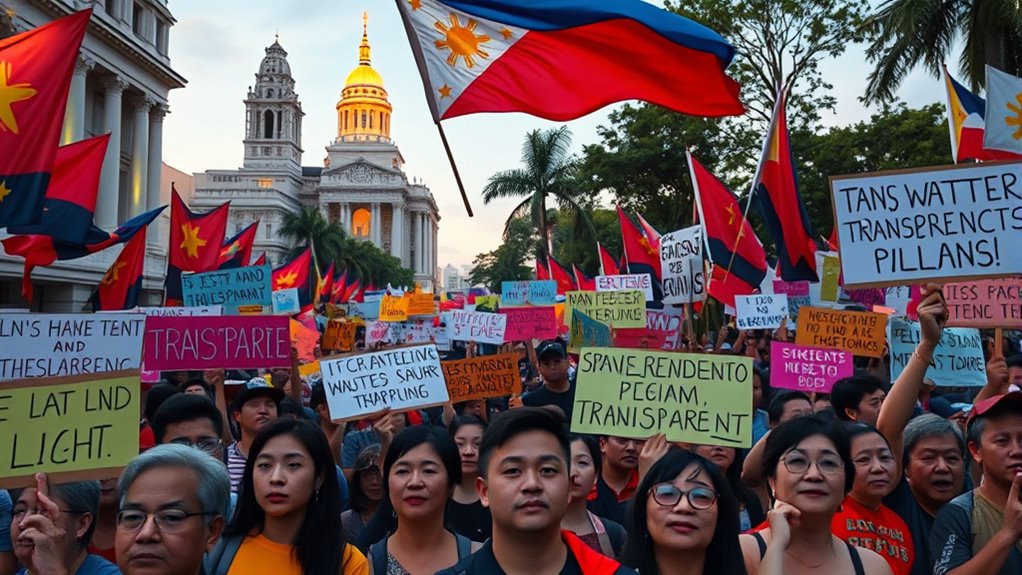
Have you noticed how widespread anti-corruption protests have become across the Philippines? It’s impossible to ignore the rising tide of people demanding transparency from their leaders. Citizens like you are taking to the streets, social media, and community gatherings to voice frustrations over the persistent corruption plaguing government institutions. These protests aren’t just about isolated incidents—they represent a collective call for accountability, honesty, and integrity in public service. You might see banners, hear chants, or read stories online that reveal how corruption affects everyday lives, from stolen public funds to favoritism and abuse of power. These demonstrations reflect a deep-seated desire for change that can’t be silenced by dismissive rhetoric or political fatigue.
Widespread protests in the Philippines demand transparency and accountability from corrupt officials.
What fuels these protests is a shared understanding that corruption isn’t just about broken systems; it’s about the erosion of trust in institutions meant to serve the Filipino people. You may feel disillusioned with promises made during election campaigns that often go unfulfilled. The frustration builds when public resources meant for healthcare, education, infrastructure, or social welfare are siphoned off by those in power. When citizens see their tax money wasted or stolen, it’s natural to feel anger and helplessness. That’s why protests demanding transparency resonate widely—they’re a way for you and others to reclaim your voice and push for a government that is open about its workings, decisions, and finances. Recognizing the importance of public accountability can help strengthen your understanding of why these protests are vital for societal progress.
These protests often spotlight specific issues, such as bribery, nepotism, or shady contracts, but their core message is simple: the public deserves honesty. You might notice that the protests are increasingly organized and persistent, showing that people refuse to accept corruption as a normal part of life. Social media plays a crucial role here, spreading stories of injustice and rallying supporters across the nation. It’s empowering to see that your voice can contribute to a larger movement, one that calls for reforms, stronger anti-corruption laws, and a culture of accountability. Every march, petition, or online post adds pressure on authorities to act indispensable.
Ultimately, these protests serve as a reminder that transparency isn’t just a lofty ideal; it’s an indispensable component of good governance. When corruption is exposed and challenged openly, it creates space for reform and renewal. As a citizen, your participation signals that you’re committed to a future where honesty prevails. Your voice matters—because real change begins when people stand together and demand a government that works for everyone, not just the few who hold power.
Frequently Asked Questions
How Long Have Anti-Corruption Protests Been Ongoing in the Philippines?
You’ve probably noticed anti-corruption protests in the Philippines have been happening for several years. These demonstrations date back to the early 2000s, gaining momentum with significant events like the 2013 protests against government corruption and more recent rallies in 2020 and 2021. The movement continues as citizens demand transparency and accountability from leaders. Your awareness of these protests highlights ongoing concerns about governance and integrity in the country.
Who Are the Main Organizers of These Protests?
You should know that various groups organize these protests, including civil society organizations, student groups, and activist coalitions. Sometimes, government critics and local community leaders also play key roles in mobilizing people. They come together to demand transparency and fight corruption. These organizers work tirelessly, using social media, rallies, and public forums to raise awareness and pressure authorities to implement meaningful reforms, making sure their voices are heard.
What Specific Policies Are Protesters Demanding From the Government?
You’re demanding that the government implement stricter anti-corruption laws, enforce transparency in public spending, and hold officials accountable for corrupt practices. You want policies that promote open access to government transactions, establish independent commissions to investigate corruption, and protect whistleblowers from retaliation. Your goal is to create a more transparent, accountable government that works for the people, reducing corruption and restoring public trust in leadership.
How Has the Government Responded to These Protests Historically?
You see, the government has often responded with a mix of silence, dismissiveness, or limited reforms. Sometimes, authorities crack down on protesters, aiming to suppress their voices. Other times, they promise investigations or reforms, but these efforts rarely lead to lasting change. This pattern leaves you feeling frustrated, hopeful, and longing for genuine accountability, as the cycle of protests continues without meaningful action to address corruption.
Are There Any Notable Success Stories Resulting From Previous Protests?
Yes, some notable success stories have emerged from previous protests. You’ve seen increased awareness, stronger anti-corruption laws, and improved government transparency efforts. These protests have pressured officials to investigate corrupt practices and implement reforms. For example, public outcry led to the dismissal of several corrupt officials and the passage of laws aimed at increasing accountability. Your participation helps keep corruption in check and encourages ongoing government reforms.
Conclusion
You must stand for transparency, demand accountability, and challenge corruption. You have the power to voice your concerns, to hold leaders responsible, and to push for change. You can raise awareness, support movements, and inspire others to act. Together, you can create a future where honesty prevails, justice is served, and integrity guides your nation. Stand firm, speak out, and never underestimate the strength of your voice in shaping a better Philippines.