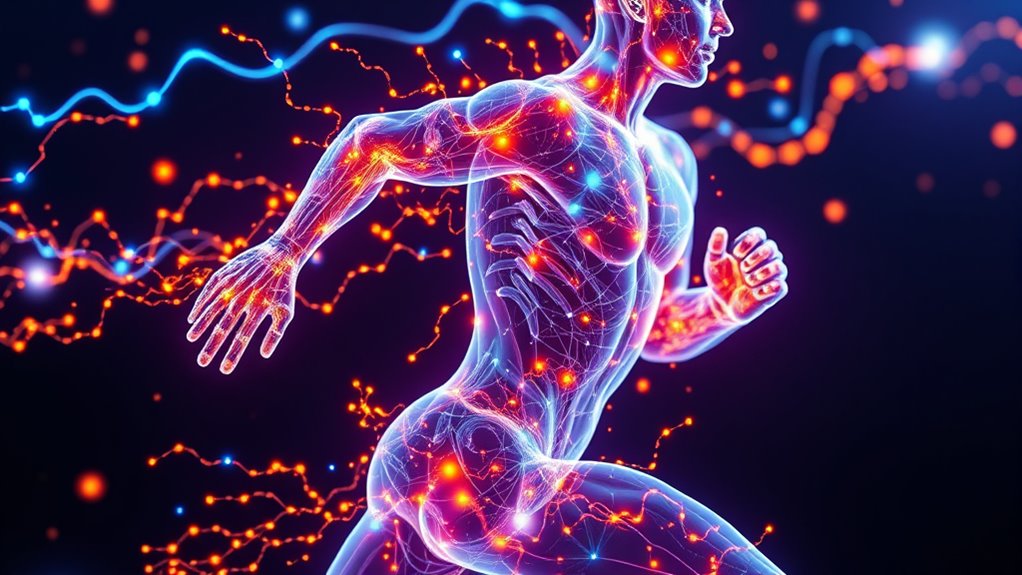

When you exercise, your body activates thousands of molecules, including enzymes, cofactors, and intermediates, to power your movement. It dynamically switches between energy pathways like glycolysis, fat burning, and protein use based on intensity and duration. These molecular changes help optimize performance and recovery. Understanding how these molecules work together can give you insights into your body’s metabolic strategies. Keep exploring, and you’ll uncover even more about how your body fuels your workouts.
Key Takeaways
- Metabolomics techniques analyze blood, muscle, and urine samples to identify thousands of molecules involved in exercise metabolism.
- During workouts, specific molecules indicate activation of pathways like glycolysis, fatty acid oxidation, and protein catabolism.
- Molecular changes reveal shifts in energy source utilization, from carbohydrates in high-intensity to fats during prolonged exercise.
- Thousands of molecules, including enzymes, intermediates, and cofactors, dynamically coordinate to meet exercise demands.
- Mapping these molecules helps optimize training, nutrition, and recovery by understanding detailed metabolic pathway activation.

Understanding how your body converts fuel during exercise is fundamental for optimizing performance and recovery. When you work out, your muscles don’t just burn one simple source of energy; instead, a complex network of molecules springs into action, orchestrating your movement and endurance. Thousands of molecules activate, interact, and transform to keep your energy levels sustained, and mapping this process reveals a fascinating web of biochemical activity that fuels your every move.
During exercise, your body primarily relies on carbohydrates, fats, and to a lesser extent, proteins, as fuel sources. These fuels are broken down through a series of metabolic pathways involving hundreds of molecules. For example, glycogen stored in your muscles and liver converts into glucose, which then enters the glycolytic pathway, producing energy quickly for immediate needs. Simultaneously, fatty acids are mobilized from fat stores, transported into mitochondria, and undergo beta-oxidation, generating ATP, the energy currency your cells use. Proteins, while not a primary fuel, can contribute when carbohydrate and fat supplies are limited, converting amino acids into usable energy through gluconeogenesis or direct oxidation.
During exercise, glycogen, fats, and proteins transform into energy through complex metabolic pathways involving hundreds of molecules.
Mapping these processes involves tracking thousands of molecules, from enzymes and cofactors to intermediates and end-products. Modern techniques like metabolomics allow scientists to analyze blood, muscle tissue, or urine samples, revealing a detailed snapshot of metabolic activity during different exercise intensities and durations. This mapping has uncovered how specific molecules spike during high-intensity sprints compared to steady-state cardio, offering insights into which pathways are prioritized. For example, during vigorous activity, there’s an increase in molecules associated with anaerobic glycolysis, like lactate, which becomes a fuel for other tissues or contributes to muscle fatigue if it accumulates excessively. Conversely, during prolonged, moderate exercise, fatty acid oxidation dominates, involving a different set of molecules that help sustain energy over longer periods.
Furthermore, understanding these pathways can help identify metabolic bottlenecks**, where energy production slows or molecules accumulate, leading to fatigue or delayed recovery. Understanding this molecular choreography helps you grasp why certain nutrients or supplements might enhance your performance or recovery**. It’s not just about eating carbs or fats; it’s about supporting the intricate dance of molecules that activate during your workouts. By mapping these pathways, researchers can identify bottlenecks or inefficiencies—areas where energy production slows or molecules accumulate, leading to fatigue or delayed recovery. This knowledge empowers you to tailor your nutrition and training strategies to optimize these metabolic processes, ensuring you get the most out of every workout. Essentially, the more you understand about the thousands of molecules involved in exercise metabolism, the better you can train smarter, recover faster, and push your limits further.
As an affiliate, we earn on qualifying purchases.
Frequently Asked Questions
How Does Exercise Intensity Affect Molecule Activation?
Higher exercise intensity activates more molecules in your body, boosting energy production and metabolic processes. When you push yourself harder, your muscles demand more ATP, prompting the activation of additional enzymes and signaling pathways. This increased molecular activity enhances muscle strength, endurance, and recovery. So, as you increase intensity, you trigger a broader range of metabolic responses, making your workouts more effective at building fitness and improving overall health.
Can Mapping Help Personalize Workout Plans?
Mapping can definitely help personalize your workout plans, like a GPS guiding your journey. By understanding how your unique molecular responses vary during exercise, you can tailor intensity and duration for ideal results. This personalized approach ensures you target your goals more effectively and avoid plateaus. As a result, you stay motivated and see faster progress. So, yes, mapping makes your fitness journey smarter and more efficient.
What Role Do Genetics Play in Metabolic Responses?
Genetics substantially influence your metabolic responses by determining how efficiently your body processes nutrients, recovers from exercise, and adapts to workouts. Your genes can affect muscle fiber composition, enzyme activity, and hormonal regulation, which impact your energy levels and recovery speed. By understanding your genetic makeup, you can tailor your workout and nutrition plan to optimize results, ensuring you train smarter and achieve your fitness goals more effectively.
Are There Risks Associated With Metabolite Overload?
Like a busy highway, metabolite overload can cause traffic jams in your body’s systems. If too many metabolites accumulate, you might experience fatigue, muscle soreness, or even inflammation. While your body usually manages this well, excessive overload can strain your organs and impair recovery. To avoid this, listen to your body, stay hydrated, and balance workouts with proper nutrition. Managing overload keeps your metabolism running smoothly and safely.
How Quickly Does Metabolism Adapt to Regular Exercise?
Your metabolism adapts pretty quickly to regular exercise, often within a few weeks. As you consistently work out, your body becomes more efficient at burning calories, using oxygen, and activating metabolic pathways. You’ll notice improvements in stamina, energy levels, and recovery time. Keep up your routine, and your metabolic rate will continue to improve, helping you burn more fat and build endurance over time.
As an affiliate, we earn on qualifying purchases.
Conclusion
Now that you’ve explored how thousands of molecules spring into action during workouts, you realize your body’s a true metabolic jukebox, spinning energy from every corner. Just like an ancient alchemist, you’re transforming fuel into power, proving that exercise isn’t just about sweat—it’s a complex, lively symphony of chemical reactions. So next time you hit the gym, remember, you’re part of a scientific masterpiece—no DeLorean needed to appreciate this futuristic feat happening inside you.
As an affiliate, we earn on qualifying purchases.
As an affiliate, we earn on qualifying purchases.