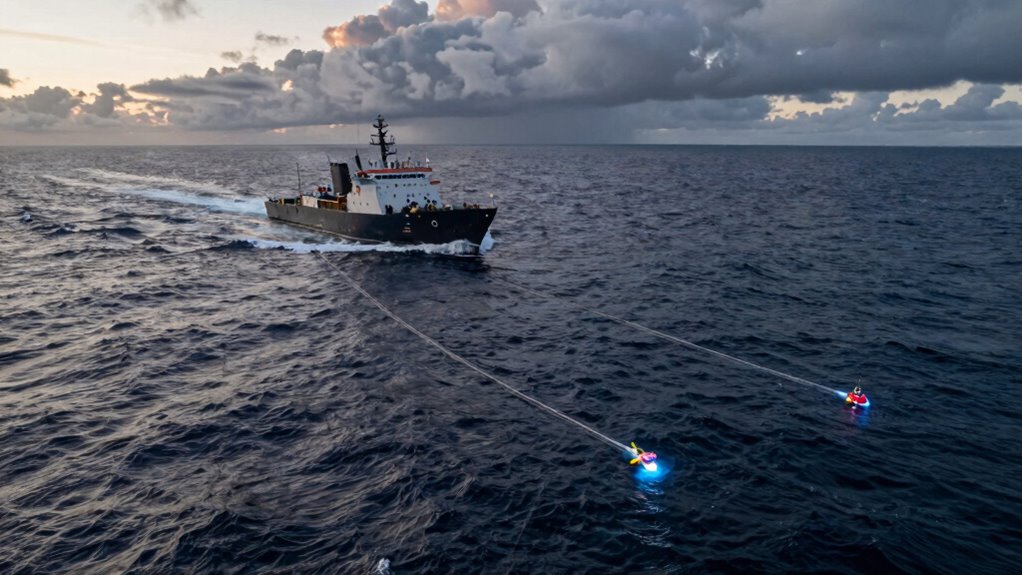

The competition over undersea cables is more serious than you might think because these cables carry most of the world’s internet traffic, making them essential for global communication and security. Countries and corporations invest heavily to control key routes, as they influence economic and geopolitical power. These cables are also targets for espionage, sabotage, and cyberattacks. If you keep exploring, you’ll uncover how this high-stakes race impacts your daily digital life and global stability.

Get the latest gadgets delivered free — and shop member deals
- Fast, free delivery on millions of items
- Access to Prime Big Deal Days deals on October 6–7
- Prime Video, Amazon Music and more included
Key Takeaways
- Control over undersea cables grants significant geopolitical influence and economic power in global communications.
- Nations and corporations fiercely compete to secure key routes, risking conflicts and strategic disputes.
- Undersea cables are vulnerable to sabotage and espionage, heightening security concerns worldwide.
- Technological advancements accelerate the race for faster, more resilient cables, intensifying global competition.
- Environmental and geopolitical risks complicate infrastructure expansion, making control over cables more critical than ever.
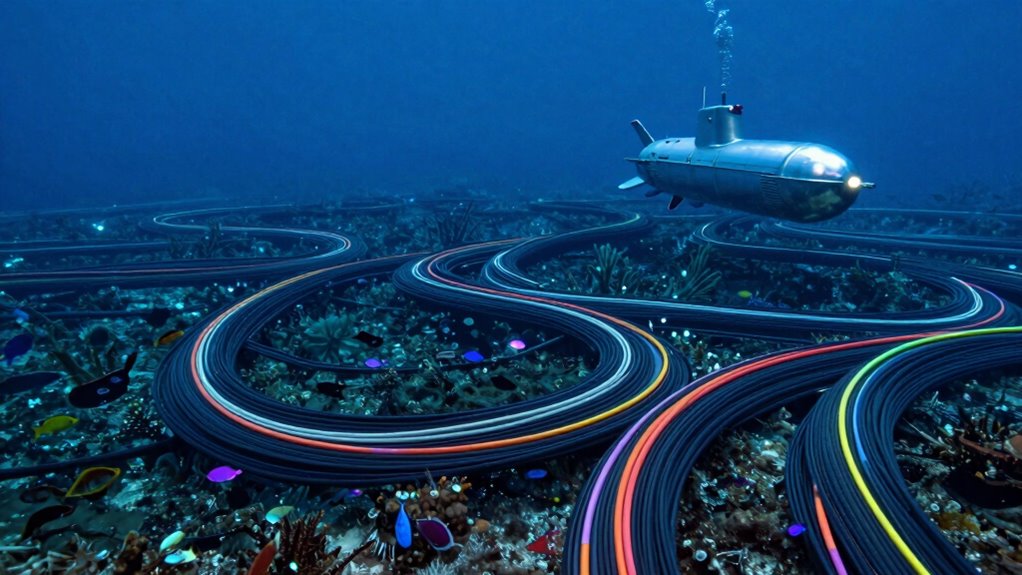
Have you ever wondered how the world stays connected across vast oceans? It’s the undersea cables that make it possible, forming the backbone of global communication and data transfer. As technology advances rapidly, emerging technologies are revolutionizing how these cables are designed, laid, and maintained. However, this progress isn’t without its concerns. The competition over undersea cables is more serious than most realize, especially when you consider the environmental impact and geopolitical stakes involved.
Emerging technologies are making undersea cables faster, more durable, and capable of handling increasing data loads. Innovations like improved fiber optics, autonomous underwater robots, and advanced laying techniques reduce costs and speed up deployment. But these advancements also escalate the competition among countries and corporations eager to dominate this critical infrastructure. Whoever controls these cables gains significant influence over global communications, commerce, and security. This intensifies the race to install new routes, upgrade existing ones, and secure strategic points along the ocean floor.
While the technological race heats up, environmental impact remains a pressing concern. Laying undersea cables involves disturbing delicate marine ecosystems, often in vulnerable coral reefs or protected habitats. Construction activities can cause noise pollution, which threatens marine life like whales and dolphins that rely on sound for navigation and communication. Additionally, the materials used in cables, such as certain plastics and metals, pose long-term risks if not properly managed. As more cables are laid to meet increasing digital demands, the cumulative environmental footprint grows, sparking debates about sustainability and conservation. The development of undersea cable infrastructure must carefully consider these ecological challenges to ensure responsible growth.
The stakes extend beyond environmental considerations. Geopolitical tensions are amplified as nations vie for control over key undersea routes. Countries are investing heavily in infrastructure to safeguard their interests and ensure resilient connectivity. This competition can lead to disputes over territorial claims and the security of cables. In some cases, cables become targets for sabotage or espionage, underscoring the geopolitical importance of these underwater arteries.
In this high-stakes environment, the race to expand and upgrade undersea cables is driven by the relentless growth of digital services and emerging technologies. As you can see, the competition isn’t just about technological supremacy—it’s about controlling a vital part of the world’s infrastructure while balancing environmental and geopolitical risks. This complex dynamic shapes the future of global connectivity and underscores why what may seem like a quiet undersea operation is actually a fierce and critical contest.
undersea fiber optic cable repair kit
As an affiliate, we earn on qualifying purchases.
As an affiliate, we earn on qualifying purchases.
Frequently Asked Questions
How Do Undersea Cables Impact Global Internet Speeds?
Undersea cables directly impact your internet speeds because their condition affects data flow. If cables need maintenance or face damage, your connection could slow down or become unreliable. Geopolitical tensions can threaten cable security, risking intentional disruptions or sabotage. Staying aware of these issues helps you understand how critical cable maintenance and international relations are to maintaining fast, stable global internet access, which you rely on daily.
What Are the Environmental Risks of Laying Undersea Cables?
During cable installation, you might disturb marine biodiversity, risking damage to delicate ecosystems and habitats. Undersea cables can inadvertently harm marine life through physical disruption or by introducing noise pollution. You need to take these environmental risks carefully into account, ensuring that cable laying minimizes impact on marine biodiversity. Proper planning and technology can help reduce these risks, protecting ocean ecosystems while supporting global connectivity.
Who Owns the Majority of Undersea Cable Infrastructure?
You should know that major undersea cable ownership mainly lies with a handful of global telecom giants, tech companies, and consortia. They handle cable maintenance to guarantee smooth operation, but ownership disputes can arise, especially over rights and responsibilities. This concentration of ownership influences international communications, making it critical to monitor who controls these essential infrastructures. Stay aware of these dynamics, as they impact global connectivity and security.
How Do Countries Secure Their Undersea Cable Interests?
You safeguard your undersea cable interests by actively monitoring geopolitical tensions that could threaten your infrastructure. Investing in advanced security measures helps mitigate vulnerabilities, and collaborating with international partners guarantees shared oversight. You also advocate for protective legal frameworks and conduct regular risk assessments to address security vulnerabilities. By doing so, you safeguard critical communication lines and maintain strategic stability amid rising global competition and potential threats to undersea cable security.
What Innovations Are Emerging in Undersea Cable Technology?
You’ll find that innovations in undersea cable technology focus on boosting cable durability through advanced materials and insulation. About 99% of global data traffic relies on these cables, emphasizing their importance. Breakthroughs include flexible, corrosion-resistant coatings and self-healing fibers that extend cable lifespan. These innovation breakthroughs not only improve performance but also guarantee resilience against harsh underwater conditions, keeping global communications faster, safer, and more reliable.
marine underwater cable laying equipment
As an affiliate, we earn on qualifying purchases.
As an affiliate, we earn on qualifying purchases.
Conclusion
As you watch the cables stretch beneath the waves, remember they’re more than just wires—they’re veins of the modern world. The fierce competition mirrors a silent battle for control over our connected future, each cable a symbol of power and influence. Beneath the surface, these strands remind you that what’s unseen often holds the greatest importance, shaping your life in ways you might never realize. In the depths, the future is quietly being wired.
As an affiliate, we earn on qualifying purchases.
autonomous underwater cable inspection robot
As an affiliate, we earn on qualifying purchases.
As an affiliate, we earn on qualifying purchases.
Fall Picks
fall essentials
As an affiliate, we earn on qualifying purchases.