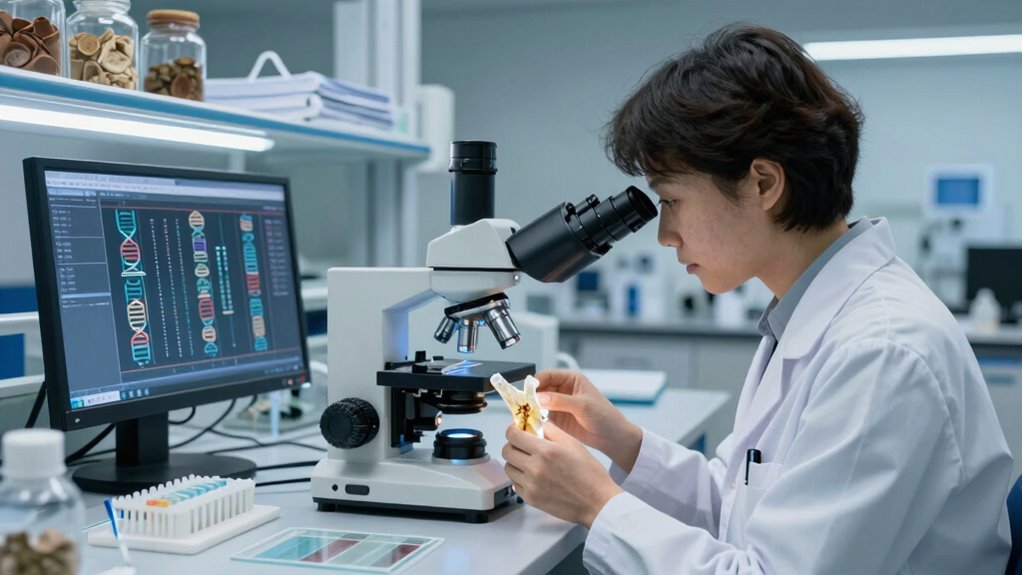

Scientists use ancient DNA to uncover your human past by analyzing genetic material from long-extinct populations. This technology reveals how groups migrated, interacted, and adapted over time, often challenging old ideas based solely on fossils or artifacts. By identifying interbreeding events and tracing evolutionary paths, they rewrite the story of human origins. Keep exploring, and you’ll discover even more fascinating insights about our ancient ancestors and how they shaped us today.

Get the latest gadgets delivered free — and shop member deals
- Fast, free delivery on millions of items
- Access to Prime Big Deal Days deals on October 6–7
- Prime Video, Amazon Music and more included
Key Takeaways
- Scientists analyze ancient DNA to uncover genetic relationships and migration patterns of extinct populations.
- They identify interbreeding events, such as with Neanderthals, to clarify human evolutionary history.
- Genetic signatures reveal how populations diverged, adapted, and responded to environmental changes over time.
- Advances in DNA sequencing enable detailed reconstructions of ancient human lineages and movements.
- Studying genetic diversity patterns helps understand population resilience, survival, and evolutionary pathways.

Recent advancements in ancient DNA analysis are transforming our understanding of human history. With this cutting-edge technology, scientists can now explore the genetic makeup of long-extinct populations, uncovering details that were once thought impossible to access. When you examine ancient DNA, you gain insights into genetic diversity across different periods and regions, revealing how various groups adapted to their environments and interacted with one another. This genetic information helps piece together the complex puzzle of human migration, settlement, and interbreeding, fundamentally reshaping the story of our ancestors.
Through the study of ancient DNA, you can trace the evolutionary pathways that led to modern humans. Instead of relying solely on fossils or artifacts, you now have access to the genetic signatures that mark evolutionary events. These pathways show how different populations branched off, converged, or exchanged genes over thousands of years. For instance, you might see evidence of interbreeding between early Homo sapiens and Neanderthals, which adds layers of complexity to our lineage. This kind of data allows you to understand not just where humans came from, but how they evolved in response to changing climates, environments, and challenges. Additionally, analyzing ancient DNA reveals patterns of genetic diversity, providing a deeper understanding of how resilient or vulnerable different groups were over time. Advances in DNA sequencing technologies continue to expand our ability to access and interpret this genetic information.
As an affiliate, we earn on qualifying purchases.
Frequently Asked Questions
How Is Ancient DNA Preserved for Analysis?
You can preserve ancient DNA through careful excavation and storage in cold, dry environments, which minimizes DNA degradation. Climate impacts, like freezing temperatures, help maintain genetic material, while warm, humid conditions accelerate decay. Scientists extract DNA by targeting genetic mutations that remain stable over time. By controlling these factors, they improve the chances of retrieving intact ancient DNA, enabling insights into our human history.
What Challenges Exist in Extracting Ancient DNA?
Extracting ancient DNA is an almost Herculean task, facing colossal challenges like contamination risks from modern DNA and DNA degradation over millennia. You must rely on delicate preservation techniques to prevent further damage, but even then, tiny traces are hard to recover intact. Every step demands meticulous precision, as contamination can easily skew results, making the quest to discover human history both a scientific marvel and an ongoing battle against time.
Can Ancient DNA Reveal Individual Identities?
Ancient DNA can sometimes reveal individual identities, but it’s often limited due to degradation and contamination. This raises concerns about genetic privacy, as identifying specific people could be possible if enough quality DNA is retrieved. For identity verification, ancient DNA helps confirm relationships or origins but isn’t typically detailed enough for precise individual identification. You should be aware that handling such genetic data involves sensitive privacy considerations and ethical questions.
How Does Ancient DNA Influence Modern Medicine?
Ancient DNA shapes modern medicine by revealing genetic diversity and disease resistance in our ancestors. Imagine unveiling a hidden library of genetic secrets that help us understand why some populations resisted diseases like tuberculosis. This knowledge guides personalized treatments and vaccine development, making medicine more effective. By studying ancient DNA, you gain insights into genetic traits that can improve health outcomes and combat future pandemics.
What Ethical Concerns Arise From Ancient DNA Research?
When researching ancient DNA, you need to ensure ethical concerns like protecting genetic privacy and respecting cultural sensitivity. You might uncover sensitive information that could impact descendant communities or reveal private genetic details. It’s essential to handle samples responsibly, obtain proper consent, and communicate findings carefully. Addressing these issues ensures your work respects individuals’ rights and cultural values, fostering trust and integrity in this fascinating yet delicate field.
DNA sequencing for ancient samples
As an affiliate, we earn on qualifying purchases.
As an affiliate, we earn on qualifying purchases.
Conclusion
As you follow these groundbreaking discoveries, you realize that ancient DNA holds secrets still waiting to be revealed. Every sample you analyze could reshape what you think you know about human origins and migrations. The story isn’t finished yet, and each breakthrough hints at even more astonishing revelations lurking in the past. So, are you ready to uncover the next chapter of human history? The future of discovery is in your hands—what will you uncover next?
As an affiliate, we earn on qualifying purchases.
genetic testing for human evolution
As an affiliate, we earn on qualifying purchases.
As an affiliate, we earn on qualifying purchases.
Fall Picks
fall essentials
As an affiliate, we earn on qualifying purchases.