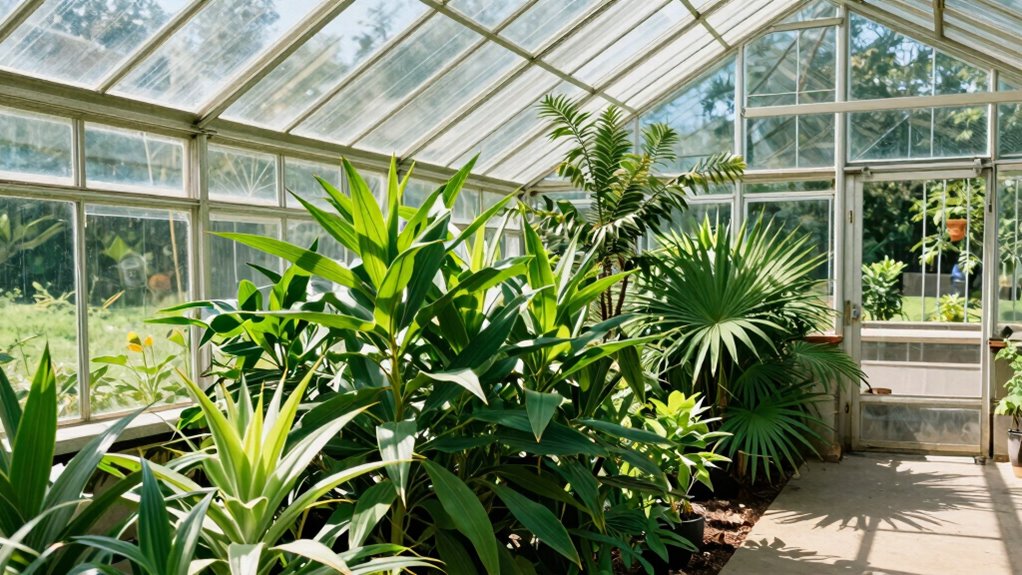

To make certain your greenhouse kits boost growth in summer, you need to manage heat effectively. Use shading, ventilation, and fans powered by solar panels to keep temperatures comfortable. Incorporate pest control strategies and keep air circulating to prevent pests and disease. Sustainable cooling methods, like solar-powered exhaust fans, work best and save energy. If you keep these strategies in mind, you’ll better protect your plants from the damaging effects of summer heat—more tips await to help you succeed.

Get the latest gadgets delivered free — and shop member deals
- Fast, free delivery on millions of items
- Access to Prime Big Deal Days deals on October 6–7
- Prime Video, Amazon Music and more included
Key Takeaways
- Effective cooling systems, like solar-powered fans and vents, are essential to prevent summer heat from damaging plants in greenhouse kits.
- Incorporating shading and ventilation helps maintain optimal temperatures and protect plants from heat stress.
- Solar panel integration provides sustainable energy for cooling and pest control, ensuring a resilient environment during hot months.
- Monitoring and managing humidity levels reduce pest risks and prevent disease spread in high temperatures.
- Combining climate control strategies with pest management ensures healthy growth despite intense summer heat.

As summer temperatures rise, managing the heat inside your greenhouse becomes crucial to protect your plants and ensure healthy growth. Greenhouse kits are designed to boost plant development, but without proper cooling strategies, the intense heat can quickly sabotage your efforts. To keep temperatures in check, solar panel integration offers a sustainable solution. Installing solar panels on your greenhouse roof allows you to generate clean energy that can power fans, exhaust vents, or misting systems. This setup not only reduces your reliance on grid electricity but also helps maintain a cooler environment, especially during the hottest parts of the day. By harnessing solar power, you can create an efficient, eco-friendly cooling system that keeps your plants comfortable and thriving.
However, managing heat isn’t the only concern during summer. Pest control strategies become even more critical as higher temperatures can accelerate pest populations and spread diseases more rapidly. Vigilant monitoring and proactive measures are essential to prevent infestations from ruining your crops. You might consider introducing beneficial insects like ladybugs or deploying organic sprays to keep harmful pests at bay. Proper air circulation, facilitated by exhaust fans powered through your solar setup, can also reduce humidity levels that attract pests and fungi. Keeping your greenhouse clean and inspecting plants regularly helps you catch problems early, preventing minor issues from escalating into major losses. Additionally, integrating pest management techniques can further enhance your ability to control pests effectively.
While implementing these cooling and pest control strategies, don’t forget the importance of shading and ventilation. Shade cloths can block excessive sunlight, reducing heat buildup and protecting delicate seedlings. Good ventilation, aided by solar-powered exhaust fans, ensures fresh air exchange and prevents the stagnation that pests and diseases thrive on. Combining shading with solar-powered ventilation creates a more stable environment, making it harder for pests to settle and for heat to accumulate dangerously inside your greenhouse. Additionally, understanding the climate conditions in your area can help you tailor these strategies more effectively. Incorporating climate-specific techniques can further optimize your greenhouse environment and plant health. Proper ventilation not only cools the air but also helps remove excess humidity, which is vital during hot summer days.
In essence, integrating solar panels into your greenhouse kit setup allows you to run essential cooling and pest control systems sustainably. This integration minimizes energy costs and provides a more resilient environment for your plants. By staying vigilant against pests and actively managing heat through shading, ventilation, and solar-powered systems, you can maximize the benefits of your greenhouse kit. Summer heat can be formidable, but with the right strategies, you’ll keep your plants healthy and productive all season long.
solar-powered greenhouse exhaust fan
As an affiliate, we earn on qualifying purchases.
As an affiliate, we earn on qualifying purchases.
Frequently Asked Questions
How Do I Choose the Best Greenhouse Kit for My Climate?
To choose the best greenhouse kit for your climate, consider your plant selection and local weather conditions. Opt for a durable kit made from sturdy materials like aluminum or heavy-duty plastic to withstand heat and storms. If summer heat is intense, select a kit with good ventilation options. Research kits designed for your specific climate, and make certain they provide adequate protection and temperature control for your plants.
What Are Cost-Effective Ways to Cool My Greenhouse During Summer?
Think of your greenhouse as a cozy house that needs a gentle breeze to stay comfortable. To cool it cost-effectively, use DIY cooling methods like shading cloths, ventilation, and exhaust fans. Incorporate cost-saving insulation to reflect heat and keep the interior cooler. These simple, budget-friendly strategies help prevent overheating, keeping your plants happy without breaking the bank during scorching summer days.
Can Greenhouse Kits Be Customized for Different Plant Types?
Yes, greenhouse kits can be customized for different plant types through plant-specific customization options. You can select modular greenhouse design features that accommodate various plant needs, like adjustable shelving, specialized ventilation, or temperature controls. This flexibility allows you to create ideal conditions for each plant type, ensuring healthy growth and maximizing yields. Customization makes your greenhouse more efficient and tailored to your gardening goals.
How Often Should I Monitor Temperature and Humidity Inside?
A stitch in time saves nine, so you should check your greenhouse’s temperature and humidity levels daily. Use sensors with proper calibration to guarantee accurate readings, helping you maintain ideal conditions. Regular monitoring allows you to detect fluctuations early, so you can adjust humidity controls and keep your plants healthy. Don’t forget, consistent oversight prevents problems before they escalate, making your greenhouse more productive and resilient.
Are There Eco-Friendly Greenhouse Kit Options Available?
Yes, eco-friendly greenhouse kits are available. You can look for options made from recycled materials, like recycled plastic or metal, which reduce waste. Some kits incorporate organic insulation, such as straw or hemp, to improve energy efficiency naturally. Choosing these eco-friendly options helps lower your environmental impact while maintaining a healthy environment for your plants. Be sure to check product details to guarantee they align with sustainable and recycling principles.
As an affiliate, we earn on qualifying purchases.
Conclusion
So, next summer, as you watch your lush greenhouse paradise turn into a sizzling oven, remember: your trusty greenhouse kit might be your best friend or your worst enemy. With the heat cranking up, your plants could fry faster than an egg on a sidewalk—leaving you with nothing but a scorch mark on your gardening dreams. Keep cool, or you’ll be left with a crispy crop and a very hot mess to clean up.
As an affiliate, we earn on qualifying purchases.
pest control organic sprays for greenhouse
As an affiliate, we earn on qualifying purchases.
As an affiliate, we earn on qualifying purchases.
Fall Picks
fall essentials
As an affiliate, we earn on qualifying purchases.