Beneath forest floors, you’ll find a complex, hidden web of fungi that connects trees and plants. These networks, called mycorrhizae, help you understand how ecosystems stay alive and resilient. Different fungi specialize with specific trees, supporting nutrient exchange and plant health. They also protect against diseases and environmental stresses. When the surface looks quiet, this underground world works tirelessly to keep forests healthy, and you’ll discover many more fascinating details as you explore further.

Get the latest gadgets delivered free with Prime
- Fast, free delivery on millions of items
- Prime Video, Amazon Music and more included
- Member-only deals all year
Key Takeaways
- Fungal networks form complex underground mycorrhizal connections that link trees and plants, facilitating nutrient and information exchange.
- These networks are highly diverse, with different fungi specialized to support specific tree or plant species.
- Fungi enhance plant nutrient uptake, resistance to pathogens, and tolerance to environmental stresses, promoting forest resilience.
- The underground fungal community sustains ecosystem health, recovery from disturbances, and overall forest stability.
- Protecting fungal diversity is essential for maintaining the intricate underground networks and the forest’s ecological balance.
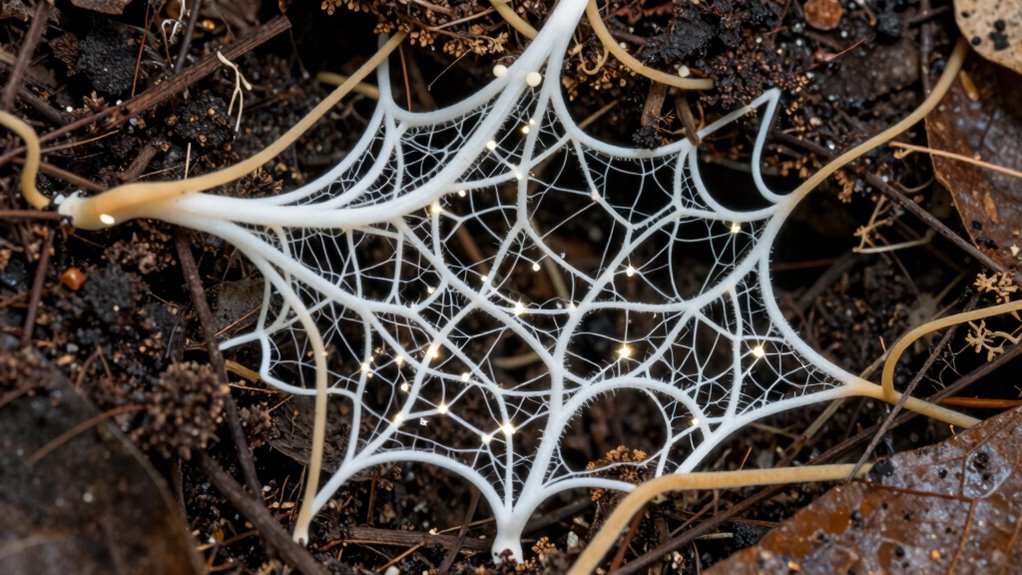
What’s fascinating is the incredible fungal species diversity that populates these networks. Different fungi specialize in forming associations with specific types of trees or plants, creating a complex mosaic of relationships. Some fungi prefer conifers, while others thrive with hardwoods. The diversity isn’t just in the species; it’s also reflected in the functions they perform. Certain fungi enhance nutrient uptake, while others help plants resist pathogens or tolerate environmental stresses. This diversity ensures that the forest’s underground economy remains resilient, adaptable to changing conditions, and capable of supporting a wide variety of plant life. Additionally, the presence of diverse fungi allows the network to better recover from disturbances by maintaining multiple pathways for nutrient flow and communication.
As you consider the unseen complexity beneath your feet, you realize that each fungal species contributes uniquely to the network. The presence of multiple fungal species increases the system’s robustness, allowing nutrients and information to flow efficiently across vast areas. This network isn’t static; it constantly adapts, with fungi competing and cooperating to optimize resource sharing. The diversity of fungal species also impacts how well the forest can recover from disturbances like storms or logging. When certain fungi decline, others can step in to maintain the network’s integrity, making the ecosystem more resilient overall.
Understanding the richness of these underground fungi networks shows you that forests are more than just trees—they’re interconnected communities sustained by a hidden, bustling world of fungi. By supporting fungal diversity and mycorrhizal symbiosis, you help preserve the delicate balance that keeps these ecosystems thriving. This unseen world beneath the forest floor is a *testament* to nature’s intricate design, working silently to sustain life above ground. Recognizing the importance of fungal diversity can help inform conservation efforts that aim to protect these vital underground ecosystems.
mycorrhizal fungi identification kit
As an affiliate, we earn on qualifying purchases.
As an affiliate, we earn on qualifying purchases.
Frequently Asked Questions
How Do Fungi Communicate With Plants Through Their Networks?
You can see fungi communicate with plants through their networks via mycorrhizal signaling and chemical exchanges. When fungi detect plant signals, they send chemical messages that promote nutrient transfer and growth. In turn, plants send signals encouraging fungi to extend their networks. This mutual exchange strengthens their relationship, helping both survive better. So, fungi and plants actively coordinate through these signaling and chemical processes, creating a hidden, supportive underground communication system.
Can Fungi Networks Be Destroyed or Damaged by Human Activity?
Yes, fungi networks can be damaged by human impact, but their resilience often allows them to recover over time. Activities like deforestation, pollution, and soil disturbance harm these delicate networks, disrupting communication between fungi and plants. However, fungi’s adaptability and ability to rebuild their connections demonstrate their resilience. Protecting forests and reducing harmful human activities help guarantee these essential networks remain intact, supporting healthy ecosystems.
Are Fungi Networks Present in All Types of Forests Worldwide?
You’ll find fungi networks in most forests worldwide, thanks to their essential role in fungal symbiosis and nutrient exchange. The diversity of mycelium guarantees different fungal species adapt to various environments. These networks help plants absorb nutrients and thrive, making them a universal feature of forest ecosystems. While some environments might have less mycelium diversity, fungi networks generally persist across diverse forest types globally.
How Do Fungi Networks Influence Soil Health and Nutrient Cycling?
Fungi networks dramatically boost soil health and nutrient cycling, acting like underground superhighways. Through fungal symbiosis, they exchange nutrients with plants and break down organic matter in soil decomposition, releasing essential minerals. This process keeps forests thriving, ensuring plants get what they need and maintaining a balanced ecosystem. Without these networks, soil would be barren and nutrient-poor, like a desert in the heart of a lush forest.
Can Fungi Networks Help in Detecting Environmental Changes or Pollution?
Fungi networks can definitely help in detecting environmental changes or pollution through fungal signaling and environmental sensing. When pollutants or stressors enter their environment, fungi respond by altering their signaling patterns, which can be detected via scientific analysis. By studying these responses, you can identify contamination early on, making fungi networks valuable indicators of environmental health. Their sensitivity to changes allows you to monitor ecosystems effectively and take timely action.
As an affiliate, we earn on qualifying purchases.
Conclusion
Just as the myth of the Earth’s silent, interconnected web reminds us of unseen forces shaping our world, the fungi beneath the forest floor reveal a hidden universe thriving in quiet cooperation. You’ve glimpsed a secret network, echoing Gaia’s own heartbeat, whispering that life’s true strength lies in unity and unseen bonds. Remember, in these silent networks, there’s a silent wisdom—a reminder that beneath our feet, worlds more mysterious and interconnected than we imagine continue to thrive.
mycorrhizae plant root inoculant
As an affiliate, we earn on qualifying purchases.
As an affiliate, we earn on qualifying purchases.
forest soil fungal diversity kit
As an affiliate, we earn on qualifying purchases.
As an affiliate, we earn on qualifying purchases.
Halloween Picks
halloween
As an affiliate, we earn on qualifying purchases.