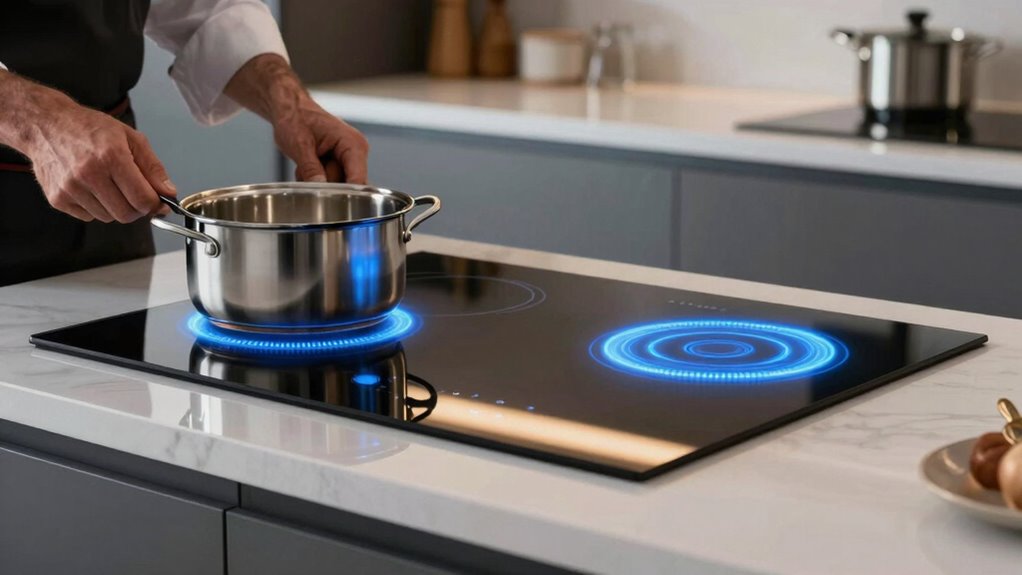

Induction cooking feels different because it heats cookware directly with electromagnetic fields, not through flames or resistive elements. This makes the heat respond instantly to your adjustments, giving you more precise control. The magnetic field is silent and invisible, so it’s less obvious compared to traditional stoves. You’ll need to learn how your cookware reacts and adapt your techniques. Keep exploring, and you’ll discover how to harness induction’s full potential and cook more efficiently.

Get the latest gadgets delivered free — and shop member deals
- Fast, free delivery on millions of items
- Access to Prime Big Deal Days deals on October 6–7
- Prime Video, Amazon Music and more included
Key Takeaways
- Induction heats cookware directly via magnetic fields, creating faster, more responsive temperature changes than traditional methods.
- The silent, invisible magnetic field alters the sensory cues cooks typically rely on, affecting their perception of heat.
- Precise, rapid adjustments demand a different technique and heightened attention from seasoned cooks.
- The absence of visible flames or glowing coils changes visual and tactile feedback during cooking.
- Understanding electromagnetic principles enhances control, but initially feels unfamiliar compared to conventional heat transfer.
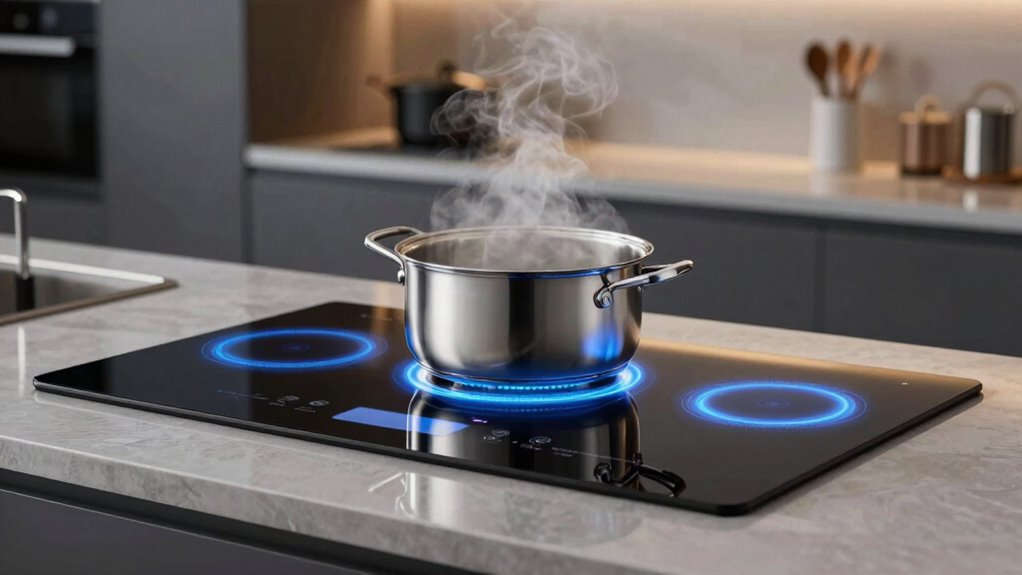
Even if you’re an experienced home cook, induction cooking can still feel surprisingly different from traditional methods. One of the key reasons is how induction heats your cookware directly through a magnetic field. Unlike gas or electric stoves that transfer heat through flames or resistive elements, induction creates a magnetic field that induces an electric current in the ferromagnetic cookware. This process results in a more immediate and precise transfer of heat, which might catch you off guard if you’re used to the slower, more gradual heat buildup of conventional stoves. The magnetic field is silent and invisible, so you don’t see the flames or glowing coils, yet it’s actively generating heat within your pots and pans. This direct heat transfer means that your cookware heats up faster and cools down quicker, giving you a level of control that’s different from traditional stoves.
Induction heats cookware instantly through an invisible magnetic field, offering precise control and faster response than traditional stoves.
This shift in heat transfer dynamics can feel unusual because it changes how you manage your cooking process. With induction, the moment you turn the dial or press a button, you notice a rapid change in temperature. If you’re accustomed to waiting for a burner to heat up or cool down, induction’s responsiveness might make you feel like you’re barely controlling the heat—it’s almost instantaneous. This quick responsiveness requires you to be more attentive, as the risk of overheating or burning food increases if you’re not careful. It’s a stark contrast to the more gradual heating and cooling you’re used to, where the heat slowly settles and gives you time to adjust.
Another aspect that feels different is the way heat transfer is concentrated directly into the cookware. Since the magnetic field only acts where ferromagnetic material is present, your heat is focused precisely where you want it. This efficiency minimizes wasted energy and keeps the surrounding area cooler, but it also demands a different approach to simmering and boiling. You may find that you need to adjust your timing and heat settings because the transfer isn’t just about the stove’s surface temperature but about how quickly your cookware responds to changes in power. Over time, you’ll get used to this timing and learn to read the subtle cues of induction cooking, but initially, it can seem like a steep learning curve. Additionally, understanding the magnetic induction process can help you better harness its benefits and adapt your cooking techniques accordingly. Recognizing how electromagnetic principles operate in your kitchen can further enhance your efficiency with induction cooktops.
In the end, the difference comes down to the fundamental shift in how heat is generated and transferred. Your traditional experiences with visible flames or glowing coils no longer apply, replaced by a silent, efficient magnetic field that heats cookware directly. Understanding this underlying technology helps you adapt quickly and harness the full potential of induction cooking’s precise, rapid heat transfer.
induction cooktop with precise temperature control
As an affiliate, we earn on qualifying purchases.
As an affiliate, we earn on qualifying purchases.
Frequently Asked Questions
Does Induction Cooking Require Special Cookware?
Yes, induction cooking requires special cookware. You need cookware with compatible magnetic requirements; not all pots and pans work. Look for cookware made of ferrous materials like cast iron or magnetic stainless steel, which have the right magnetic properties for induction. Check for a magnet‘s ability to stick to the bottom of your cookware. If it sticks, your cookware is compatible, ensuring efficient heat transfer and safe induction cooking.
How Does Induction Heating Differ From Gas or Electric?
Did you know induction cooking heats up 50% faster than electric stoves? Unlike gas or electric, induction relies on magnetic fields to directly transfer heat to compatible cookware. This means the heat transfer is instant and precise, giving you quick adjustments and consistent temperatures. You feel the difference because induction responds immediately, offering control that gas and electric stoves can’t match, making cooking more efficient and enjoyable.
Can Induction Cooktops Be Used Outdoors?
Yes, you can use induction cooktops outdoors, but look for models with good outdoor durability and weather resistance. Make sure the cooktop is specifically designed for outdoor use, with features like sealed surfaces and sturdy construction. Keep it protected from direct rain, extreme temperatures, and moisture when not in use. Proper placement and a weather-resistant cover help maintain its performance and longevity, letting you enjoy outdoor cooking safely and efficiently.
Are Induction Cooktops Energy-Efficient?
Ever wondered if induction cooktops are energy-efficient? They definitely are, because they heat cookware directly, reducing energy waste and promoting energy savings. This efficiency not only saves you money but also lowers environmental impact. Isn’t it satisfying to cook faster and greener at the same time? With induction, you get quicker heating and less energy lost, making it a smart choice for eco-conscious cooks like you.
What Safety Features Do Induction Cooktops Have?
Induction cooktops include safety features like safety sensors that automatically turn off the heat if overheating or spills are detected, reducing fire risks. Child locks are also standard, preventing children from accidentally turning on or changing settings. These features make induction cooking safer by ensuring the surface stays cool to the touch and minimizing accidental operation, giving you peace of mind while preparing meals.
ferromagnetic cookware for induction stove
As an affiliate, we earn on qualifying purchases.
As an affiliate, we earn on qualifying purchases.
Conclusion
You might think seasoned cooks would be used to induction’s quick response, but the sensation of rapid heat changes can still feel unfamiliar. It’s like switching from a traditional car to an electric one—you notice the immediate acceleration, but it takes time to adjust to the new experience. Embracing this difference helps you master induction’s precision, making your cooking more efficient and enjoyable. So, trust the process and enjoy the new control at your fingertips.
induction compatible pots and pans set
As an affiliate, we earn on qualifying purchases.
As an affiliate, we earn on qualifying purchases.
induction cooktop safety features
As an affiliate, we earn on qualifying purchases.
As an affiliate, we earn on qualifying purchases.
Halloween Picks
halloween
As an affiliate, we earn on qualifying purchases.