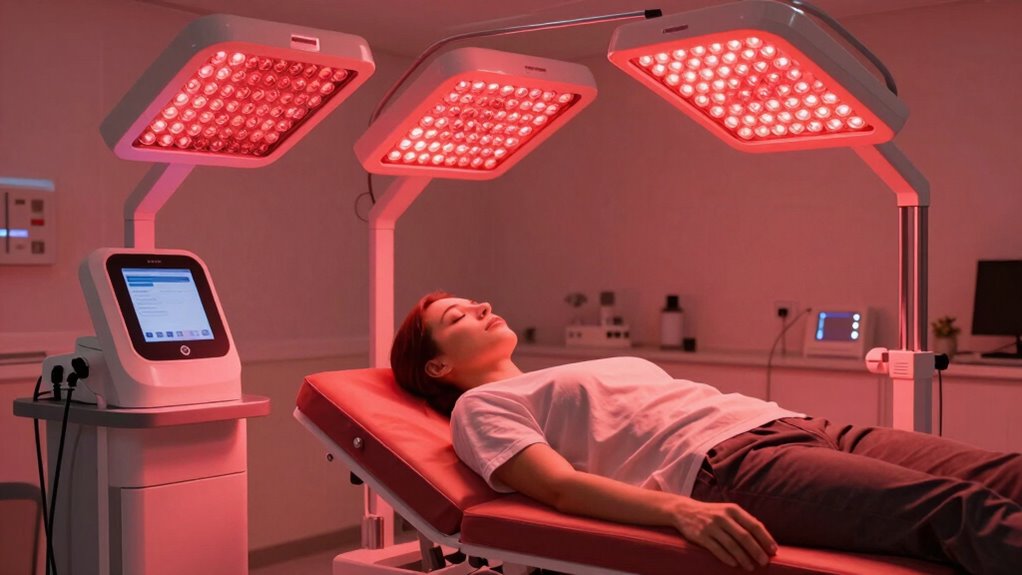

Red light therapy shows promise for skin rejuvenation, pain relief, and tissue repair, but the scientific evidence is still evolving. Some studies support its benefits, but results vary depending on treatment parameters and device quality. It’s generally safe if used properly, yet more rigorous research is needed to confirm its effectiveness. Knowing how it works and what to expect can help you make informed decisions—if you’re curious, there’s more to uncover about its true potential.

Get the latest gadgets delivered free with Prime
- Fast, free delivery on millions of items
- Prime Video, Amazon Music and more included
- Member-only deals all year
Key Takeaways
- Evidence suggests red light therapy may improve skin appearance and promote tissue healing, but results vary and more research is needed.
- It is generally safe when used properly, with minimal side effects, but unregulated devices can pose risks.
- Clinical benefits depend on specific parameters like wavelength, intensity, and treatment duration.
- Current scientific evidence supports potential uses, but it is not a guaranteed or universal treatment.
- Consulting healthcare professionals and understanding the science behind light wavelengths can optimize safety and effectiveness.

Red light therapy has gained popularity as a non-invasive treatment for various health and skin concerns, but understanding its true effectiveness requires examining the available evidence. Many people turn to this therapy for conditions like skin rejuvenation, pain relief, and inflammation reduction. While the concept sounds promising, it’s essential to look at what scientific studies say about its clinical applications and safety considerations.
Research shows that red light therapy can have certain benefits, especially in skin health. It’s been used to improve skin texture, reduce wrinkles, and promote collagen production. Some clinical trials support these claims, indicating that consistent treatment may lead to visible improvements over time. However, the strength of the evidence varies, and results are not always guaranteed. When it comes to clinical applications, red light therapy is also explored for wound healing and pain management. For example, some studies suggest it can accelerate tissue repair and reduce inflammation, making it a potential adjunct in physical therapy and dermatology. Still, these applications often depend on specific parameters like wavelength, intensity, and duration, which are not yet standardized across studies. Additionally, the variability in equipment quality and treatment protocols can influence outcomes, underscoring the importance of understanding standardized treatment guidelines.
Safety considerations are equally important when evaluating red light therapy. Generally, it’s considered safe because it’s non-invasive and doesn’t involve harmful radiation like UV rays. Most users experience no side effects, and adverse reactions are rare. Nonetheless, it’s also important to consider how treatment parameters can impact safety and effectiveness, especially with unregulated devices. Proper eye protection and adherence to recommended treatment times are necessary to minimize risks. It’s worth noting that proper device regulation can significantly influence both safety and outcomes, which highlights the need for consumers to choose reputable products. Understanding the science behind light wavelengths can provide further insight into how these therapies work at a cellular level. It’s also wise to consult a healthcare professional before starting red light therapy, particularly if you’re pregnant, have underlying health conditions, or use photosensitive drugs. Additionally, understanding the science behind sound healing science can help provide a broader perspective on alternative therapeutic options that may complement red light therapy.
Despite its safety profile and promising clinical applications, red light therapy isn’t a miracle cure. While some individuals see notable improvements, others may not notice much difference. The evidence is still evolving, and more rigorous, large-scale studies are needed to confirm many of its claimed benefits. If you’re considering trying it, you should weigh the current evidence carefully and discuss it with a healthcare provider to ensure it’s appropriate for your needs. To sum up, red light therapy shows potential in certain clinical applications with a good safety record, but it’s essential to approach it with realistic expectations and awareness of the existing scientific evidence.
red light therapy device for skin rejuvenation
As an affiliate, we earn on qualifying purchases.
As an affiliate, we earn on qualifying purchases.
Frequently Asked Questions
How Long Does It Take to See Results From Red Light Therapy?
You might start noticing results from red light therapy within a few sessions, but it varies based on your goals and treatment duration. Photobiomodulation research suggests that consistent treatments over several weeks often yield the most favorable outcomes. Typically, most people see improvements after 4 to 6 weeks, with sessions scheduled 2-3 times weekly. Patience and adherence to your treatment plan are key to achieving ideal results.
Are There Any Age Restrictions for Using Red Light Therapy?
You can generally use red light therapy at any age, but if you’re concerned about skin pigmentation or eye safety, it’s best to consult a healthcare professional. For children or older adults, extra caution is recommended, especially around sensitive areas. Always follow safety guidelines to avoid eye strain or damage, and consider protective eyewear for eye safety. Tailoring sessions to your age and skin type helps guarantee safe, effective treatment.
Can Red Light Therapy Replace Traditional Medical Treatments?
Can red light therapy replace traditional medical treatments? Generally, no. It’s considered an alternative therapy that may complement, not substitute, conventional treatments. While some studies show promising results for skin health and pain relief, it has treatment limitations and isn’t proven to address serious conditions on its own. You should always consult a healthcare professional before relying solely on red light therapy, especially for significant health issues.
Is Red Light Therapy Safe for Pregnant Women?
Red light therapy’s safety during pregnancy isn’t well-established, so it’s best to approach with caution. You should avoid it due to concerns about pregnancy safety and potential fetal impact, as there’s limited research on its effects on developing fetuses. Always consult your healthcare provider before using red light therapy during pregnancy to guarantee your safety and the baby’s well-being.
What Are the Potential Long-Term Effects of Red Light Therapy?
The long-term effects of red light therapy are still being studied, but it’s generally considered safe when used properly. You might experience benefits like skin rejuvenation and pain relief over time, with minimal risks. However, prolonged or frequent use could potentially cause skin irritation or eye strain. To stay safe, follow recommended guidelines and consult a healthcare professional if you notice any adverse effects.
infrared LED light therapy for pain relief
As an affiliate, we earn on qualifying purchases.
As an affiliate, we earn on qualifying purchases.
Conclusion
Red light therapy is like a shiny new toy—exciting and full of promise, but not yet the entire toy box. While some studies show benefits, the evidence isn’t strong enough to guarantee results for everyone. Think of it as a promising map, but not a guaranteed shortcut. Keep your expectations realistic, and don’t rely solely on red light therapy for major health fixes. Use it as a tool, but remember, the journey to wellness still requires a well-rounded approach.
red light therapy for wound healing
As an affiliate, we earn on qualifying purchases.
As an affiliate, we earn on qualifying purchases.
As an affiliate, we earn on qualifying purchases.
Halloween Picks
halloween
As an affiliate, we earn on qualifying purchases.