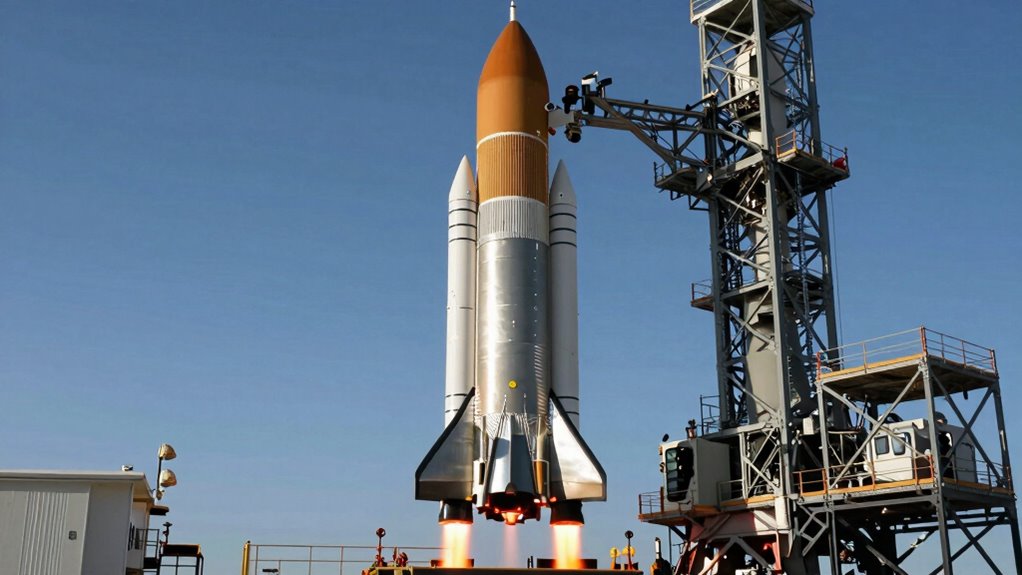

You might be surprised to learn how engineers make reusable rockets possible by combining advanced engine designs, precise throttling, and fuel optimization to maximize efficiency. They craft thermal protection systems with heat-resistant materials to survive re-entry, while sophisticated landing technologies ensure safe, accurate recoveries. Integrating these systems decreases costs and pushes space travel toward sustainability. Curious how all these innovations work together? There’s more to uncover behind the engineering marvels that are transforming space exploration.

Get the latest gadgets delivered free — and shop member deals
- Fast, free delivery on millions of items
- Access to Prime Big Deal Days deals on October 6–7
- Prime Video, Amazon Music and more included
Key Takeaways
- Advanced engine designs with throttling improve fuel efficiency and enable precise thrust control during launches.
- Thermal protection systems, including heat-resistant tiles, safeguard rockets during intense re-entry heat.
- Reusable rockets feature durable landing legs and control systems for safe landings on land or drone ships.
- Materials science innovations balance lightweight construction with heat resistance for multiple re-entries.
- Integrating propulsion, thermal protection, and landing technologies reduces costs and advances sustainable space exploration.
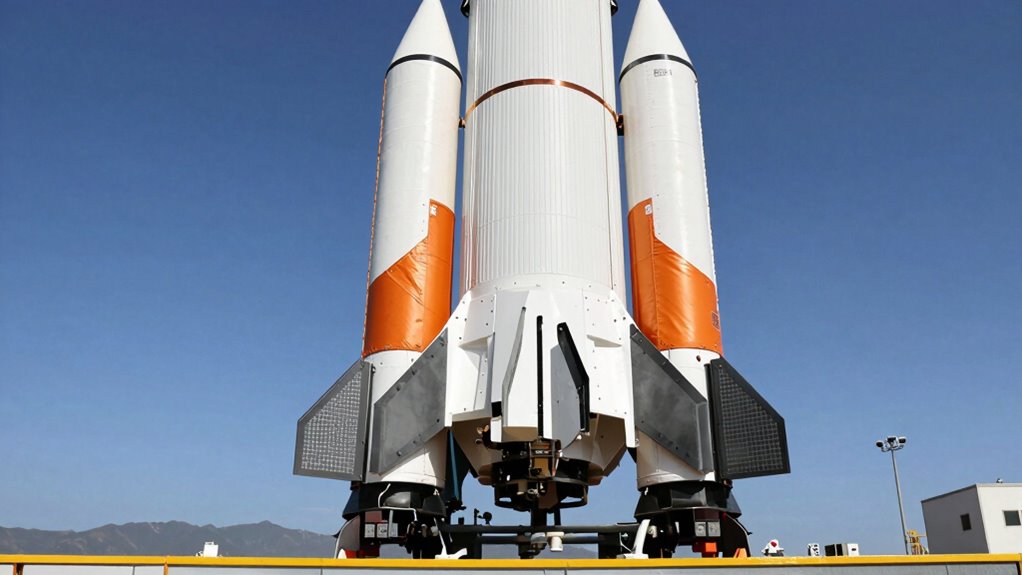
Have you ever wondered how rockets can be reused multiple times? It’s a feat of engineering that combines innovative design with meticulous planning. The core idea is to make rockets more cost-effective and sustainable, but it hinges on understanding and controlling several complex factors. One of the most critical aspects is propellant efficiency. Unlike traditional rockets that burn through their fuel and are discarded after a single use, reusable rockets are designed to maximize every drop of propellant. Engineers develop advanced engines that can throttle up and down precisely, allowing for optimized fuel consumption during each phase of flight. This means fewer resources are wasted, and each launch becomes more economical. Efficient propellant use also involves refining the engine’s combustion process to extract the maximum energy from the fuel, reducing the amount needed for each mission. Additionally, engine throttling technology plays a vital role in adjusting thrust levels to improve overall efficiency and safety during flight. Achieving this level of control requires sophisticated sensors and control algorithms that constantly monitor and adapt to changing flight conditions. Moreover, innovations in thermal management are essential for maintaining optimal engine performance under extreme temperatures.
Beyond fuel efficiency, thermal protection plays a crucial role in the engineering behind reusable rockets. When a rocket re-enters Earth’s atmosphere, it faces extreme heat generated by friction, which can reach thousands of degrees. To withstand these conditions, engineers design sophisticated thermal protection systems—think of them as high-tech armor—that shield the spacecraft. These systems often include heat-resistant tiles or ablative materials that absorb and dissipate heat, preventing damage to the rocket’s structure. The challenge is to create thermal protection that’s lightweight enough not to compromise payload capacity but durable enough to endure multiple re-entries. This balance requires innovative materials science and meticulous testing, ensuring that the rocket can return safely and be prepared for its next flight. The ongoing development of thermal protection materials is crucial for extending the reusability of spacecraft and reducing overall mission costs.
Reusability also depends heavily on the rocket’s ability to land safely and be quickly refurbished. The engineering doesn’t stop at launch; it involves designing landing legs, control systems, and sensors that allow the rocket to execute precise landings, whether on a drone ship at sea or a landing pad on land. Each component must withstand the stresses of launch, re-entry, and landing, which demands rigorous durability standards. The entire process hinges on a deep understanding of thermal protection and propellant efficiency, integrated into a cohesive system that can be repeatedly used with minimal refurbishment. This synergy of advanced propulsion, heat shielding, and landing technology is what makes reusable rockets a revolutionary step forward in space exploration, turning what was once impossible into a practical reality.
As an affiliate, we earn on qualifying purchases.
Frequently Asked Questions
How Do Reusable Rockets Withstand Multiple Re-Entries Without Damage?
Reusable rockets withstand multiple re-entries through advanced aerodynamic design and precise landing control. You see, their sleek shapes reduce heat and stress during re-entry, while landing precision systems ensure gentle, accurate landings. Built with heat-resistant materials, these rockets endure the intense heat and vibration, allowing them to be reused without damage. This combination of smart design and technology makes reusability possible, saving costs and resources for future launches.
What Materials Are Used to Ensure Heat Resistance During Re-Entry?
Imagine you’re designing a reusable rocket, like SpaceX’s Falcon 9. You’d use advanced materials like reinforced carbon-carbon composites for thermal protection and heat shielding, which withstand extreme re-entry temperatures. These materials absorb and dissipate heat efficiently, preventing damage. By incorporating such high-performance thermal protection systems, your rocket can endure multiple re-entries, ensuring safety and reusability without compromising structural integrity.
How Does Fuel Efficiency Compare Between Reusable and Expendable Rockets?
You’ll find reusable rockets are generally more fuel-efficient than expendable ones, thanks to significant fuel savings from multiple launches. Their efficiency metrics improve as you reuse components, reducing the need for new fuel with each flight. This means lower costs and less environmental impact. By optimizing design and materials, reusable rockets maximize efficiency, allowing you to achieve more with less fuel, making space missions more sustainable and economically viable over time.
What Safety Measures Are in Place for Recovering Reusable Rocket Stages?
You should know that safety measures for recovering reusable rocket stages include careful mission planning, which considers the launch pad location and possible recovery zones. During recovery, ground crews monitor the stage’s descent, ensuring a safe landing with controlled descent systems like grid fins and parachutes. Multiple checks are in place to prevent accidents, and recovery procedures are rehearsed extensively, prioritizing safety for personnel and equipment.
How Does the Cost of Reusability Impact Overall Space Mission Budgets?
Reusability considerably lowers your launch costs, allowing for more frequent missions and better mission planning. By reusing rocket stages, you save money on building new hardware, which can then be allocated to other mission needs or innovations. This cost reduction makes space exploration more affordable, enabling you to plan complex missions with greater confidence and flexibility, ultimately accelerating advancements in space technology and exploration efforts.
thermal protection tiles for spacecraft
As an affiliate, we earn on qualifying purchases.
As an affiliate, we earn on qualifying purchases.
Conclusion
As you explore the world of reusable rockets, you begin to see the delicate dance of innovation and resilience. These marvels gently return, like seasoned dancers gracefully stepping back onto the stage, ready for their next performance. Their engineering whispers tales of patience and precision, turning what once seemed impossible into a gentle promise of exploration. With each successful reuse, you’re reminded that sometimes, the most extraordinary journeys start with a simple, elegant step forward.
rocket landing gear simulation kit
As an affiliate, we earn on qualifying purchases.
As an affiliate, we earn on qualifying purchases.
advanced rocket propulsion system
As an affiliate, we earn on qualifying purchases.
As an affiliate, we earn on qualifying purchases.
Fall Picks
fall essentials
As an affiliate, we earn on qualifying purchases.