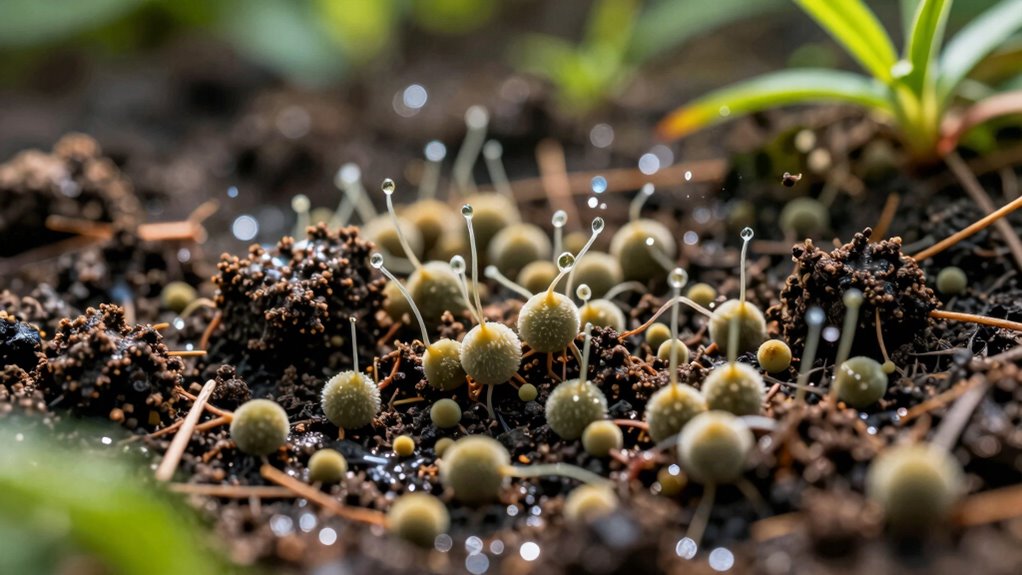

Soil microbes are surprisingly essential to climate models because they control key processes like nutrient cycling, organic matter decomposition, and greenhouse gas emissions. Their diversity shapes whether soils act as carbon sinks or sources, influencing climate feedbacks. Ignoring these microbes can lead to inaccurate predictions of warming and climate change impacts. If you keep exploring, you’ll discover how recent advances help incorporate microbial effects into climate forecasts, making them more reliable.
Key Takeaways
- Soil microbes influence greenhouse gas emissions, affecting climate change predictions.
- Microbial diversity determines whether soils act as carbon sinks or sources.
- Omitting microbial processes leads to inaccuracies in climate models.
- Advances in microbial research improve the precision of climate feedback assessments.
- Understanding microbial responses helps in developing effective climate mitigation strategies.
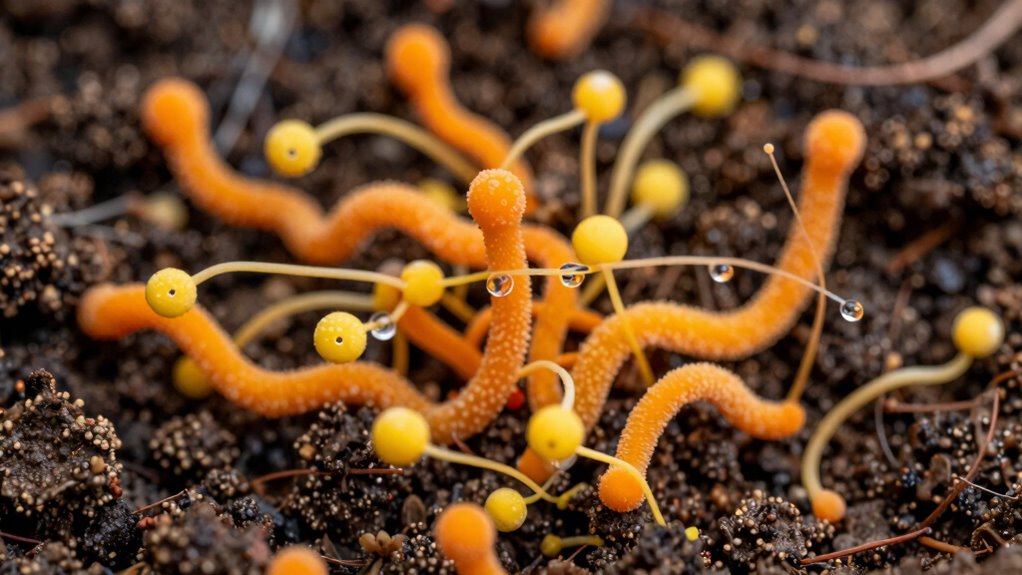
Have you ever wondered how tiny soil microbes influence the accuracy of climate models? It’s easy to overlook these microscopic entities, but they play a essential role in shaping Earth’s climate. Soil microbes, which encompass a vast microbial diversity, are the unseen engineers of nutrient cycling, organic matter decomposition, and greenhouse gas emissions. When climate scientists develop models to predict future climate change, they often simplify or omit these microbial processes. However, recent research shows that these microbes can markedly affect climate feedback mechanisms, making their inclusion indispensable for more precise predictions.
Microbial diversity refers to the variety of microbes present in soil ecosystems. This diversity isn’t just about the number of species, but also about their different functions and responses to environmental changes. Diverse microbial communities have a broader range of metabolic capabilities, which influence how carbon and nitrogen cycle through the soil. These cycles directly impact greenhouse gases like carbon dioxide, methane, and nitrous oxide—key players in climate feedback loops. When soil microbes break down organic matter, they release these gases into the atmosphere, contributing to warming. Conversely, some microbes can also sequester carbon, pulling CO₂ out of the air. The balance between these processes depends heavily on microbial diversity and activity. Additionally, microbial responses to environmental stressors such as temperature fluctuations can alter their activity levels impacting climate feedback. Recognizing the importance of microbial ecology helps scientists understand these complex interactions more comprehensively.
Ignoring the complexity of soil microbial communities in climate models can lead to inaccuracies. For example, if models assume a uniform microbial response to warming, they might underestimate or overestimate greenhouse gas emissions. These inaccuracies cascade, affecting predictions about global temperature rise, sea-level change, and weather patterns. Incorporating microbial diversity into climate feedback mechanisms helps scientists better understand how soils respond to changing temperatures and moisture levels. It also emphasizes the need to consider microbial responses in climate modeling to improve accuracy. Moreover, advancements in microbial analysis techniques are enabling researchers to observe these tiny organisms’ responses in real-time, leading to more accurate modeling.
Understanding these microbial processes isn’t just an academic exercise; it’s essential for creating reliable climate models. When scientists account for how microbial diversity affects soil carbon storage and greenhouse gas fluxes, their predictions become much more precise. This approach emphasizes the significance of microbial responses to environmental changes in climate predictions. This knowledge can guide policymakers to adopt strategies that enhance soil carbon sinks or mitigate emissions. Ultimately, recognizing the critical role of soil microbes offers a more complete picture of climate feedback, empowering us to better anticipate and respond to the challenges posed by climate change. So, the tiny microbes beneath your feet are far from insignificant—they’re integral to the future of our planet’s climate stability.

Rapitest® Soil Microbial Test Kit. Improve Soil Health and Activity. for use Along with Soil Conditioners/Activators/Nutrients. Designed, Engineered and Assembled in the USA.
- Soil Health Assessment: Determine soil activity and sustainability
- Complete Test Kit: Includes all components and instructions
- Rapid Results: Get results in 10 minutes
As an affiliate, we earn on qualifying purchases.
As an affiliate, we earn on qualifying purchases.
Frequently Asked Questions
How Do Soil Microbes Influence Greenhouse Gas Emissions?
Soil microbes influence greenhouse gas emissions by driving nutrient cycling and affecting the production of gases like methane and nitrous oxide. Your microbial diversity determines how efficiently these microbes break down organic matter, which impacts greenhouse gas release. When microbial communities are diverse, they can either emit more or less gases depending on their functions. So, understanding this diversity helps improve climate models and predict future emissions more accurately.
Can Soil Microbe Data Improve Climate Model Accuracy?
Yes, soil microbe data can improve climate model accuracy. By understanding microbial diversity, you gain insights into how different microbes process soil nutrients and influence greenhouse gas emissions. Incorporating this data helps models better predict carbon and nitrogen cycling, leading to more precise climate projections. When you consider soil nutrient interactions with diverse microbes, you enhance the model’s ability to forecast how ecosystems respond to climate change, making predictions more reliable.
What Methods Are Used to Study Soil Microbes?
Think of studying soil microbes like mining for hidden treasures underground. You start with soil sampling, collecting small samples from different locations. Then, microbial sequencing helps decode their genetic makeup, revealing which microbes are present and what they do. These methods uncover the rich diversity and activity of soil microbes, providing essential insights into their roles in climate processes. This knowledge improves climate models by showing how microbes influence greenhouse gases.
Are Soil Microbes Affected by Climate Change?
Yes, soil microbes are affected by climate change. Rising temperatures and changing precipitation impact soil microbial diversity, often reducing beneficial microbes while favoring others. You’ll find that microbial adaptation occurs as microbes adjust to new conditions, but these changes can disrupt soil health and carbon cycling. Understanding these shifts helps us predict climate impacts better, emphasizing the importance of protecting soil microbial communities for ecosystem resilience.
How Quickly Do Soil Microbes Respond to Environmental Changes?
You might think soil microbes respond slowly, but they’re surprisingly quick. Microbial diversity shifts within days to weeks when environmental conditions change, directly impacting soil nutrient cycling. This rapid response means they play a vital role in adapting ecosystems to climate fluctuations, often faster than we expect. Their agility underscores why understanding soil microbes is essential for accurate climate models and predicting future environmental shifts.
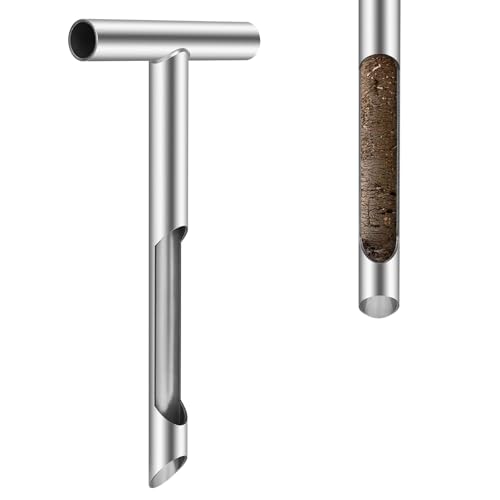
AUZEKER 12 Inch Soil Sampler Probe, Stainless Steel Soil Core Sampling Tool with T-Handle, Heavy Duty Soil Probe for Lawn, Garden, Farm & Soil Testing
- Accurate Soil Sampling: Collect clean, consistent soil cores
- Durable Stainless Steel: Corrosion-resistant for long-term use
- Ergonomic T-Handle: Provides better leverage and control
As an affiliate, we earn on qualifying purchases.
As an affiliate, we earn on qualifying purchases.
Conclusion
So, next time you ignore those tiny soil microbes, remember—they hold the key to climate predictions you rely on. Ironically, it’s often the smallest players who have the biggest impact on our planet’s future. By overlooking soil microbes, we risk skewing climate models, possibly leading us astray. So, while they seem insignificant, these microbes are quietly shaping the climate’s fate—proof that sometimes, size really doesn’t matter.

MySoil Soil Test Kit, Unlock Your Lawn & Garden Potential, Complete & Accurate Nutrient and pH Analysis with Recommendations Tailored to Your Soil and Plant Needs
- Professional Soil Testing Kit: Accurately analyze nutrients and pH
- Fast Results: Receive analysis in 6-8 days
- Comprehensive Nutrient Analysis: Measures 13 plant-available nutrients including Nitrogen and pH
As an affiliate, we earn on qualifying purchases.
As an affiliate, we earn on qualifying purchases.

Just Good Soil – Soil Supplement Protocol, 3-Part Soil Enhancer System
- Complete 3-Part Soil System: Includes microbes, microalgae, and seaweed
- Enhances Soil Microbial Diversity: Restores soil health and resilience
- Boosts Nutrient Availability: Supports stronger, healthier plants
As an affiliate, we earn on qualifying purchases.
As an affiliate, we earn on qualifying purchases.