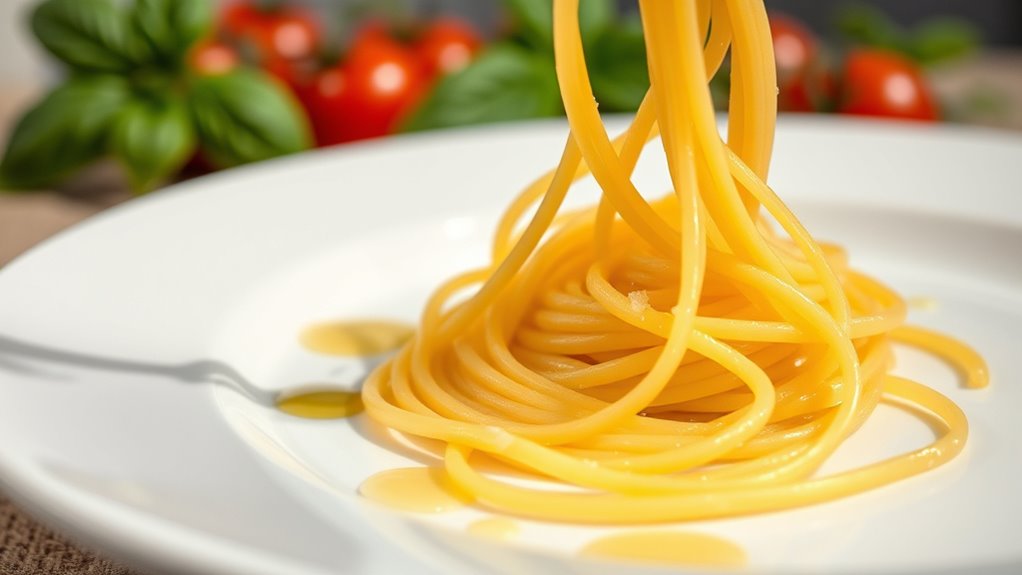

Gluten is the key protein network that gives spaghetti its strength and elasticity, helping it hold its shape during cooking. When you mix wheat flour with water, gluten develops into long, elastic strands that trap air and moisture, creating a sturdy structure. This network guarantees your pasta remains firm and resists breaking apart. Understanding how gluten works can help you cook perfect al dente pasta every time—keep going to discover more secrets behind spaghetti’s magic.
Key Takeaways
- Gluten forms elastic protein strands that create a strong network, giving pasta its firmness and shape.
- Proper gluten development during mixing and kneading enhances pasta’s resilience and cooking quality.
- Heat causes gluten proteins to tighten, maintaining pasta’s structure and preventing disintegration during boiling.
- Higher gluten content results in more durable pasta that holds sauces better and resists breakage.
- Understanding gluten’s role helps in achieving the perfect al dente texture and optimal pasta-cooking results.
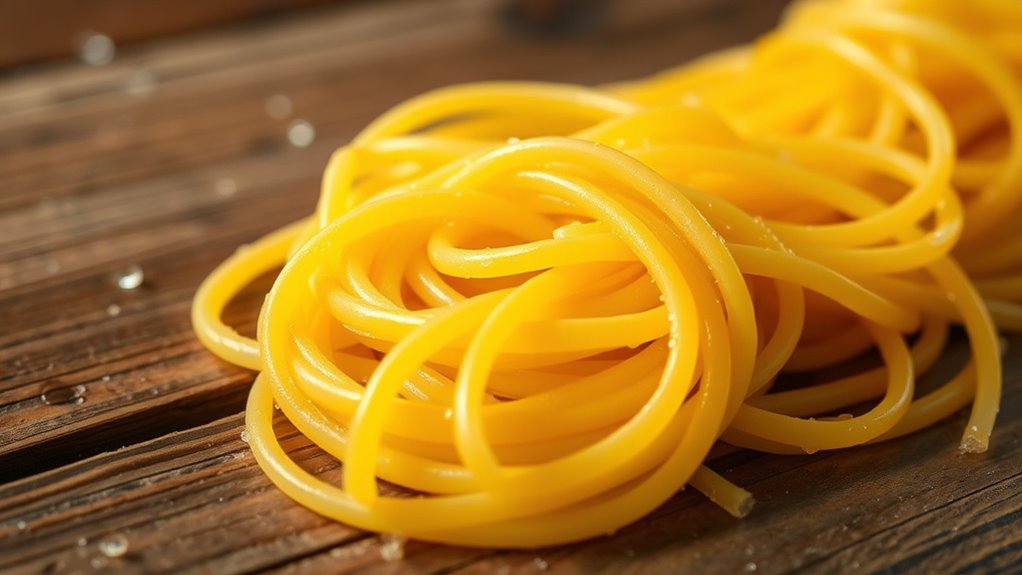
Have you ever wondered what truly makes perfect spaghetti? It’s not just about the sauce or the shape of the pasta; it’s about the fundamental ingredients that give it its unique texture and structure. At the heart of this is gluten, a protein found in wheat flour. When you cook spaghetti, gluten is what holds the pasta together and gives it that satisfying chew. Understanding how gluten functions can help you appreciate why certain pasta recipes turn out best and how to improve your own cooking.
Gluten forms when you mix wheat flour with water and knead or stir the dough. This process develops long, elastic strands of protein that create a network capable of trapping air and moisture. For spaghetti, this network is vital. It gives the pasta its strength, flexibility, and the ability to hold its shape during cooking. Without gluten, the dough would be crumbly and wouldn’t have the desired firmness or elasticity. That’s why high-quality pasta uses durum wheat, which has a higher gluten content, resulting in a sturdier, more resilient noodle.
Mixing wheat flour with water develops elastic gluten strands that give pasta strength and shape.
When you boil spaghetti, that gluten network doesn’t just sit idle; it interacts dynamically with heat. As the pasta cooks, the gluten proteins denature and tighten, giving the noodles their firm yet tender texture. Overcooking, however, can break down this structure, leading to mushy pasta. That’s why timing is so important—removing the spaghetti at just the right moment preserves the gluten’s integrity and keeps your dish from turning into a soggy mess.
The role of gluten also explains why some pasta brands taste better and have a better texture than others. Pasta made with higher gluten content tends to be more resilient and less likely to fall apart. You might notice that artisanal or traditional Italian brands often use durum wheat precisely for this reason. Additionally, the gluten network influences how well the pasta clings to sauces. A well-formed gluten structure creates a surface that can hold onto the sauce better, making each bite flavorful and satisfying.
Knowing about gluten’s role in spaghetti helps you understand how to handle and cook it better. Whether you’re boiling a store-bought box or making your own from scratch, paying attention to gluten development and cooking time makes a noticeable difference. When you respect the science behind gluten, you can guarantee your spaghetti always turns out perfectly al dente—firm, tender, and just right for sauce. Embracing the science behind gluten development can elevate your pasta-cooking skills and ensure consistent, delicious results. It’s these unseen protein strands that truly make your pasta a delightful experience.
Frequently Asked Questions
How Does Gluten Affect the Cooking Time of Spaghetti?
Gluten affects the cooking time of spaghetti by influencing its firmness and elasticity. When you cook spaghetti with higher gluten content, it tends to hold its shape better and requires a slightly longer cooking time to reach the perfect al dente texture. Conversely, pasta with less gluten may cook faster but can become mushy more easily. Adjust your timing based on the gluten level to achieve your desired doneness.
Can Gluten-Free Pasta Mimic Traditional Spaghetti’s Texture?
You can definitely get gluten-free pasta to mimic traditional spaghetti’s texture, but it takes some tricks. Did you know that over 1 in 100 people has a gluten allergy or sensitivity? To achieve that chewy, firm bite, choose gluten-free varieties made with rice, corn, or lentils, and cook them al dente. Adding a touch of olive oil or cooking them slightly less than usual helps replicate the classic pasta feel.
What Are the Health Implications of Gluten in Pasta?
Consuming gluten in pasta can cause health issues if you have gluten intolerance or celiac disease, leading to symptoms like digestive discomfort, inflammation, and nutrient absorption problems. For most people without these conditions, moderate gluten intake is generally safe and can provide important nutrients like fiber, protein, and B vitamins. However, if you suspect gluten sensitivity, you should consult your doctor and consider gluten-free options to protect your health.
How Does Gluten Influence Spaghetti’s Shelf Life?
Gluten helps spaghetti maintain its shape and firmness over time, extending its shelf life. When you store dried pasta, the gluten’s protein network prevents moisture absorption and spoilage, keeping it fresh longer. If you keep it in a cool, dry place, the gluten’s structure stays intact, and your pasta remains good for months. So, gluten plays a key role in preserving spaghetti’s quality and preventing spoilage during storage.
Are There Gluten Alternatives That Enhance Pasta’s Structure?
You can use chickpea or lentil flour as gluten alternatives that improve pasta’s structure. For example, a gluten-free pasta brand added chickpea flour, which enhanced firmness and elasticity, making it more similar to traditional pasta. These alternatives contain natural proteins and fibers that help mimic gluten’s network, giving your pasta better bite and texture. Experimenting with these ingredients can help you enjoy hearty, well-structured gluten-free pasta at home.
Conclusion
You might think gluten is just about elasticity, but it’s really the secret to pasta’s firm, chewy texture. The theory that gluten forms a network that traps air and water holds true, giving spaghetti its structure and bite. Without gluten, your pasta would be mushy and shapeless. So next time you cook spaghetti, remember—gluten isn’t just an ingredient; it’s the backbone that makes pasta perfect. Trust the science behind every delicious bite.