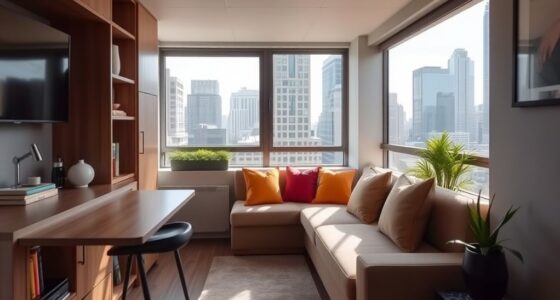

To design a sustainable home in 2025, focus on energy-efficient upgrades like modern insulation, double or triple-pane low-emissivity windows, and ENERGY STAR appliances. Conduct an energy audit first to identify key areas for improvement. Incorporate renewable energy sources such as solar panels and smart technology for enhanced control and efficiency. Combining these strategies helps reduce costs, lower your environmental impact, and increases comfort—continue exploring to discover how to implement these solutions effectively.
Key Takeaways
- Conduct an energy audit to identify and prioritize areas for efficiency upgrades in your home.
- Upgrade to eco-friendly insulation and double/triple-pane windows to improve sealing and reduce heat transfer.
- Replace outdated appliances with ENERGY STAR-rated models and install LED lighting to lower electricity consumption.
- Integrate renewable energy sources like solar panels and solar water heaters to decrease reliance on grid power.
- Incorporate smart home technology for automated energy management and adopt a holistic design approach for maximum efficiency.

As more homeowners seek to reduce their environmental impact, sustainable home design becomes an essential consideration. You’re likely looking for ways to lower your energy bills while making your living space more eco-friendly. Luckily, there are numerous energy-efficient upgrades you can implement in 2025 that not only benefit the environment but also save you money in the long run. The first step is to evaluate your current home’s energy consumption and identify areas where efficiency can be improved. Conducting an energy audit can reveal leaks, inefficient appliances, or outdated insulation that may be costing you more than necessary. Once you understand where your home is losing energy, you can target those areas with specific upgrades.
Evaluating your home’s energy use is the first step toward eco-friendly upgrades.
One of the most impactful changes you can make is upgrading your insulation. Modern, eco-friendly insulation materials like cellulose or spray foam do a better job of sealing your home and maintaining consistent indoor temperatures. Proper insulation reduces the workload on your heating and cooling systems, which means you use less energy and save money. Pairing improved insulation with the installation of energy-efficient windows is another smart move. Double or triple-pane windows with low-emissivity coatings prevent heat transfer, keeping your home warmer in winter and cooler in summer. These upgrades substantially cut down on heating and cooling costs and enhance comfort.
Switching to energy-efficient appliances and lighting also makes a noticeable difference. Replacing older HVAC systems, water heaters, and refrigerators with ENERGY STAR-rated models ensures you’re using appliances that consume less power without sacrificing performance. LED lighting, which uses a fraction of the energy of traditional bulbs, can be installed throughout your home to reduce electricity use and extend bulb life. Smart home technology further enhances efficiency by allowing you to monitor and control energy consumption remotely, scheduling heating, cooling, and lighting to operate only when needed.
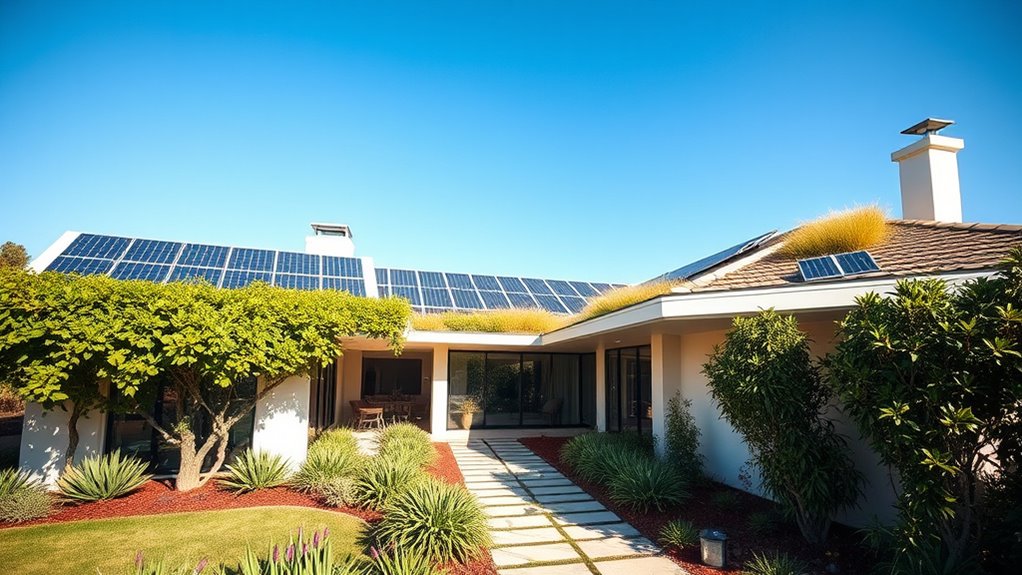
Renewable energy sources are another essential aspect of sustainable home design. Installing solar panels can drastically reduce your reliance on grid electricity, especially in sunny climates. Many regions offer incentives or rebates for solar installation, making it a more affordable investment. Additionally, integrating solar water heaters or small wind turbines can supplement your energy supply. These systems work best when combined with energy-efficient upgrades, creating a comprehensive approach to reducing your carbon footprint.
Furthermore, adopting AI-driven technologies can optimize your energy use by learning your habits and adjusting systems automatically, further enhancing efficiency and reducing waste. In 2025, sustainable home design emphasizes a holistic approach that combines insulation, efficient appliances, renewable energy, and smart technology. By taking these steps, you not only contribute to a healthier planet but also enjoy the benefits of lower energy bills and increased home comfort. The effort you put into making your home more energy-efficient now will pay off for years to come, aligning your living space with the values of sustainability and innovation.
Top picks for "sustainable home design"
Open Amazon search results for this keyword.
As an affiliate, we earn on qualifying purchases.
Frequently Asked Questions
What Affordable Sustainable Materials Are Best for Renovations?
You should consider using recycled steel, bamboo, reclaimed wood, cork, and recycled glass for renovations. These materials are affordable, eco-friendly, and readily available. Bamboo grows quickly and is durable, making it a great alternative to traditional hardwoods. Reclaimed wood adds character and reduces waste, while cork and recycled glass are versatile options for flooring and surfaces. Choosing these sustainable materials helps lower your environmental impact without breaking the bank.
How Can Smart Technology Optimize Home Energy Use?
Smart technology helps you optimize your home’s energy use by automatically adjusting lighting, heating, and cooling based on your habits and preferences. You can control devices remotely via smartphone apps or set schedules to reduce waste. Smart thermostats learn your schedule and optimize temperature settings, saving energy and money. Motion sensors turn off lights when rooms are empty. This seamless automation enhances efficiency while maintaining comfort.
Are There Tax Incentives for Eco-Friendly Home Upgrades?
Yes, there are tax incentives for eco-friendly home upgrades. You can often claim credits or deductions for installing energy-efficient appliances, solar panels, or insulation. These incentives help reduce the overall cost of upgrading your home. Be sure to check federal, state, or local programs, as eligibility and benefits vary. Taking advantage of these incentives not only lowers your expenses but also supports your commitment to sustainability.
How Do Passive Solar Designs Reduce Heating Costs?
Imagine a cozy cabin in a snow-covered landscape. Passive solar design reduces your heating costs by harnessing the sun’s energy through south-facing windows, which absorb heat during the day. You then retain that warmth with insulation and thermal mass, like concrete or stone. This way, your home stays warm naturally, cutting down on heating bills and energy use, making your space more eco-friendly and budget-friendly.
What Maintenance Is Required for Energy-Efficient Systems?
You need to regularly check and replace filters in your HVAC system to keep it running efficiently. Clean your solar panels and inspect insulation annually to prevent energy loss. Schedule professional maintenance for your energy-efficient appliances and systems, like smart thermostats or heat pumps, at least once a year. Keep an eye on ductwork for leaks and ensure vents are unobstructed. Proper maintenance guarantees your system’s performance and saves you money.
Conclusion
By embracing energy-efficient upgrades, you not only reduce your environmental impact but can also save up to 30% on energy bills annually. With innovative designs and sustainable materials, your home becomes a healthier, more comfortable space. Remember, small changes like smart thermostats or better insulation can make a big difference. As you plan for 2025, take pride in creating a home that’s eco-friendly and future-ready—your wallet and the planet will thank you.