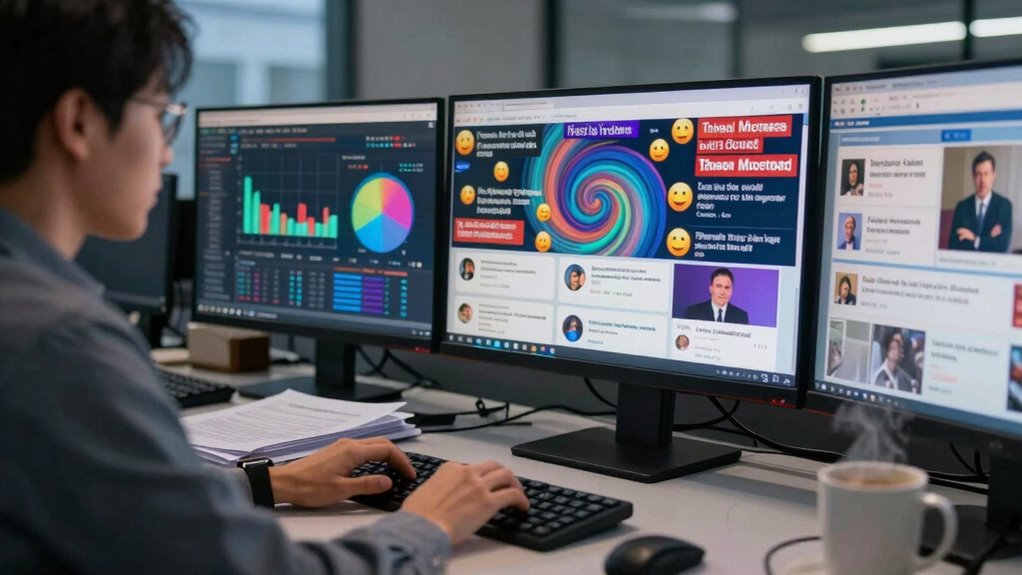

As the election misinformation battle enters a new phase, you’ll notice tactics becoming more subtle and tailored to divide or mislead. Fake news, manipulated images, and videos are harder to spot at first glance, so critical skills are essential. Stay vigilant, question claims, and learn to verify sources independently. Building your understanding of misinformation techniques boosts your ability to spot deception. Keep exploring further, and you’ll discover how to strengthen your defenses against these sophisticated tactics.

Get the latest gadgets delivered free — and shop member deals
- Fast, free delivery on millions of items
- Access to Prime Big Deal Days deals on October 6–7
- Prime Video, Amazon Music and more included
Key Takeaways
- Misinformation tactics are becoming more subtle, exploiting emotional triggers and social divisions through sophisticated manipulation.
- Voter education now emphasizes critical verification skills to distinguish credible information from falsehoods.
- Fact-checkers and media literacy programs play a crucial role in empowering voters to evaluate content critically.
- Social media platforms are implementing warning labels and prompts to combat evolving misinformation strategies.
- Collective responsibility and critical thinking are essential for an informed electorate to resist deceptive election narratives.

As election season heats up, the fight against misinformation is shifting into a new phase, with both political actors and fact-checkers deploying more sophisticated tactics. You’re likely to notice that misinformation sources are becoming harder to spot at first glance. Instead of blatant falsehoods, you might encounter subtle distortions or misleading claims designed to sway your opinions. To counter this, voter education has become more crucial than ever. It’s no longer enough to simply dismiss false information; you need to understand how to identify credible sources and verify facts on your own.
Political campaigns and interest groups are increasingly using targeted messaging to influence voters, often by exploiting emotional triggers or social divides. These misinformation sources spread narratives that seem plausible but are carefully crafted to manipulate perceptions. You might come across fake news stories shared on social media, manipulated images, or videos that appear authentic but are altered or taken out of context. Because these tactics are more sophisticated, they can be difficult to spot unless you’re actively scrutinizing the content. Developing media literacy skills is essential to navigate this complex landscape effectively. Being aware of content manipulation techniques can help you recognize when information has been intentionally altered to mislead. Recognizing how disinformation tactics evolve can further enhance your ability to detect deceptive content.
Fact-checkers and media literacy initiatives are stepping up to meet this challenge. They’re providing you with tools and skills to evaluate information critically. This includes learning to check the credibility of the source, cross-referencing claims with reputable outlets, and being cautious of sensational headlines. Voter education efforts now emphasize the importance of understanding misinformation sources—knowing where falsehoods originate can help you recognize patterns and motives behind them. These initiatives aim to empower you to make informed decisions rather than falling prey to misleading narratives.
At the same time, social media platforms are deploying new measures to combat misinformation. You might see warning labels on posts flagged as false or misleading, or prompts encouraging you to verify claims before sharing. Yet, it’s vital to stay vigilant, since misinformation is constantly evolving with new tactics and channels. Your role becomes active: question what you see, seek out multiple perspectives, and rely on trusted fact-checking organizations.
Ultimately, the ongoing battle against election misinformation requires your participation. By improving your understanding of misinformation sources and honing your ability to discern fact from fiction, you help create a more informed electorate. As campaigns become more complex and deceptive tactics more refined, your awareness and critical thinking are your best defenses. The new phase of this fight isn’t just about fact-checking; it’s about building resilience through education, ensuring you’re equipped to navigate the increasingly sophisticated landscape of election information.
As an affiliate, we earn on qualifying purchases.
Frequently Asked Questions
How Do Social Media Platforms Plan to Combat Election Misinformation?
Social media platforms plan to combat election misinformation by improving algorithm transparency, so you can better understand how content is prioritized and flagged. They’ll also focus on user education, helping you identify false information and encouraging critical thinking. By combining these efforts, platforms aim to reduce misinformation spread, making it easier for you to access accurate election information and participate confidently in the democratic process.
What Role Do Foreign Actors Play in Spreading Election Falsehoods?
Foreign actors play a significant role in spreading election falsehoods by engaging in foreign interference, often using sophisticated misinformation tactics. They craft and amplify false narratives, targeting social media platforms to manipulate public opinion and undermine trust in the electoral process. You need to stay vigilant, critically evaluate sources, and report suspicious content, as these foreign influences can distort the democratic process and sway voter perceptions through coordinated misinformation campaigns.
How Can Voters Verify the Accuracy of Election Information?
Verifying election information is like double-checking your map before a trip. Use fact checking tools to quickly assess claims, and develop your media literacy skills to spot falsehoods. Always cross-reference information from reputable sources, such as official election websites or trusted news outlets. Don’t rely solely on social media posts; instead, verify before sharing. Staying vigilant helps you make informed decisions and resist misinformation’s influence.
Are There Legal Consequences for Spreading Election Misinformation?
Yes, there are legal repercussions for spreading election misinformation. You could face misinformation penalties if authorities determine your actions intentionally misled voters or disrupted the electoral process. Laws vary by state, but penalties may include fines or even criminal charges for serious cases. It’s important to verify information before sharing, as spreading false election details can have significant legal consequences and undermine trust in the democratic process.
How Have Past Election Misinformation Campaigns Influenced Voter Trust?
Past election misinformation campaigns have profoundly increased voter skepticism and led to misinformation fatigue. You might find yourself doubting official results or questioning the legitimacy of electoral processes, which erodes trust in democracy. These campaigns create a cycle where you become more vulnerable to false claims, making it harder to distinguish truth from fiction. As a result, your confidence in election outcomes diminishes, undermining the foundational trust needed for a healthy democracy.
As an affiliate, we earn on qualifying purchases.
Conclusion
Now, as you navigate this new phase of the election misinformation battle, you might find yourself caught in a web of falsehoods spun tighter than ever. Ironically, in seeking the truth, you could end up lost in a maze of distorted realities, each more convincing than the last. Just remember, in this digital jungle, the greatest illusion is believing you’re immune. Stay alert, because the game of shadows is only getting more elaborate.
image and video verification software
As an affiliate, we earn on qualifying purchases.
As an affiliate, we earn on qualifying purchases.
social media misinformation warning labels
As an affiliate, we earn on qualifying purchases.
As an affiliate, we earn on qualifying purchases.
Halloween Picks
halloween
As an affiliate, we earn on qualifying purchases.