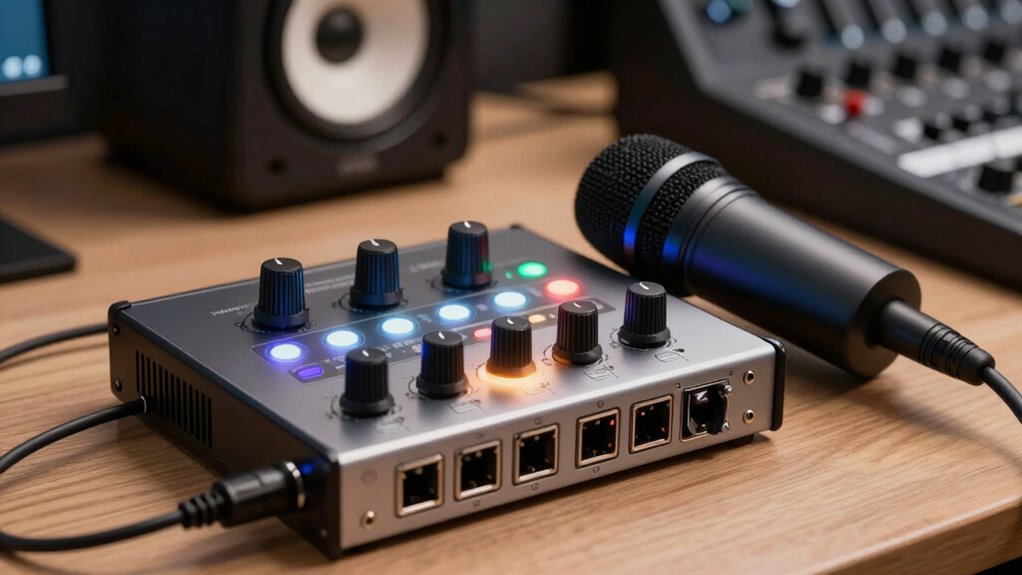

Audio interfaces provide better sound quality through advanced analog signal processing and higher-quality digital conversion, which USB mics can’t match. They give you low-latency monitoring, so you hear your recordings almost instantly, essential for performers and producers. Plus, interfaces offer extensive control over gain, effects, and multiple inputs, making them versatile for complex setups. If you want professional-grade sound and flexibility, audio interfaces are your best choice—exploring further shows you why they stand out from USB mics.
Key Takeaways
- Provide superior analog signal processing and high-quality conversion for cleaner, more accurate sound.
- Offer low-latency, real-time monitoring with dedicated drivers essential for professional performance.
- Enable extensive control over gain, effects, and sound shaping for tailored recordings.
- Support multiple inputs and outputs for complex, multi-source recording setups.
- Built with durable, professional-grade components for reliability and consistent high-fidelity performance.
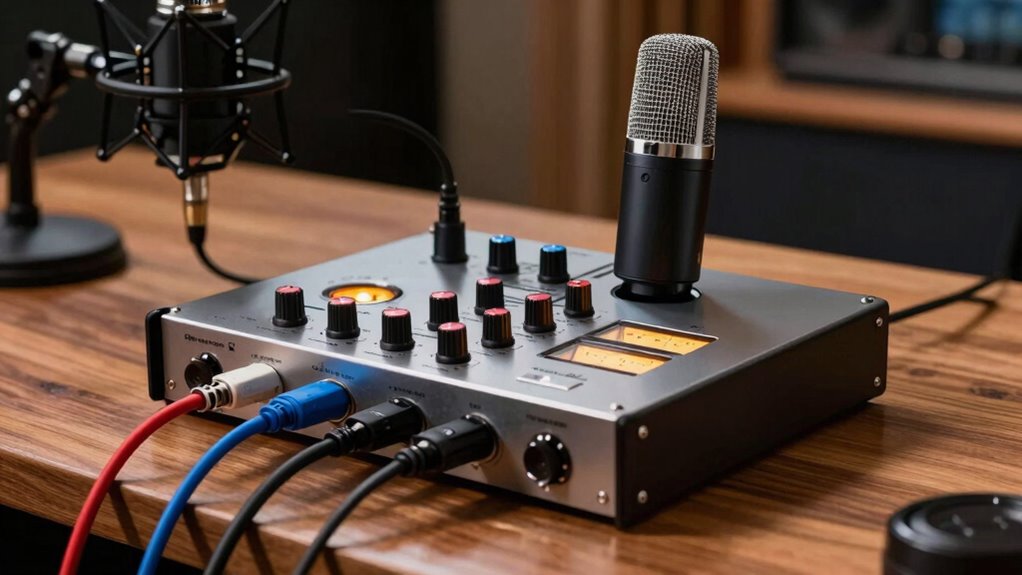
When you’re choosing between an audio interface and a USB microphone, understanding their differences can help you make the right decision for your recording needs. Audio interfaces offer a level of flexibility and control that USB microphones simply can’t match. One key aspect is their ability to handle analog signal processing more robustly. With an audio interface, you connect professional microphones via XLR or other high-quality inputs, allowing for cleaner, more accurate sound conversion from analog to digital. This process preserves the integrity of your recordings, especially at higher sound pressure levels or with high-end microphones. USB microphones, on the other hand, integrate the analog-to-digital conversion inside the mic itself, which can compromise sound quality and limit customization options.
Audio interfaces provide superior control and sound quality with professional XLR inputs, unlike USB microphones’ built-in conversion.
Latency management is another area where audio interfaces excel. When you’re recording or monitoring in real-time, even slight delays can disrupt your flow. Audio interfaces typically feature dedicated drivers optimized for low latency, ensuring your sound reaches your headphones almost instantaneously. This is *essential* for performers and producers who need immediate feedback during recording sessions. In contrast, USB microphones rely on the computer’s built-in processing, which can introduce more latency, sometimes causing distracting delays. The ability of an audio interface to manage latency effectively makes it the preferred choice for professional recording environments.
Additionally, audio interfaces provide extensive control over your audio signal chain. You can adjust gain levels, apply real-time effects, and choose different preamps to shape your sound. This level of customization allows you to tailor your recordings to specific needs, whether it’s vocals, instruments, or podcasts. Flexibility in setup also plays a vital role in accommodating various recording scenarios. Superior analog-to-digital conversion within audio interfaces ensures a higher fidelity capture of your sound, especially when working with high-quality microphones and complex setups. They often support multiple inputs and outputs, enabling complex multi-source recordings that are not feasible with standard USB microphones. Their robust construction and high-quality components contribute to consistent performance and durability, making them suitable for professional environments. USB microphones are generally single-input devices, making them less suitable for multi-source recordings. Their plug-and-play design is perfect for beginners or casual users but falls short when it comes to professional or multi-layered productions.

Focusrite Scarlett Solo 3rd Gen USB Audio Interface for Guitarists, Vocalists, Podcasters or Producers to record and playback studio quality sound
Pro performance with great pre-amps – Achieve a brighter recording thanks to the high performing mic pre-amps of…
As an affiliate, we earn on qualifying purchases.
As an affiliate, we earn on qualifying purchases.
Frequently Asked Questions
Can USB Mics Be Upgraded Like Audio Interfaces?
No, USB mics can’t be upgraded like audio interfaces. With an audio interface, you can improve sound quality through better signal processing and adjust mic placement for ideal recording. You can also add external gear, tweak gain levels, and upgrade components over time. USB mics are limited to their built-in hardware, so they’re less flexible for improvements, whereas audio interfaces offer ongoing customization and enhancement options.
Do Audio Interfaces Improve Audio Quality Over USB Mics?
Think of your audio setup like a fine wine; an audio interface is the cellar that enhances its flavor. Yes, audio interfaces improve audio quality over USB mics by providing better studio preamps and superior analog conversion. This means clearer, richer sound with less noise. When you upgrade to an interface, you’re accessing the full potential of your recordings, making your sound more professional and polished.
Are Audio Interfaces Compatible With All Recording Software?
Yes, audio interfaces are generally compatible with most recording software. They offer studio versatility by supporting various digital audio workstations (DAWs) and plugins. Your hardware compatibility depends on the interface’s connections and your computer’s ports, so verify your setup matches the device specifications. Most interfaces use standard drivers, making integration smooth. This compatibility allows you to focus on creating, knowing your hardware and software work seamlessly together.
How Do I Choose the Right Audio Interface for My Needs?
Choosing the right audio interface is like finding the perfect key to unleash your creative potential. Think about your budget, ensuring it fits comfortably without stretching. Consider portability features if you’re a nomad, needing a lightweight companion for on-the-go recording. Match the number of inputs and outputs to your gear, and prioritize compatibility with your software. When you find an interface that feels right, it’s like catching a musical wave ready to be ridden.
Can I Use a USB Mic With an Audio Interface?
Yes, you can use a USB mic with an audio interface, but it’s not always necessary or recommended. When you connect a USB mic to an audio interface, you might need to adjust the audio gain to guarantee clear sound quality. Keep in mind that using a dedicated audio interface allows for better microphone placement options and more precise control over audio gain adjustment, resulting in improved overall sound.

Focusrite Scarlett Solo 4th Gen USB Audio Interface, for the Guitarist, Vocalist, or Producer — High-Fidelity, Studio Quality Recording, and All the Software You Need to Record
The new generation of the songwriter's interface: Plug in your mic and guitar and let Scarlett Solo 4th…
As an affiliate, we earn on qualifying purchases.
As an affiliate, we earn on qualifying purchases.
Conclusion
In short, choosing an audio interface over a USB microphone opens a world of wider, richer, and more versatile sound. With better bandwidth, broader connectivity, and enhanced customization, you gain greater control and clarity. So, step beyond the simple, and seize the superior soundscape that an audio interface supplies. Make the move to more-melodic, more-magnificent music mastery, and maximize your microphone’s potential with the power of professional-grade audio interfaces.
Focusrite Scarlett Solo 3rd Gen USB Audio Interface for Guitarists, Vocalists, Podcasters or Producers to record and playback studio quality sound
Pro performance with great pre-amps – Achieve a brighter recording thanks to the high performing mic pre-amps of…
As an affiliate, we earn on qualifying purchases.
As an affiliate, we earn on qualifying purchases.
Focusrite Scarlett Solo 4th Gen USB Audio Interface, for the Guitarist, Vocalist, or Producer — High-Fidelity, Studio Quality Recording, and All the Software You Need to Record
The new generation of the songwriter's interface: Plug in your mic and guitar and let Scarlett Solo 4th…
As an affiliate, we earn on qualifying purchases.
As an affiliate, we earn on qualifying purchases.