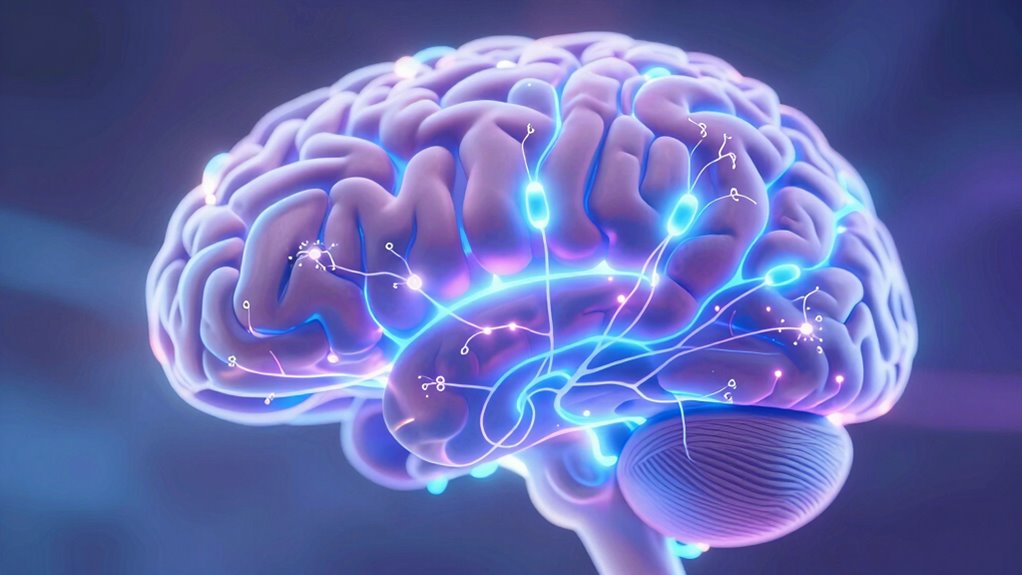

Researchers are studying the human body’s internal clock more closely because it controls essential functions like sleep, metabolism, and overall health. Understanding how the circadian rhythm works helps you learn how disruptions—like irregular schedules or excessive screen time—affect your well-being. By exploring how light influences your internal timing, scientists aim to develop better treatments and health strategies. Keep exploring to discover how this research could improve your sleep, health, and daily performance.

Get the latest gadgets delivered free — and shop member deals
- Fast, free delivery on millions of items
- Access to Prime Big Deal Days deals on October 6–7
- Prime Video, Amazon Music and more included
Key Takeaways
- To better understand how circadian rhythms influence sleep, metabolism, and overall health.
- To develop targeted therapies for sleep disorders, mental health issues, and metabolic diseases.
- To identify how modern lifestyles and light exposure disrupt internal clocks and affect well-being.
- To optimize work schedules and environments aligning with natural biological rhythms.
- To advance personalized medicine by leveraging insights into individual circadian patterns.

Scientists are increasingly focusing on the human body’s internal clock because of its crucial role in regulating sleep, metabolism, and overall health. This internal clock, known as the circadian rhythm, orchestrates your biological timing to guarantee your body functions at its best within a 24-hour cycle. Understanding this rhythmic pattern helps researchers discover how various processes—like hormone production, body temperature, and alertness—align with the day-night cycle. When these rhythms are disrupted, it can lead to sleep disorders, metabolic issues, and even mental health problems. That’s why studying your biological timing isn’t just about sleep; it’s about comprehending the intricate system that keeps your body in sync with the environment.
Your circadian rhythm is governed by a master clock located in your brain’s suprachiasmatic nucleus (SCN), which acts as the body’s timekeeper. It receives signals from your eyes about light exposure and adjusts your internal timing accordingly. When light hits your retina, it signals the SCN to promote wakefulness and alertness during the day. As evening approaches and light diminishes, your internal clock signals your body to prepare for rest, releasing hormones like melatonin. This finely tuned biological timing guarantees that you’re awake when you should be and asleep when your body needs recovery. Additionally, light exposure plays a vital role in maintaining your internal clock’s accuracy, as it directly influences hormone secretion and alertness cycles. However, modern lifestyle choices—such as irregular sleep schedules, shift work, or excessive screen time—can throw off your circadian rhythm, causing misalignment that impacts your health.
Researchers are digging deeper into how this internal clock influences more than just sleep. They’re exploring its role in metabolic processes, immune function, and even mental health. For example, disruptions in biological timing can contribute to obesity, diabetes, or depression. By understanding the mechanisms behind circadian rhythm regulation, scientists hope to develop targeted therapies that restore proper biological timing. This could mean better treatments for sleep disorders or new strategies for optimizing work schedules to match your natural rhythms. Additionally, it highlights the importance of maintaining consistent routines and exposure to natural light to keep your internal clock functioning properly.
Understanding the connection between light exposure and your internal clock is supported by research on the human body’s internal timing, emphasizing the importance of proper light management for health. Ultimately, your circadian rhythm is a fundamental aspect of your health, intricately linked to your biological timing. As research advances, you’ll see more personalized approaches to health and wellness that align with your body’s internal clock, helping you live better, healthier, and more balanced. The ongoing quest to decode this internal timing system promises to revolutionize how we understand sleep, health, and human performance—making it an exciting frontier in science.
blue light blocking glasses for sleep
As an affiliate, we earn on qualifying purchases.
As an affiliate, we earn on qualifying purchases.
Frequently Asked Questions
How Does the Internal Clock Affect Mental Health Disorders?
Your internal clock influences mental health by regulating your circadian rhythms, which impact mood regulation. When circadian disruption occurs, it can lead to sleep disturbances and emotional instability, increasing the risk of disorders like depression and anxiety. By understanding and maintaining your internal clock’s health, you can improve your mental well-being, reduce mood swings, and promote better overall psychological resilience.
Can External Factors Completely Reset Our Internal Clock?
You might be surprised to learn that external factors can substantially influence your internal clock, but they rarely reset it completely. Environmental cues like light exposure and social activities help regulate your rhythm through hormonal regulation, yet your body’s internal clock maintains a level of independence. For example, jet lag affects only part of your cycle, showing external cues can’t fully override your internal timing, but they do play an essential role.
What Are the Long-Term Effects of Disrupted Circadian Rhythms?
Disrupted circadian rhythms can lead to long-term health issues like sleep disorders, obesity, and weakened immunity. When your sleep hygiene suffers or your chronotype varies unexpectedly, your body struggles to regulate hormones and metabolism effectively. Over time, this imbalance increases your risk of chronic diseases, mental health problems, and decreased cognitive function. Maintaining regular sleep patterns helps stabilize your internal clock and supports overall well-being.
How Do Age and Gender Influence Internal Clock Functions?
Age and gender influence your internal clock through hormonal fluctuations and lifestyle habits. As you age, hormonal changes can shift your sleep-wake patterns, making it harder to stay consistent. Gender differences, like hormonal variations in men and women, also affect circadian functions, impacting sleep quality and alertness. Your lifestyle habits, such as sleep routines and exposure to light, further modify how your internal clock operates across different ages and genders.
Are There Genetic Differences in Internal Clock Mechanisms?
Your internal clock is like a finely tuned instrument, with genetic variations acting as the unique strings that produce different melodies. Researchers find that genetic differences shape how your circadian rhythms function, influenced by evolutionary adaptations over time. These genetic variations can explain why some people are morning larks while others are night owls, highlighting the rich diversity in internal clock mechanisms across individuals, shaped by millions of years of evolution.
melatonin supplements for circadian rhythm
As an affiliate, we earn on qualifying purchases.
As an affiliate, we earn on qualifying purchases.
Conclusion
As you explore the fascinating world of the body’s internal clock, you’ll discover that nearly 75% of people experience some form of disrupted sleep due to circadian rhythm issues. This highlights just how essential understanding our internal clocks really is. By studying these natural rhythms, researchers aim to improve health and well-being for millions. So, paying closer attention to your body’s internal signals could be the key to a healthier, more balanced life.
light therapy lamps for wakefulness
As an affiliate, we earn on qualifying purchases.
As an affiliate, we earn on qualifying purchases.
As an affiliate, we earn on qualifying purchases.
Fall Picks
fall essentials
As an affiliate, we earn on qualifying purchases.