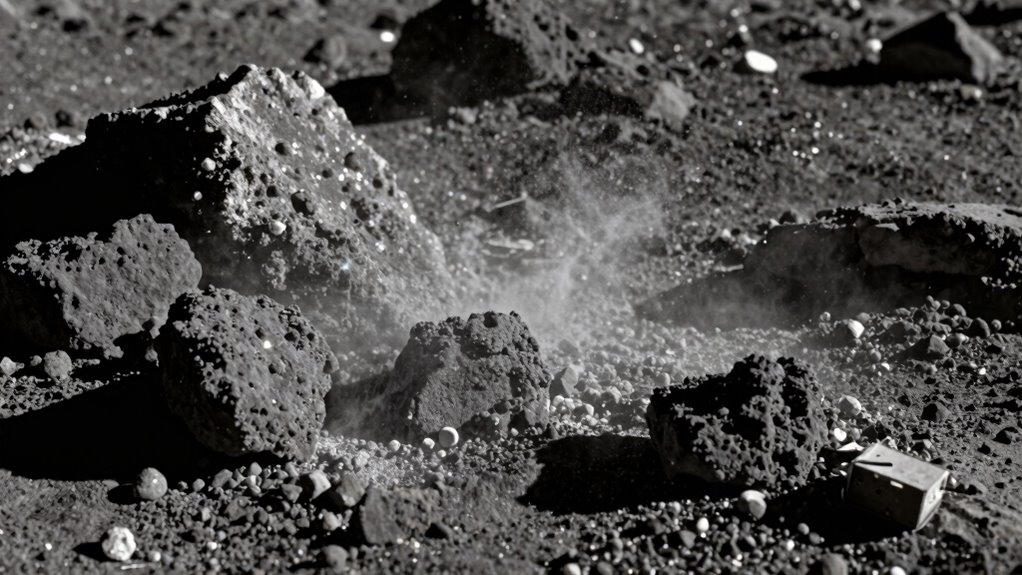

Lunar dust is a bigger problem than it looks because it’s fine, abrasive, and sticky, making it hard to control. It clings to surfaces, infiltrates seals, and damages equipment, risking costly failures. For you, it’s a health hazard that can cause lung issues and skin irritation. Static electricity causes dust to stick and spread inside habitats, creating ongoing contamination. If you keep exploring this issue, you’ll discover how scientists are finding ways to counter these severe challenges.

Get the latest gadgets delivered free — and shop member deals
- Fast, free delivery on millions of items
- Access to Prime Big Deal Days deals on October 6–7
- Prime Video, Amazon Music and more included
Key Takeaways
- Lunar dust’s sharp, abrasive particles easily damage equipment and pose contamination risks to spacecraft systems.
- Static electricity causes dust adherence, making it difficult to remove and increasing contamination cycles.
- Inhalation of fine dust particles can cause serious respiratory health issues for astronauts.
- Dust infiltrates seals and joints, leading to mechanical failures and costly delays in missions.
- Its persistent, weathering-resistant nature makes lunar dust an ongoing, complex challenge for habitat and suit maintenance.

Lunar dust poses a significant challenge for future moon missions because its fine, abrasive particles cling to surfaces and equipment. This dust isn’t just a minor inconvenience; it can cause serious problems for spacecraft contamination and astronaut health. When dust gets into spacecraft systems, it can interfere with sensors, clog filters, and cause mechanical failures. Because lunar dust is so tiny and sticky, it easily infiltrates seals and joints, making it difficult to keep the interior of your spacecraft clean and functioning properly. This contamination can compromise essential systems, leading to costly delays and increased risks during your mission.
Lunar dust clings to surfaces, risking equipment failure and mission delays.
As an astronaut, you’re also at significant risk from lunar dust. Its particles can become airborne and, if inhaled, pose a serious threat to your respiratory health. Unlike dust on Earth, lunar dust lacks weathering processes like rain that could help settle and clear it away. Instead, the dust remains suspended and can be inhaled easily, potentially causing lung issues or other respiratory problems. The abrasive nature of lunar dust means it can cause skin irritation or damage to your eyes and mucous membranes if you’re not careful. Even small amounts can be harmful over time, making it crucial to develop effective protective measures. Understanding the static electricity properties of lunar dust can help in developing more effective mitigation techniques.
The challenge of spacecraft contamination is compounded by the difficulty in cleaning lunar dust. Earth-based cleaning methods don’t work well in the lunar environment, where dust adheres tenaciously to surfaces due to static electricity and electrostatic forces. As you move around the lunar surface, you risk tracking dust into your habitat and equipment, creating a cycle of contamination that’s hard to break. This persistent presence of dust means you’ll need specially designed tools and protocols to keep your living and working spaces as dust-free as possible. Developing dust-resistant materials is a key area of research to prevent the buildup of lunar dust on critical surfaces. Additionally, researchers are exploring novel cleaning techniques that could be more effective in the lunar environment.
The health risks are equally troubling. Lunar dust’s unique properties—sharp edges and electrostatic charges—make it particularly dangerous. When inhaled, dust particles can embed deep into your lungs, causing inflammation, fibrosis, or other long-term health issues. Protecting yourself with proper suits, helmets, and filtration systems isn’t just about comfort; it’s a critical safeguard for your well-being. Researchers are working on solutions like dust-resistant materials and cleaning methods, but until they’re perfected, lunar dust remains a formidable obstacle. Its impact on spacecraft contamination and astronaut health highlights why lunar dust is a problem bigger than it appears at first glance.
As an affiliate, we earn on qualifying purchases.
Frequently Asked Questions
How Does Lunar Dust Affect Astronaut Health During Long-Term Missions?
Lunar dust poses serious health risks during long-term missions because dust inhalation can lead to respiratory problems and potential lung damage. As an astronaut, you might breathe in tiny, abrasive particles that can accumulate in your lungs over time. The dust’s sharp edges and toxic properties increase the danger, making it essential to develop effective protective measures to minimize exposure and safeguard your health during extended stays on the Moon.
Can Lunar Dust Damage Spacecraft Equipment Beyond Current Protections?
Lunar dust can damage spacecraft equipment beyond current protections through electrostatic adhesion, causing dust particles to cling tightly to surfaces. Over time, this buildup leads to material degradation, impairing essential systems like sensors and seals. You might not see the damage right away, but the abrasive nature of lunar dust and its electrostatic properties pose a serious threat, potentially compromising spacecraft functionality during long-term missions.
What Methods Are Being Developed to Clean or Mitigate Lunar Dust?
Imagine battling a persistent, invisible storm. Scientists develop electrostatic removal techniques, like tiny lightning bolts, to sweep away lunar dust from surfaces. Dust-resistant coatings act as shields, repelling particles before they settle. These methods work together to keep equipment clean and functioning. You’ll find ongoing innovation in these areas, making lunar exploration safer and more efficient by actively addressing the dust problem before it causes damage.
Does Lunar Dust Pose Environmental Risks to Future Lunar Habitats?
Lunar dust definitely poses environmental risks to your future habitats. Dust infiltration can compromise air quality and damage equipment, leading to habitat contamination. As you build and maintain lunar bases, you’ll need to implement strict dust mitigation strategies to prevent these issues. Without proper controls, lunar dust could threaten the safety, functionality, and longevity of your habitats, making it essential to address these risks early on.
How Does Lunar Dust Compare to Earth’s Airborne Dust in Impact Severity?
Lunar dust is more severe than Earth’s airborne dust because of its unique properties, including sharp edges and magnetic tendencies, which make it highly abrasive and clingy. Unlike Earth’s dust, lunar dust easily contaminates surfaces, causing equipment malfunctions and health risks. Its surface contamination potential is much greater, demanding careful management. You must address these dust properties proactively to prevent damage and guarantee safety in lunar environments.
As an affiliate, we earn on qualifying purchases.
Conclusion
You might think lunar dust is just a minor inconvenience, but it’s more of a wolf in sheep’s clothing. Its tiny particles can wreak havoc on equipment, pose health risks, and complicate future missions. Ignoring the problem would be like putting all your eggs in one basket—you’re setting yourself up for failure. To truly explore and settle on the Moon, you must confront this dust head-on, or it’ll keep slipping through your fingers when you least expect it.
astronaut respiratory protection mask
As an affiliate, we earn on qualifying purchases.
As an affiliate, we earn on qualifying purchases.
As an affiliate, we earn on qualifying purchases.
Fall Picks
fall essentials
As an affiliate, we earn on qualifying purchases.