
You’ll find your metal detector’s performance heavily depends on your soil and sand conditions, often more than ads reveal. Mineral-rich soils and dense sands cause false signals, reduce sensitivity, and make target detection harder. Adjusting your settings like ground balance, sensitivity, and frequency can help, but knowing the environment is key. Understanding how terrain impacts your device can boost your success rate—if you keep exploring, you’ll uncover even more effective techniques.

Get the latest gadgets delivered free with Prime
- Fast, free delivery on millions of items
- Prime Video, Amazon Music and more included
- Member-only deals all year
Key Takeaways
- Soil mineralization and sand density significantly influence detector sensitivity and accuracy, often more than manufacturers acknowledge.
- Mineral-rich soils cause false signals and reduce discrimination, affecting detector reliability in real-world conditions.
- Dense or compacted sand absorbs signals, decreasing detection depth and requiring specific adjustments.
- Environmental factors like mineral deposits and soil composition necessitate tailored search settings for optimal performance.
- Terrain variability impacts detector effectiveness, making adaptive strategies essential for successful treasure hunting.
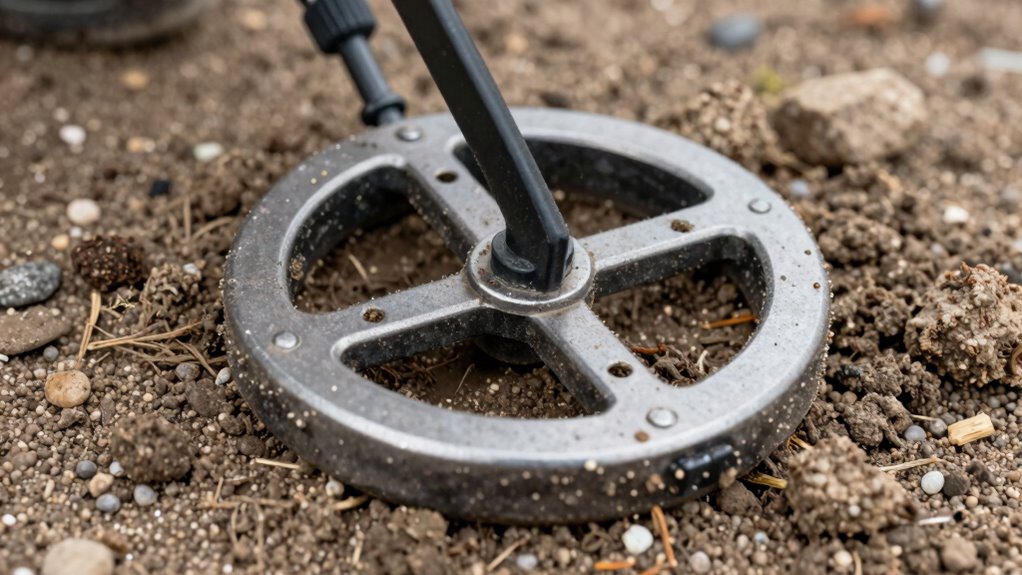
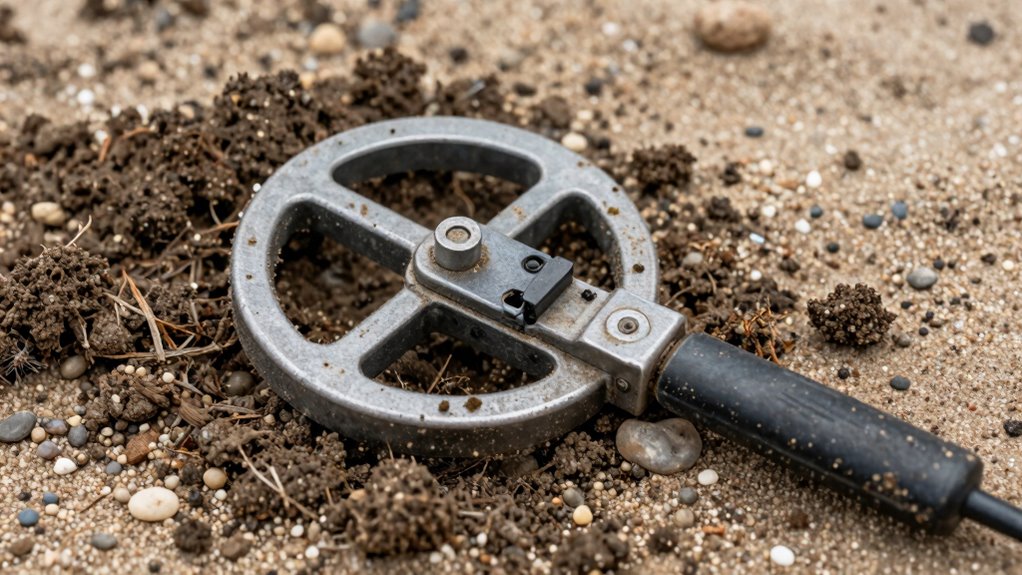
Many metal detectors perform differently depending on the soil and sand conditions they encounter, often more so than the advertisements suggest. When you’re out searching, the type of ground you’re working with can drastically affect your detector’s performance. Mineral interference plays a significant role here, especially in highly mineralized soils or mineral-rich sand. These minerals can cause your detector’s signals to become erratic or false, making it harder to distinguish real targets from noise. This interference is often underestimated by manufacturers, who advertise detectors as capable of handling all environments, but in reality, mineral content can limit your success.
Mineral-rich soils and sand can cause false signals, limiting detector performance despite manufacturer claims.
Sand density is another critical factor that influences how well your metal detector functions. Soft, loose sand allows signals to pass more freely, so you get clearer readings and better sensitivity. Conversely, dense or compacted sand absorbs or scatters signals, reducing your detector’s ability to pick up small or deep targets. If you’re scanning at a popular beach, for example, the sand may be densely packed from foot traffic, which hampers detection. This means you might need to adjust your settings or use a more powerful detector designed for such conditions.
You’ll find that many detectors struggle more in mineralized or dense sand than they do in simpler soils. It’s not just about the equipment; it’s about understanding the environment you’re working in. When mineral interference is high, your detector’s discrimination features become less reliable, and you may need to switch to all-metal mode or lower your sensitivity to avoid false signals. Similarly, when sand is dense, you might need to increase your coil’s ground balance or switch to a frequency better suited for mineralized environments. These adjustments aren’t just optional; they’re essential if you want to maximize your chances of finding valuable targets. Additionally, understanding how soil composition impacts detector performance can help you better interpret signals and avoid unnecessary digging. Recognizing the influence of natural mineral deposits in your search area can further refine your technique and improve success rates. Being aware of these environmental factors also helps you develop more effective search techniques tailored to different conditions. Recognizing how mineralized soils can create false signals further enhances your ability to differentiate between real targets and interference. Moreover, educating yourself about the specific ground conditions in your search area can lead to more confident and successful treasure hunts.
Being aware of how soil and sand conditions affect your detector helps you manage expectations and adapt your search strategies. You’ll learn to recognize when signals are likely false alarms caused by mineral interference or sand density rather than real targets. This awareness can save you time and frustration, leading to more successful hunts. While manufacturers advertise their detectors as versatile, the truth is that terrain plays a bigger role in performance than most realize. By understanding these environmental factors, you can choose the right equipment and techniques, making your treasure hunts more productive and enjoyable.
metal detector ground balance adjustment
As an affiliate, we earn on qualifying purchases.
As an affiliate, we earn on qualifying purchases.
Frequently Asked Questions
How Does Moisture Content Affect Metal Detector Performance?
Moisture content considerably affects your metal detector’s performance by increasing soil conductivity, which can cause more false signals or masking of targets. When the soil is moist, it conducts electricity better, making it harder to distinguish between mineralized soil and actual metal objects. The moisture impact varies depending on the soil, so you may need to adjust your detector’s settings or use specific search modes to improve accuracy in damp conditions.
Can Mineralization Levels Be Tested Before Metal Detecting?
Yes, you can perform pre-detection testing for mineralization levels. By conducting a mineralization assessment, you identify how much the soil interferes with your metal detector. This process helps you adjust your settings and choose the right equipment, ensuring better performance. Doing a mineralization assessment before detecting saves time and improves your chances of success, giving you confidence that your searches are more effective in areas with varying mineral content.
What Specific Soil Treatments Improve Detection Accuracy?
You can improve detection accuracy by adjusting soil pH and managing organic matter. Lime or sulfur can raise or lower soil pH, reducing mineralization interference. Removing excess organic matter like decayed leaves or roots minimizes signal clutter. Additionally, using a soil conditioner designed for metal detecting can help stabilize soil conditions. These treatments enhance your detector’s sensitivity, making it easier to find buried treasures by reducing the soil’s natural interference.
Are There Metal Detectors Optimized for Highly Mineralized Soils?
Yes, some metal detectors are designed specifically for highly mineralized soils. These detectors often feature advanced ground balancing and discrimination settings to handle challenging conditions caused by mineral deposits and variations in soil pH. They actively reduce false signals and improve detection accuracy, allowing you to search effectively in mineral-rich environments. Investing in a detector with these features helps you navigate tough terrains and increases your chances of finding buried treasures.
How Does Soil Composition Influence Battery Life and Device Longevity?
Soil composition directly impacts your metal detector’s battery efficiency and device longevity. Highly mineralized or salty soils cause your detector to work harder, draining batteries faster and increasing wear on electronic components. Over time, soil degradation, like erosion or accumulation of mineral deposits, can worsen these effects. To maximize your detector’s lifespan, use models designed for tough soils, and regularly maintain and clean your device to prevent damage from harsh conditions.
metal detector sensitivity control
As an affiliate, we earn on qualifying purchases.
As an affiliate, we earn on qualifying purchases.
Conclusion
Remember, every cloud has a silver lining, and so does every patch of soil or sand. Your metal detector’s performance depends more on the environment than ads claim. Don’t be fooled by promises—understand your terrain, and you’ll find more treasures. Keep experimenting, stay patient, and trust that persistence pays off. Sometimes, the real treasure isn’t just buried in the ground but in your knowledge and experience. Happy hunting!
beach metal detector for dense sand
As an affiliate, we earn on qualifying purchases.
As an affiliate, we earn on qualifying purchases.
mineralization resistant metal detector
As an affiliate, we earn on qualifying purchases.
As an affiliate, we earn on qualifying purchases.
Fall Picks
fall essentials
As an affiliate, we earn on qualifying purchases.